2026年10月16日(金)
今日の日本文化
食べものを考える日と札幌の時計台
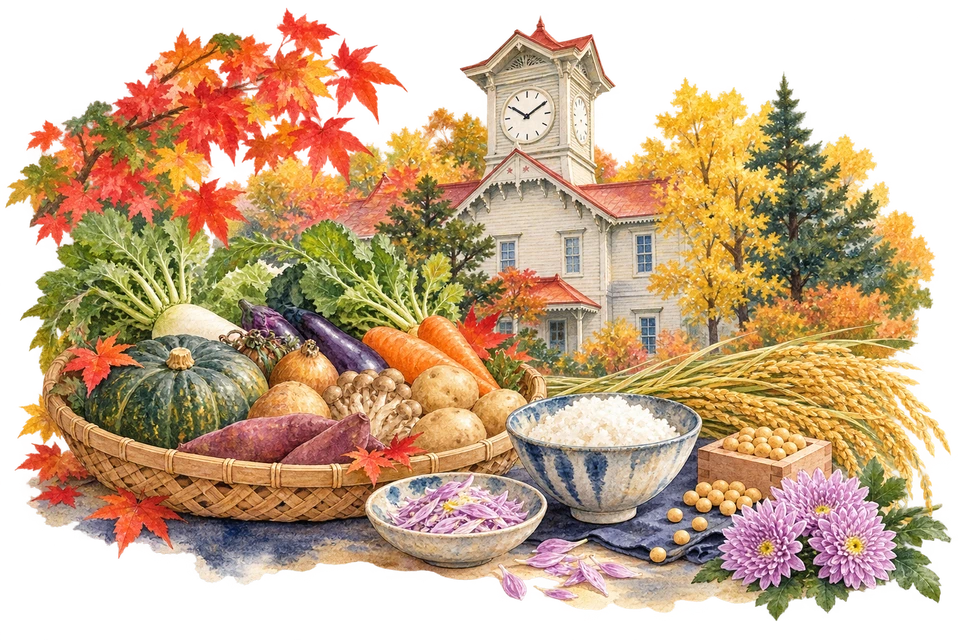
10月16日は国連の「世界食料デー」で、日本では同じ日がJA全中の定めた「国消国産の日」でもあります。札幌のシンボルの時計台が、1878年に完成した日でもあります。
今日は何の日
-
1981年から世界食料デーWorld Food Day
The UN's Food and Agriculture Organization, or FAO, was founded on October 16th, 1945, and the first World Food Day was held on this date in 1981. Japan joined the FAO in 1951. It's a day to think about hunger, farming and food waste around the world, and it's a good time to ask how much food we throw away.
国連食糧農業機関(FAO)は1945年10月16日に設立され、1981年のこの日に第1回の世界食料デーが行われました。日本がFAOに加わったのは1951年です。世界の飢え、農業、食べ物のむだについて考える日で、自分がどれだけ食べ物を捨てているかを見直すきっかけにもなります。
辞典でくわしく › -
2021年制定国消国産の日Kokusho Kokusan Day (Eat What Your Country Grows Day)
Kokusho kokusan means "what a country eats, it should grow itself." JA Zenchu, the national federation of farm cooperatives, made this its day in 2021 to match World Food Day. In fiscal 2025, Japan grew only 37 percent of the calories it eats, the government says, so the idea is a hot topic here.
「国消国産」は「国民が食べるものは、できるだけその国で作る」という意味です。全国の農協をまとめるJA全中が2021年、世界食料デーに合わせてこの日を記念日にしました。国の発表では、2025年度の日本の食料自給率はカロリーで見て37%しかなく、日本ではよく話題になる考え方です。
辞典でくわしく › -
1878年札幌の時計台(演武場)が完成Sapporo Clock Tower completed
On this day in 1878, the drill hall of the Sapporo Agricultural College, now Hokkaido University, was completed. It had only a small bell at first. A tower clock was ordered from the Howard company in New York, and it started striking the hours in 1881. Today the building is a national Important Cultural Property, and the clock still rings every hour.
1878年のこの日、札幌農学校(いまの北海道大学)の演武場が完成しました。はじめは小さな鐘があるだけでした。ニューヨークのハワード社に塔時計を注文し、1881年から時を告げはじめます。いまは国の重要文化財で、時計は今も毎正時に鐘を鳴らしています。
今日の三択クイズ
農林水産省によると、2025年度の日本の食料自給率(カロリーベース)は何%?
正解は37%です。2026年8月の発表で、前の年度より1ポイント下がりました。お金で見る「生産額ベース」では66%と、ぐっと高くなります。米はほぼ国内でまかなえていますが、小麦や大豆、家畜のえさの多くを輸入に頼っているため、カロリーで見ると低くなります。外国の人に話すと「お米の国なのに?」と驚かれることが多い数字です。
外国人に聞かれたら
Japan grows so much rice. Why does it import most of its food?
日本はお米をたくさん作っているのに、なぜ食べ物の多くを輸入しているの?
Rice is the one staple Japan almost fully grows itself. But people here eat a lot less rice than they used to, and a lot more bread, noodles and meat. Most of the wheat, soybeans and animal feed comes from abroad, so when you count calories, Japan only grows about 37 percent of what it eats. If you count by money instead, the figure is about 66 percent, because many high-priced foods, like vegetables, are grown here.
米は、日本がほぼ自分でまかなえている唯一の主食です。でも日本の人は昔より米をずっと食べなくなり、パンや麺、肉をたくさん食べるようになりました。小麦や大豆、家畜のえさの多くは外国から来るので、カロリーで数えると、日本は食べている量の37%ほどしか作っていません。お金で数えると66%ほどになります。野菜など、値段の高い食べ物の多くを国内で作っているからです。
今日のひとこと英語
Japan imports most of its wheat and soybeans.
日本は小麦と大豆の多くを輸入しています。
「輸入に頼っている」を depend on import と書く人が多いですが、名詞の import は「輸入」の意味では imports と複数形にするのがふつうです(depend on imports)。動詞なら Japan imports ... と言えば十分で、depend を使わなくても通じます。
今日の一文
Today is World Food Day, and in Japan it's also a day to think about eating what the country grows. On this day in 1878, the building that became the Sapporo Clock Tower was completed.
今日は世界食料デーで、日本では国内で作ったものを食べることを考える日でもあります。1878年のこの日には、のちに札幌の時計台となる建物が完成しました。
今日の読みもの
今日に関係する項目
- 食べもの必修 米komerice as the center of the meal ご飯は料理ではなく、食事そのものを指す言葉でもある。
- 食べもの標準 食品ロスshokuhin rosufood that could have been eaten but was thrown away 日本は食料の多くを輸入しながら、食べられるはずの食品を毎年数百万トン捨てている。
- 季節標準 菊kikuchrysanthemum 皇室の紋であり、葬儀の花でもある。同じ花が両方を担っている。
- 食べもの必修 和食washokutraditional Japanese cuisine ユネスコ無形文化遺産に登録されたのは「料理」ではなく「食の習わし」だった。