INTRODUCE JAPAN
海外の友だちに日本を紹介しようIntroduce Japan in English
留学先で、オンライン交流で、SNSで。そのまま言える英文63本。音声で発音も確かめられます。
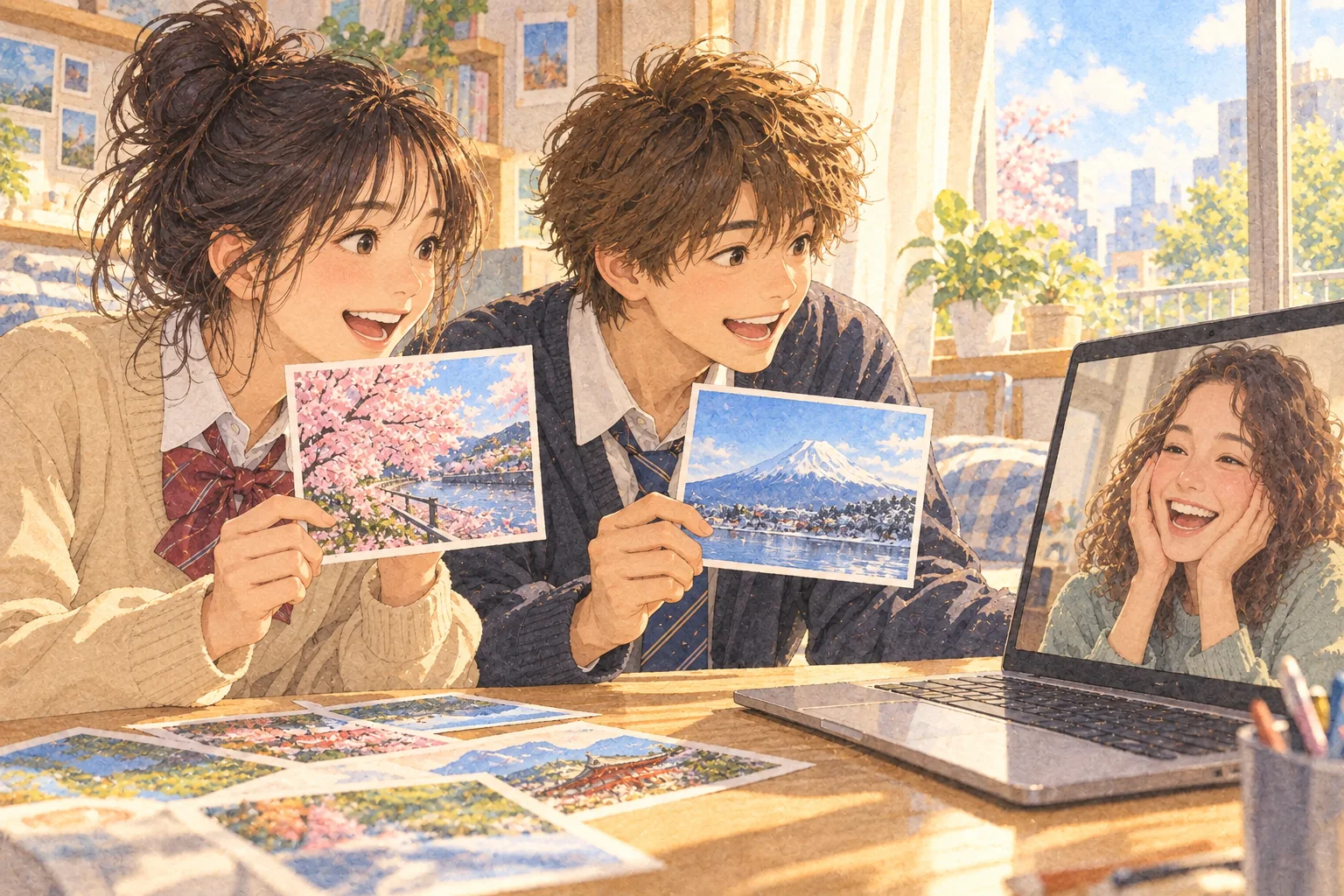
はじめましての自己紹介
Hi, I'm ____ from Japan. I'm a second-year high school student, and I love anime and playing volleyball. I'm really excited to talk with you!
はじめまして、日本の__です。高校2年生で、アニメとバレーボールが大好きです。話せるのをすごく楽しみにしていました!
💡 学年は "I'm in ninth grade."(中3)のように言ってもOK。アメリカでは小1から通しで数える言い方が通じやすい。
名前の順番
In Japan, we usually say our family name first and our given name second. So in Japanese I'm Tanaka Yui, but in English I'm often Yui Tanaka. Just call me Yui!
日本では、ふつう名字を先に、名前をあとに言います。だから日本語だと田中ゆいだけど、英語ではゆい・田中と言うことが多いです。ゆいって呼んでね!
💡 最後の "Just call me ____!" で呼んでほしい名前を伝えると、一気に距離が縮まる。
日本ってどれくらい大きい?
Japan is made up of four main islands and thousands of smaller ones. It's a little smaller than California, but more than 120 million people live here.
日本は、四つの大きな島と何千もの小さな島でできています。広さはカリフォルニア州より少し小さいくらいですが、1億2000万人以上が住んでいます。
💡 相手の国に合わせて比べると伝わりやすい。イギリスの人なら "about one and a half times the size of the UK"。
日本語の文字は3種類
Japanese uses three kinds of writing: hiragana and katakana, which are simple sound symbols, and kanji, which came from China. We learn about 2,000 kanji by the end of high school!
日本語には3種類の文字があります。音を表すシンプルなひらがなとカタカナ、それに中国から来た漢字です。高校を卒業するまでに、漢字を約2000字習います!
💡 "Want to see your name in katakana?" と聞いて、相手の名前をカタカナで書いてあげると盛り上がる。
家族を紹介する
There are four people in my family: my parents, my little brother and me. We also have a cat named Mochi. Honestly, she's the real boss of our house.
わたしの家族は4人です。両親と弟とわたし。それから、もちという名前の猫もいます。正直、うちで一番えらいのは猫です。
💡 "the real boss of our house"(うちの本当のボス)は、ペット自慢で使える定番のジョーク。
趣味を話す
In my free time, I like watching anime, drawing and listening to J-pop. Lately I've been really into baking. What kind of stuff are you into?
ひまなときは、アニメを見たり、絵を描いたり、J-POPを聴いたりするのが好きです。最近はお菓子作りにハマっています。あなたは何にハマってる?
💡 "be into ~" は「~にハマっている」。"I'm into K-pop." のように、好きなものを入れかえて使える。
日本の好きなところ
What I like most about Japan is that it feels safe. Lots of kids take the train to school by themselves. But summers are super hot and humid, so that part is tough!
日本で一番好きなのは、安心して過ごせるところ。一人で電車通学する子どももたくさんいます。でも夏はすごく暑くて蒸すので、そこはつらい!
💡 良いところと大変なところを一つずつ言うと、自慢に聞こえず、相手も自分の国の話をしやすくなって、会話が自然に続く。
相手の国について聞く
I've never been abroad, so I really want to know about your country. What do people usually eat for breakfast there? And what do you do on weekends?
海外に行ったことがないので、あなたの国のことをすごく知りたいです。朝ごはんは、ふつう何を食べるの?週末は何をしてる?
💡 紹介したら、必ず質問で返そう。"What about you?" だけでも会話が続く。
穴うめ:町の場所
I live in ____, a ____ city in the ____ part of Japan. It takes about ____ hours from Tokyo by shinkansen, or bullet train.
わたしは__に住んでいます。日本の__地方にある、__な町です。東京から新幹線で約__時間かかります。
💡 2つ目の空欄は small / big / quiet など。方角は northern / southern / western / eastern を入れる。
穴うめ:町の自慢
My town is famous for ____. Every ____, we have a big festival, and the whole town gets really lively. You should come see it someday!
わたしの町は__で有名です。毎年__には大きなお祭りがあって、町じゅうがすごくにぎやかになります。いつか見に来てね!
💡 季節は in summer、月なら in August のように。"Every August" と言えば「毎年8月に」。
穴うめ:案内したい場所
If you visit my town, I'll take you to ____. It's my favorite place because ____. The view from there is just amazing, especially at sunset.
もしわたしの町に来たら、__に連れて行ってあげる。__だから、お気に入りの場所なんだ。そこからの景色は最高で、特に夕方がきれい。
💡 理由の空欄は it's quiet / you can see the ocean / the food is great など、短い文でOK。
都会に住んでいる
I live in a big city, so trains come every few minutes and lots of stores stay open late. It's really convenient, but it gets crowded, especially during rush hour.
わたしは都会に住んでいるので、電車は数分おきに来るし、遅くまで開いているお店もたくさんあります。とても便利だけど、特に通勤ラッシュの時間はすごく混みます。
💡 "packed like sardines"(イワシの缶詰みたいにぎゅうぎゅう)と言うと、満員電車の様子がよく伝わる。
田舎に住んでいる
I live in the countryside. There are rice fields all around my house, and at night you can hear frogs. The train only comes once an hour, so I bike everywhere.
わたしは田舎に住んでいます。家のまわりは田んぼで、夜はカエルの声が聞こえます。電車は1時間に1本しか来ないので、どこへでも自転車で行きます。
💡 田舎を "the middle of nowhere"(何もないところ)と笑って言うのもアリ。自分の町なら言っても大丈夫。
雪の多い町
Where I live, it snows a lot in winter. Some years the snow piles up higher than my head! We have to shovel before school, but building snowmen is fun.
わたしの住んでいるところは、冬に雪がたくさん降ります。年によっては、頭より高く積もることも!学校の前に雪かきをしないといけないけど、雪だるまを作るのは楽しいです。
💡 雪国でなければ "It hardly ever snows here."(ここではめったに雪が降らない)に言いかえよう。
ご当地のおみやげ
Every region in Japan has its own local specialties. When people travel, they usually buy local snacks as omiyage, or souvenirs, for their friends and coworkers.
日本では、地域ごとに名物があります。旅行に行くと、友だちや職場の人に、その土地のお菓子をおみやげとして買って帰ることが多いです。
💡 続けて "My area is known for ____." と自分の町の名物を言うと、話が広がる。
新学期は4月から
In Japan, the school year starts in April and ends in March. So when we have our entrance ceremony, the cherry blossoms are often in full bloom.
日本では、学校の一年は4月に始まって3月に終わります。だから入学式のころは、桜が満開のことが多いんです。
💡 アメリカの多くの学校は8月末か9月始まり。"When does your school year start?" と聞いてみよう。
掃除は生徒がする
At my school, students clean the classrooms, the hallways and even the bathrooms ourselves. It can be a pain, but it makes us take better care of our school.
わたしの学校では、教室も廊下も、トイレまで生徒が自分たちで掃除します。面倒なこともあるけど、そのおかげで学校を大事にするようになります。
💡 "a pain" は「面倒くさいこと」。"Homework is a pain." のように日常でよく使う。
給食の時間
In elementary and junior high school, many of us eat kyushoku, or school lunch, in the classroom. Students take turns serving the food while wearing white coats and caps.
小学校と中学校では、多くの生徒が教室で給食を食べます。生徒が交代で、白い服と帽子を身につけて配膳します。
💡 "take turns ~ing" は「交代で~する」。当番の説明に便利な表現。
部活に夢中
Most students join a bukatsu, or school club. Some clubs practice almost every day, even on weekends. I'm in the tennis club, and my teammates are like family to me.
ほとんどの生徒が部活に入っています。ほぼ毎日、週末まで練習する部もあります。わたしはテニス部で、部の仲間は家族みたいな存在です。
💡 吹奏楽部は brass band、美術部は art club、帰宅部は "I'm not in any club." と言えばOK。
制服について
Most junior high and high schools in Japan have uniforms. Some students think they're boring, but it's nice not having to pick out clothes every morning.
日本の中学・高校の多くには制服があります。つまらないと思う生徒もいるけど、毎朝着る服を選ばなくていいのは楽です。
💡 自分の制服を説明するなら "We wear a navy blazer and a plaid skirt." のように色と形を言う。
学校でも靴をはきかえる
At school, we change into indoor shoes called uwabaki at the entrance. We leave our outdoor shoes in a shoe locker. It keeps the floors much cleaner.
学校では、入口で上履きという室内用の靴にはきかえます。外ばきは下駄箱に入れておきます。そのほうが床がずっときれいに保てます。
💡 海外の学校では見かけることが少ない習慣なので、下駄箱の写真を見せると「本当に?」とかなり驚かれることが多い。
文化祭は一大イベント
The school festival is one of the biggest events of the year. Each class runs something like a haunted house, a cafe or a play, and we prepare for weeks.
文化祭は一年で最大級のイベントです。クラスごとにお化け屋敷やカフェ、劇などをやって、何週間もかけて準備します。
💡 "It's like a school fair, but the students run everything." と言うとイメージが伝わりやすい。
受験のプレッシャー
In Japan, many students take entrance exams to get into high school and college. So ninth grade can be really stressful, and lots of students go to cram school after class.
日本では、高校や大学に入るのに入試を受ける生徒が多いです。だから中3はかなりストレスがたまるし、放課後に塾に通う生徒もたくさんいます。
💡 塾は cram school。"I'm studying for my entrance exams." で「受験勉強中」。
うちの朝ごはん
In my family, breakfast is usually rice, miso soup and grilled fish. But lots of families eat toast, too. Honestly, on busy mornings I just grab a banana!
うちの朝ごはんは、たいていご飯とみそ汁と焼き魚です。でもトーストの家もたくさんあります。正直、忙しい朝はバナナだけのこともあります!
💡 "In my family" で始めると、「日本人はみんなこう」と決めつけずに話せる。
お弁当の文化
Bento, or boxed lunches, are super common in Japan. Some parents make character bento with rice shaped like animals. Mine is simpler, but it's still really good.
日本ではお弁当がとても身近です。ご飯を動物の形にした、キャラ弁を作る親もいます。わたしのはもっとシンプルだけど、それでもすごくおいしいです。
💡 キャラ弁の写真を見せながら "Can you believe this is rice?" と言うと盛り上がる。
ラーメンは地域で違う
Ramen is different in every region. Sapporo is famous for miso ramen, and Fukuoka is famous for tonkotsu, a rich pork bone soup. Which one sounds best to you?
ラーメンは地域ごとに違います。札幌はみそラーメン、福岡はとんこつ(濃厚な豚骨スープ)で有名です。どれが一番おいしそう?
💡 しょうゆは soy sauce、しおは salt。"I'm a shoyu ramen person."(しょうゆ派)のように言える。
コンビニごはん
Japanese convenience stores, or konbini, are amazing. You can get fresh onigiri, fried chicken and desserts at almost any hour. Some people say konbini food beats restaurants!
日本のコンビニはすごいです。できたてのおにぎりやからあげ、スイーツが、ほぼいつでも買えます。コンビニのごはんはレストランに勝つ、と言う人もいるくらい!
💡 おにぎりは "rice ball" と言いかえると通じやすい。"beats ~" は「~に勝つ、~よりいい」。
回転寿司
Conveyor belt sushi is cheap and fun. Plates go around the counter, and you just grab what you want. At many places, you can also order on a touch screen.
回転寿司は安くて楽しいです。お皿がカウンターを回っていて、好きなものを取るだけ。多くの店では、タッチパネルで注文もできます。
💡 "The price depends on the color of the plate."(皿の色で値段が違う)と付け足すのもおすすめ。
ご当地お菓子
Japanese snacks come in so many flavors. Kit Kat has come out in lots of flavors you can only find in Japan, like matcha. Some are sold only in certain regions!
日本のお菓子は、とにかく味の種類が多いです。キットカットには抹茶味のような日本限定の味がたくさんあって、特定の地域でしか売っていないものもあります!
💡 海外の友だちへのおみやげに日本のお菓子は大人気。"This is a Japan-only flavor." と渡そう。
食べるときのマナー
It's OK to slurp noodles in Japan. People say it cools them down and brings out the flavor. But don't stick your chopsticks straight up in your rice. That's a big no-no.
日本では、麺をすすって食べても大丈夫。冷ませるし、風味がよくなると言われています。でも、ご飯にはしをまっすぐ突き立てるのは絶対ダメです。
💡 "a big no-no" は「絶対やっちゃダメなこと」。理由を聞かれたら "It's something done at funerals." と答える。
納豆に挑戦する?
Have you heard of natto? It's fermented soybeans, and it's super sticky and smelly. Even some Japanese people can't stand it, but I love it with rice!
納豆って知ってる?発酵させた大豆で、すごくネバネバして、においも強いんだ。日本人でも苦手な人がいるけど、わたしはご飯にのせて食べるのが大好き!
💡 苦手なら最後を "but I'm one of them!"(わたしもその一人!)に変えよう。
お正月
New Year's is the biggest holiday in Japan. Families get together and eat special food called osechi, and kids get money from relatives called otoshidama. It's the best!
お正月は日本で一番大きな行事です。家族が集まって、おせちという特別な料理を食べ、子どもは親戚からお年玉というお金をもらいます。最高です!
💡 お年玉は "New Year's money" と言いかえると一発で伝わる。"How much did you get?" と聞き返されるかも。
初詣とおみくじ
In early January, many people visit a shrine or temple to pray for a good year. It's called hatsumode. I always get an omikuji, a paper fortune, to check my luck.
1月の初め、多くの人が神社やお寺にお参りして、よい一年を願います。これを初詣といいます。わたしは毎年おみくじを引いて、運だめしをします。
💡 大吉は "great luck"、凶は "bad luck"。"I got great luck this year!" と自慢しよう。
バレンタインとホワイトデー
In Japan, it's mostly girls who give chocolate on Valentine's Day. Then on White Day, March 14th, the boys give something back. Lots of people give chocolate to friends, too.
日本のバレンタインは、主に女子がチョコをあげる日です。そして3月14日のホワイトデーに、男子がお返しをします。友だちにチョコを配る人もたくさんいます。
💡 海外ではバレンタインに男性が花やカードを贈ることも多い。ホワイトデーは知らない人が多いので話のネタになる。
お花見
In spring, we have hanami, or cherry blossom viewing parties. People sit on blue tarps under the trees, eat and chat. Honestly, it's as much about the picnic as the flowers!
春にはお花見、つまり桜を見るパーティーをします。木の下にブルーシートを敷いて、食べたりおしゃべりしたり。正直、花と同じくらいピクニックが目的です!
💡 "It's as much about A as B." は「BだけでなくAも同じくらい大事」。本音が伝わる便利な形。
夏祭りと花火
Summer means festivals! People wear yukata, or light cotton kimonos, and walk around the food stalls. My favorites are shaved ice and chocolate bananas. The fireworks are amazing, too.
夏といえばお祭り!浴衣(軽い木綿の着物)を着て、屋台を見て回ります。わたしのお気に入りはかき氷とチョコバナナ。花火もすごくきれいです。
💡 屋台は "food stalls"。金魚すくいは "goldfish scooping" で通じる。
お盆の帰省
In mid-August, many people go back to their hometowns for Obon. It's a time to remember family members who have passed away. Trains and highways get really crowded.
8月の中ごろ、多くの人がお盆で故郷に帰ります。亡くなった家族をしのぶ時期です。電車も高速道路もすごく混みます。
💡 地域によっては7月にお盆をするところもある。"In my area, Obon is in July." と言い分けよう。
紅葉がり
In the fall, the leaves turn red and yellow, and people go out to see them. We call it momijigari, which means "red leaf hunting." Don't worry, we just look at them!
秋になると葉っぱが赤や黄色に色づいて、みんな見に出かけます。これを紅葉狩りといいます。「狩り」だけど、ただ見るだけだから安心してね!
💡 アメリカでは fall、イギリスでは autumn と言うことが多い。このサイトはアメリカ英語で統一。
日本のクリスマス
For most people in Japan, Christmas isn't a religious holiday. It's more like a fun event. Lots of people eat fried chicken and strawberry shortcake on Christmas Eve.
日本の多くの人にとって、クリスマスは宗教の行事というより、楽しいイベントに近いです。クリスマスイブにフライドチキンやいちごのショートケーキを食べる人がたくさんいます。
💡 海外ではクリスマスは家族で過ごす大切な日のことが多い。違いを聞いてみると話がはずむ。
アニメの話をしよう
Anime is a big part of life here. Lots of adults watch it too, and new shows start every season. What anime do you like? I'll tell you my top three!
アニメは日本の生活の一部です。大人もたくさん見ているし、季節ごとに新しい作品が始まります。どんなアニメが好き?わたしのベスト3も教えるね!
💡 "Have you seen ____?"(__は見た?)で好きな作品をどんどん聞こう。
マンガは右から左へ
In Japan, we read manga from right to left, so you start from what looks like the back of the book. It's confusing at first, but you'll get used to it fast.
日本のマンガは右から左へ読むので、海外の人から見ると本の「うしろ」から読み始めることになります。最初はとまどうけど、すぐ慣れるよ。
💡 英語版のマンガも、右から左の読み方のまま出版されていることが多い。"Read it backwards!" と教えてあげよう。
日本のカラオケ
Karaoke in Japan is a little different. You rent a private room with your friends, so strangers can't hear you. It's perfect for singing badly and laughing a lot!
日本のカラオケはちょっと違います。友だちと個室を借りるので、知らない人に歌を聞かれません。下手でも思いきり歌って笑えるのが最高!
💡 海外ではバーのステージでみんなの前で歌うカラオケも多い。個室は驚かれるポイント。
ゲーセンとプリクラ
Arcades, or game centers, are still popular in Japan. There are claw machines and purikura photo booths. Purikura make your eyes look huge, and you can add cute stickers.
日本では、ゲームセンターが今も人気です。クレーンゲームやプリクラがあります。プリクラは目が大きく写って、かわいいスタンプも付けられます。
💡 UFOキャッチャーは英語では "claw machine"。これを言えると通じる。
ガチャガチャ
Gachapon are capsule toy machines. You put in coins, turn the handle, and get a random toy. Some shops have hundreds of machines, and it's hard to stop!
ガチャガチャは、カプセルトイの機械です。お金を入れてハンドルを回すと、何が出るかわからないおもちゃが出てきます。何百台も並ぶお店もあって、やめられなくなります!
💡 "It's so addictive!"(ハマって抜けられない!)とひと言付けるとリアル。
推し活って何?
My oshi is my favorite idol or character, the one I support the most. Oshi-katsu means cheering for them, like buying merch or going to concerts. Who's your oshi?
「推し」は、一番応援しているアイドルやキャラクターのこと。「推し活」は、グッズを買ったりライブに行ったりして応援することです。あなたの推しは誰?
💡 英語では "my bias"(K-POPファンの言い方)や "my fave" が近い。
日本生まれのゲーム
Lots of famous games come from Japan, like Pokemon and Super Mario. I've played Pokemon since I was little. Which starter Pokemon would you pick?
ポケモンやスーパーマリオなど、有名なゲームには日本生まれのものがたくさんあります。わたしは小さいころからポケモンをやっています。最初の3匹なら、どれを選ぶ?
💡 "starter Pokemon" は最初にもらう3匹のこと。好みを聞くだけで盛り上がる鉄板ネタ。
アニメの聖地巡礼
Some fans travel to real places that appear in their favorite anime. We call it seichi junrei, or anime pilgrimage. A few towns have become famous this way!
好きなアニメに出てくる実際の場所を訪ねるファンがいます。これを聖地巡礼といいます。それで有名になった町もあるんです!
💡 "pilgrimage" はもともと宗教の巡礼。ファンの旅にも冗談まじりで使われる。
交通系ICカードが便利
Get an IC card like Suica or ICOCA. You just tap it at the gate for trains and buses, and you can use it at convenience stores, too. It saves so much time.
SuicaやICOCAのようなICカードを手に入れよう。電車やバスは改札でタッチするだけで、コンビニでも使えます。すごく時間の節約になるよ。
💡 "tap" は「タッチする」。"Just tap and go!" と短く言ってもOK。
チップはいらない
You don't need to tip in Japan. Just pay the price on the bill. If you leave extra money on the table, the staff might even run after you to give it back!
日本ではチップはいりません。請求された金額を払うだけ。テーブルに余分なお金を置いていくと、店員さんが追いかけて返しに来るかもしれません!
💡 チップが当たり前の国の人ほど驚く話題。"Service is included, kind of." と冗談で言っても。
ゴミ箱が少ない
There aren't many trash cans on the streets in Japan. Keep a small bag with you and take your trash back to your hotel. Some convenience stores have bins, too.
日本の道には、ゴミ箱があまりありません。小さな袋を持ち歩いて、ゴミはホテルに持ち帰ろう。ゴミ箱があるコンビニもあります。
💡 "Where can I throw this away?"(これどこに捨てればいい?)も覚えておくと便利。
電車では静かに
On trains, people usually keep quiet and don't talk on the phone. Please put your phone on silent. In Japan, we call that "manner mode."
電車の中では、みんなたいてい静かにしていて、電話で話しません。スマホは音が鳴らないようにしてね。日本ではこれを「マナーモード」と呼びます。
💡 マナーモードは和製英語。英語では "silent mode" や "vibrate"。
夏の暑さに注意
If you come in summer, be ready for the heat. It's hot and humid, so bring a hat and drink lots of water. There are vending machines everywhere, so that part is easy!
夏に来るなら、暑さを覚悟してね。蒸し暑いので、帽子を持ってきて、水をたくさん飲もう。自販機がどこにでもあるから、飲みものには困らないよ!
💡 "It's like a sauna outside."(外はサウナみたい)は日本の夏を表す定番の言い方。
おすすめの季節
The best times to visit are spring and fall. The weather is nice, and you can see cherry blossoms or colorful leaves. But popular spots get really crowded then.
来るなら春か秋が一番おすすめ。気候がよくて、桜や紅葉が見られます。でも、人気の場所はその時期すごく混みます。
💡 冬なら "Winter is great for hot springs and snow." と、冬ならではの楽しみを伝えよう。
温泉の入り方
At an onsen, or hot spring, you wash your body before you get in the bath, and you don't wear a swimsuit. It feels a little weird at first, but it's so relaxing!
温泉では、湯船に入る前に体を洗います。水着は着ません。最初はちょっと変な感じがするけど、すごくリラックスできるよ!
💡 "Don't put your towel in the water."(タオルはお湯に入れないでね)も大事なマナー。
地方にも行ってみて
Don't just stay in Tokyo and Kyoto. Smaller towns have great food, friendly people and fewer tourists. Hop on a local train and see where it takes you!
東京と京都だけで終わらせないで。小さな町には、おいしい食べものや親切な人がいて、観光客も少なめです。ローカル線に乗って、どこへ行くか楽しんでみて!
💡 "hop on" は「ひょいと乗る」という意味。計画しすぎない、気軽な旅の雰囲気が伝わる言い方。
お辞儀のしかた
In Japan, people usually bow instead of hugging or shaking hands. A small nod is fine with friends, and a deeper bow shows more respect. You'll see people bowing all day!
日本では、ハグや握手の代わりにお辞儀をすることが多いです。友だちには軽い会釈でよくて、深く頭を下げるほど敬意を表します。一日じゅう、あちこちでお辞儀を見かけるよ!
💡 ビジネスの場では握手をすることもある。"It depends on the situation."(場面による)と添えると正確。
なぜ家で靴を脱ぐの?
We take off our shoes at the genkan, or entryway, to keep the floors clean. Many people sit or even sleep close to the floor, so a clean floor really matters.
床をきれいに保つために、玄関で靴を脱ぎます。床に座ったり、床の近くで寝たりする人も多いので、床がきれいなことはとても大事なんです。
💡 "Watch for the step at the entrance."(玄関の段差が目印)と言うと、どこで脱ぐかがわかる。
いただきます
Before eating, we say "itadakimasu." It's a way of saying thank you for the food, to the people who made it and to the food itself. After eating, we say "gochisosama."
食べる前に「いただきます」と言います。作ってくれた人や、食べもの自体への「ありがとう」のような言葉です。食べ終わったら「ごちそうさま」と言います。
💡 英語にぴったりの言葉はない。"There's no perfect English word for it." と言ってから説明するとスムーズ。
すみませんは万能
"Sumimasen" can mean "excuse me," "I'm sorry" and even "thank you." We use it all the time, like when we call a server or when someone holds the door for us.
「すみません」は、「失礼します」「ごめんなさい」、さらに「ありがとう」の意味にもなります。店員さんを呼ぶときや、ドアを押さえてもらったときなど、いつでも使います。
💡 "It's like a magic word."(魔法の言葉みたいなもの)と付けると、便利さが伝わる。
空気を読む
"Kuki o yomu" means "reading the air." It's about understanding how people feel without them saying it. It's a big deal in Japan, but honestly, it can be kind of tiring.
「空気を読む」は、相手がはっきり言わなくても気持ちを察することです。日本ではとても大事にされているけど、正直ちょっと疲れることもあります。
💡 英語では "read the room" がほぼ同じ意味。"It's like reading the room." と言うと一発で通じる。
マスクをする理由
Many people in Japan wear masks, and not only when they're sick. Some wear them during hay fever season, and some just feel more comfortable with one on.
日本ではマスクをする人が多く、病気のときだけではありません。花粉症の時期につける人もいれば、つけているほうが落ち着くという人もいます。
💡 花粉症は "hay fever"。"I have hay fever." は春によく使う一言。
自販機だらけの国
There are vending machines almost everywhere in Japan, even in the countryside. Many sell both hot and cold drinks, and some even sell hot corn soup in a can!
日本には、いなかも含めてほとんどどこにでも自販機があります。温かい飲みものと冷たい飲みものの両方を売っている機械が多く、缶入りの温かいコーンスープまであります!
💡 "You can get hot drinks from a vending machine?!" と驚かれたら "Yep, in winter!" と返そう。
「考えておきます」の意味
Sometimes Japanese people say "I'll think about it" when they actually mean "no." It's a way to avoid hurting anyone's feelings. So don't be surprised if it's a polite no!
日本人は、本当は「いいえ」の意味で「考えておきます」と言うことがあります。相手の気持ちを傷つけないための言い方です。だから、それがていねいな「ノー」でも驚かないでね!
💡 "a polite no"(ていねいなお断り)は覚えておくと便利。自分が断るときにも使える。