2026年11月2日(月)(バックナンバー)
今日の日本文化
曳山と書道ともみじの日
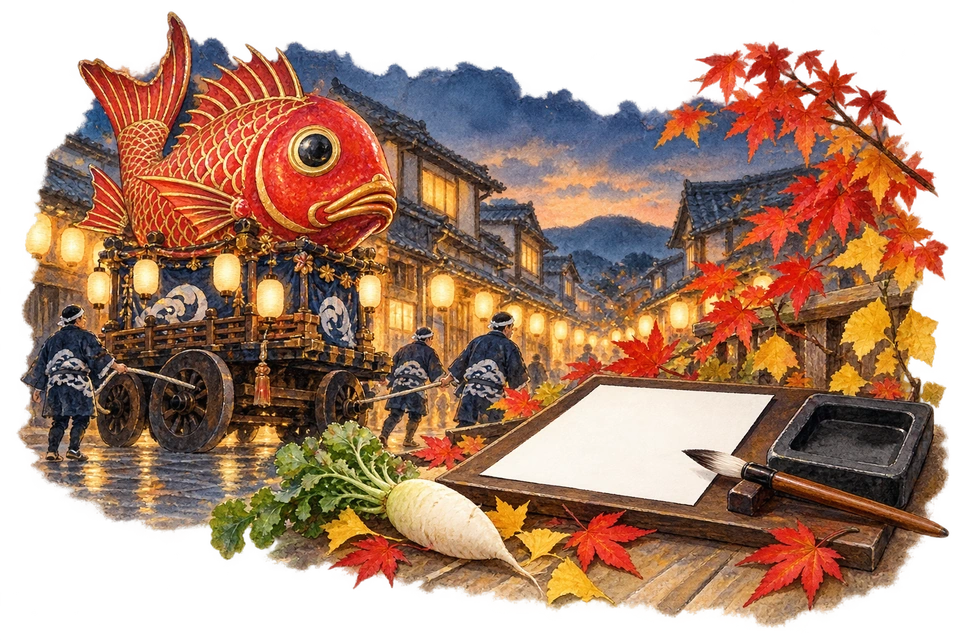
11月2日の夜、佐賀県唐津市では「唐津くんち」が宵曳山で幕を開けます。語呂合わせで「書道の日」でもあり、暦の上ではもみじや蔦が色づくころです。祭り・文字・紅葉と、外国の人に話せる種が三つそろった一日です。
今日は何の日
-
1980年に国の重要無形民俗文化財唐津くんち(11月2日〜4日)Karatsu Kunchi Festival
Karatsu Kunchi is the autumn festival of Karatsu Shrine in Saga Prefecture. It starts on the evening of November 2nd, when 14 huge floats, including a red lion head and a sea bream, are pulled through the old castle town. The oldest float is said to have been made by someone inspired by Kyoto's Gion Festival. In 2016, UNESCO listed it as Intangible Cultural Heritage along with other float festivals.
唐津くんちは、佐賀県の唐津神社の秋祭りです。11月2日の夜に始まり、赤い獅子や鯛の形をした14台の大きな曳山が、旧城下町を引かれていきます。いちばん古い曳山は、京都の祇園祭を見た人が作ったと伝えられています。2016年には、ほかの山車の祭りとともに、ユネスコの無形文化遺産に登録されました。
辞典でくわしく › -
書道の日・習字の日Calligraphy Day
November 2nd is Calligraphy Day, set by a foundation that runs calligraphy classes. The date is a pun: 11-02 can be read as ii moji, which means "good letters." The idea is to get people to enjoy writing by hand again. Most Japanese people practiced with a brush at elementary school, so many people remember getting ink on their clothes.
11月2日は「書道の日・習字の日」で、習字の教室を運営する財団が定めました。日付は語呂合わせで、11と02を「いい文字」と読みます。手で文字を書く楽しさを、もう一度味わってもらおうという日です。日本人の多くは小学校で筆を使って習字をしたので、服に墨をつけてしまった思い出のある人もたくさんいます。
辞典でくわしく › -
七十二候「楓蔦黄(もみじつたきばむ)」Maples and Ivy Turn Yellow
In the old calendar, the year is split into 72 short seasons of about five days each. The one that starts around today is called momiji tsuta kibamu, which means "maples and ivy turn yellow." It's the last of the autumn ones. Right after it comes Ritto, the start of winter on the traditional calendar.
昔の暦では、1年を約5日ずつの72の季節に分けます。今日ごろから始まるのは「楓蔦黄(もみじつたきばむ)」で、もみじや蔦が色づくという意味です。秋の候の最後にあたり、このあとすぐに、暦の上での冬の始まり「立冬」が来ます。
辞典でくわしく ›
今日の三択クイズ
11月2日が「書道の日」になったのは、11と02を何と読む語呂合わせから?
正解は「いい文字」です。11を「いい」、02を「もじ」と読みます。日本の記念日には、このような数字の語呂合わせがとても多く、外国の人に説明すると面白がられます。英語なら「In Japanese, 11-02 sounds like "good letters."」と説明できます。
外国人に聞かれたら
Do kids in Japan still learn calligraphy at school?
日本の子どもは、いまでも学校で書道を習うの?
Yes, they do. It's part of Japanese class, and kids usually start using a brush and ink in the third grade of elementary school. In January, many of them write a word or a short phrase with a brush as a New Year's activity. Some kids also go to private calligraphy classes after school, but plenty of adults admit they haven't touched a brush since they were kids.
はい、習います。国語の授業の一部で、ふつうは小学3年生から筆と墨を使い始めます。1月には、新年の行事として、言葉や短い句を筆で書く子どもがたくさんいます。放課後に書道教室に通う子もいますが、子どものころ以来、筆を持っていないという大人もたくさんいます。
今日のひとこと英語
The festival floats are pulled through town by hand.
祭りの山車は、人の手で引いて町を回ります。
山車・曳山は英語で float と言います。「引く」は pull で、draw でも通じますが、話し言葉では pull が自然です。「担ぐ」神輿(portable shrine)とは動詞が違うので、carry と区別して使い分けましょう。
今日の一文
In early November, many towns in Japan hold autumn festivals, and the leaves are just starting to turn. It's also a good time to try writing a word with a brush.
11月の初め、日本では多くの町で秋祭りが開かれ、木の葉が色づき始めます。筆で一文字書いてみるのにも、ちょうどいい季節です。
今日の読みもの
今日に関係する項目
- 年中行事必修 祭りmatsuria local festival 観光イベントではなく、神社の行事。神輿の中には神様が乗っている。
- 伝統芸能標準 書道shodoJapanese calligraphy 小学校で必ず習う。一度書いたら直せない、という一点がすべてを決める。
- 年中行事標準 書き初めkakizomethe first calligraphy of the year 新年に筆で今年の抱負を書く。小学校の冬休みの宿題として、多くの日本人が経験する。
- 季節必修 紅葉koyoautumn leaves, and going to look at them 「紅葉狩り」という言葉がある。狩らないのに、なぜ狩りなのか。
- 食べもの標準 おでんodena winter stew of fish cakes, daikon and eggs コンビニのレジ横で湯気を上げるあれ。中に何が入っているか、よく聞かれる。
- 神道標準 祇園祭Gion Matsurithe month-long Kyoto festival that began as a rite against plague 始まりは869年、疫病を鎮めるための祈り。山鉾はその後に大きくなった。