2026年10月26日(月)(バックナンバー)
今日の日本文化
柿ときしめんと初霜の日
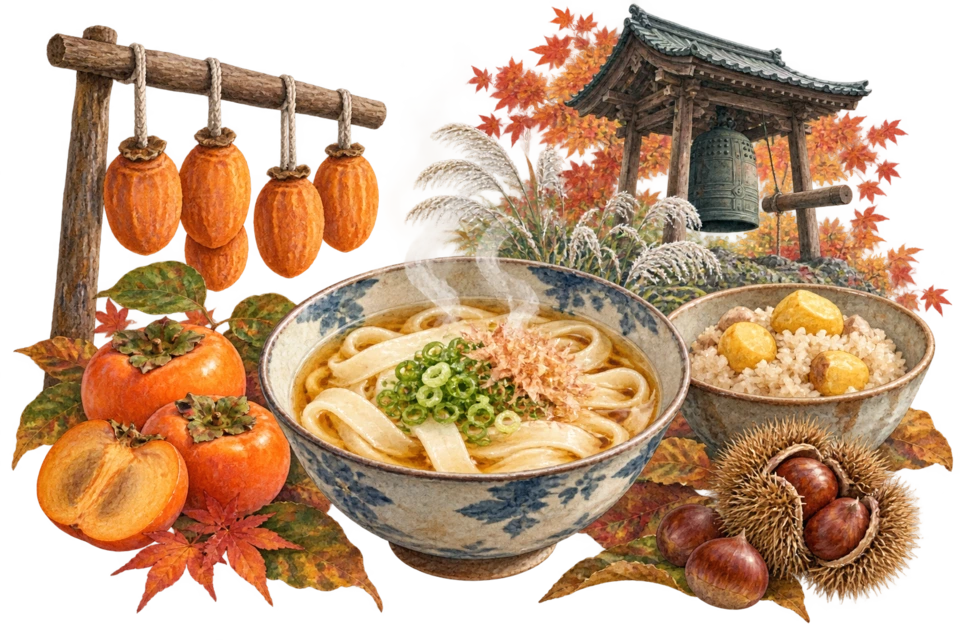
10月26日は、正岡子規の有名な句にちなむ「柿の日」です。名古屋の平たい麺をたたえる「きしめんの日」でもあり、暦の上では、初めての霜が降りるころとされる七十二候「霜始降」にあたります。秋の果物と温かい麺、そして冬の入り口がそろう一日です。
今日は何の日
-
2005年制定柿の日Persimmon Day
This day was set up in 2005 by the persimmon section of a national group of fruit growers. It comes from a famous haiku by Masaoka Shiki, written on his trip to Nara in 1895: "Eating a persimmon, I hear the bell of Horyuji ring." October 26th is linked to that trip, and late October is also when persimmons are at their best.
この日は、果樹の生産者の全国団体の柿の部会が、2005年に定めました。由来は、正岡子規が1895年の奈良の旅で詠んだ有名な句「柿くへば鐘が鳴るなり法隆寺」です。10月26日はこの旅にちなむ日で、10月の終わりは柿がおいしい時期でもあります。
辞典でくわしく › -
きしめんの日Kishimen Noodle Day
Kishimen are flat, wide wheat noodles, a local specialty of Nagoya. This day was set up by a noodle makers' group in Aichi Prefecture. The date is a word game: 26 can be read as "tsu-ru," like tsuru-tsuru, the Japanese sound for smooth, slippery noodles. Nobody is sure where the name kishimen comes from, and there are several theories.
きしめんは、平たくて幅の広い小麦の麺で、名古屋の名物です。この日は、愛知県の製麺業者の組合が定めました。日付は語呂合わせで、26を「つ(2)る(6)」と読み、麺のつるつるした感じにかけています。「きしめん」という名前の由来ははっきりせず、いくつかの説があります。
辞典でくわしく › -
七十二候「霜始降(しもはじめてふる)」First Frost Falls
The old calendar splits the year into 72 short seasons of about five days each. From around October 23rd to 27th is "First Frost Falls." In the mountains and in the north, the first frost of the year starts to appear on the fields. In big cities like Tokyo, though, the first frost usually comes much later, around December.
昔の暦では、1年を5日ほどずつの72の季節に分けます。10月23日ごろから27日ごろまでが「霜始降」で、山や北の地方では、その年の初めての霜が畑に降り始めます。ただ、東京のような大都市では、初霜はもっと遅く、12月ごろになります。
辞典でくわしく ›
今日の三択クイズ
正岡子規の句「柿くへば鐘が鳴るなり◯◯◯」。◯◯◯に入るお寺は?
正解は「法隆寺」です。子規が1895年に奈良を旅したときに詠んだ句で、柿を食べていると法隆寺の鐘が鳴った、という情景を描いています。10月26日の「柿の日」は、この句にちなんで定められました。外国人に話すなら、"Eating a persimmon, I hear the bell of Horyuji ring." と訳すと伝わります。
外国人に聞かれたら
Why do people hang rows of orange fruit outside their houses in autumn?
秋になると、家の外にオレンジ色の果物をずらっと吊るしているのはなぜ?
Those are persimmons being dried. Some kinds of persimmon make your mouth feel so dry and rough that you can't really eat them fresh. But if you peel them and hang them in the cold autumn air for a few weeks, that dry feeling goes away and they become very sweet. We call them hoshigaki, or dried persimmons. You'll see them in the countryside more than in big cities.
あれは柿を干しているところです。柿の中には渋みが強く、口の中がざらざらと乾くような感じがして、そのままではとても食べられない種類があります。でも皮をむいて、秋の冷たい空気の中に何週間か吊るしておくと、渋みが消えて、とても甘くなるんです。干し柿と呼んでいます。大都市より、田舎のほうでよく見かけます。
今日のひとこと英語
Persimmons are in season now. Want to try one?
いま柿が旬なんです。一つ食べてみる?
柿は英語で persimmon で、「パーシモン」と平らに読まず、2つ目の音節 -sim- を強く読みます。また、柿の「渋い」は bitter(苦い)とは違い、口の中が乾いてきゅっとなる感じなので、英語では astringent と言います。日常会話なら it makes your mouth feel dry と説明するほうが伝わります。
今日の一文
October 26th is Persimmon Day, named after a famous haiku by Masaoka Shiki. It's also Kishimen Noodle Day, and in the old calendar it's the time when the first frost falls.
10月26日は、正岡子規の有名な句にちなむ「柿の日」です。「きしめんの日」でもあり、昔の暦では初めての霜が降りるころにあたります。
今日の読みもの
今日に関係する項目
- 食べもの標準 柿kakiJapanese persimmon 秋の庭先のオレンジ色。甘い柿と渋い柿の違い、英語で言える?
- 伝統芸能必修 俳句haikuthe seventeen-syllable poem 五七五だけではない。伝統的な俳句には季語が欠かせない。
- 食べもの必修 そばとうどんsoba and udonthe two traditional Japanese noodles 東はそば、西はうどん。つゆの色を見れば、どこの店か分かる。
- 名所標準 名古屋nagoyathe industrial city between Tokyo and Osaka, with its own food 日本の製造業の中心地。食べ物も八丁味噌を軸にした独自の系統。
- 年中行事標準 二十四節気nijushi sekkithe twenty-four solar terms of the traditional calendar 立春、夏至、冬至。太陽の位置で一年を二十四に割った、季節のものさし。
- 季節必修 紅葉koyoautumn leaves, and going to look at them 「紅葉狩り」という言葉がある。狩らないのに、なぜ狩りなのか。