書き初めかきぞめ
kakizome
the first calligraphy of the year
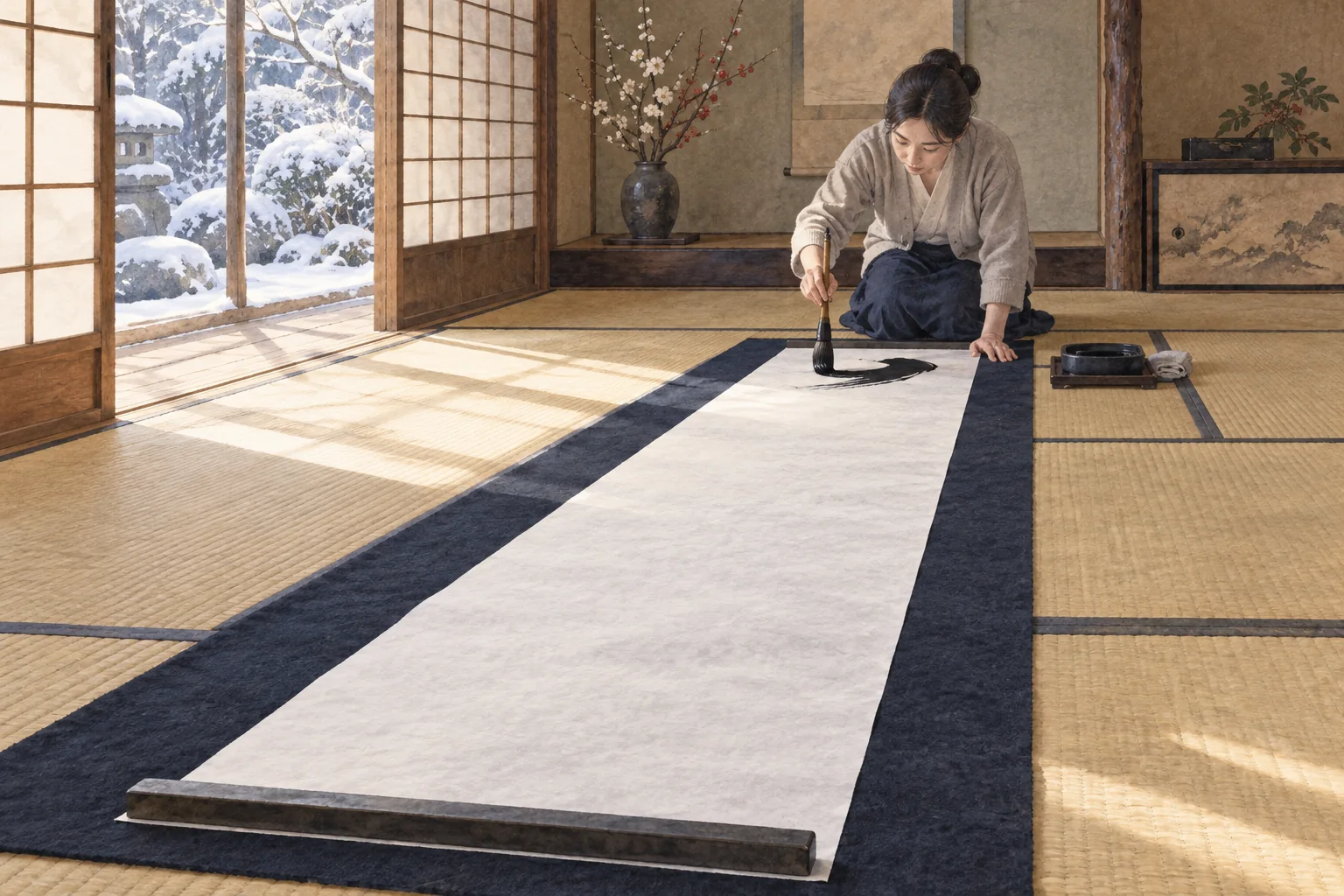
新年に筆で今年の抱負を書く。小学校の冬休みの宿題として、多くの日本人が経験する。
一言で言うと
これだけ覚えれば最低限伝わる一文
Kakizome is the first calligraphy of the year, written with a brush in early January as a wish or resolution.
書き初めとは、一月の初めに筆で願いや抱負を書く、その年最初の書のことです。
30秒で説明する
外国人に説明するときの標準サイズ
Kakizome means first writing. Traditionally on January 2nd, people grind ink, take up a brush and write a few characters on a long sheet of paper: a lucky phrase, a poem, or a word for the year such as hope or effort. Many Japanese children do it as winter homework, and schools hang the results in the hallway. The papers were once burned at a mid-January bonfire, with high-flying ashes meaning better handwriting to come.
書き初めは「最初の書」という意味です。伝統的には一月二日に、墨をすり、筆を取り、長い紙に数文字を書きます。縁起のよい言葉、詩、あるいは「希望」「努力」のようなその年の言葉です。日本の子どもの多くが冬休みの宿題としてこれをし、学校は作品を廊下に貼り出します。書いた紙はかつて一月半ばの火祭りで燃やし、灰が高く舞えば字が上達すると言われました。
スピーチ・英作文
通訳案内士の二次口述・大学入試の自由英作文に
Among the many first-of-the-year customs in Japan, kakizome, the first calligraphy, is the one most people can actually remember doing. On or around January 2nd, you spread a long strip of paper on the floor, grind an ink stick on a stone or open a bottle, and write a phrase with a brush in one careful pass.
Adults might choose a classical poem or a four-character idiom about renewal; children write simple words like dream or friend. The custom is said to have begun in the imperial court and spread to ordinary households through the temple schools of the Edo period.
Today it survives mainly through schools, which assign it as winter vacation homework and display every student's sheet in the corridor when classes resume, and through large public events where hundreds or even thousands of people write at once in a big hall. In some areas the finished sheets are burned at the mid-January fire festival, and ashes that rise high promise better handwriting. I still remember the smell of the ink.
日本にある数多くの年始の習慣の中で、書き初めは実際にやった記憶が多くの人にある習慣です。一月二日かそのころに、床に長い紙を広げ、硯で墨をするか墨汁の瓶を開け、筆で一気に言葉を書きます。
大人は古典の詩や新しい始まりについての四字熟語を選び、子どもは「ゆめ」「ともだち」のような簡単な言葉を書きます。この習慣は宮中で始まり、江戸時代の寺子屋を通じてふつうの家庭に広まったと言われています。
今は主に学校を通じて続いていて、冬休みの宿題として出され、始業式のあとに全員の作品が廊下に貼られます。また大きな会場で何百人、ときに何千人もが一斉に書く公開行事もあります。書いた紙を一月半ばの火祭りで燃やし、灰が高く舞えば字が上達するとする地域もあります。私は今でも墨の匂いを覚えています。
こう聞かれたら
外国人から実際にされる質問と、その答え方。
What do people usually write?
何と書くのが普通ですか。
Something short and hopeful. Common choices are lucky words such as new spring, a four-character idiom about a fresh start, a line from a classical poem, or a single word that sets a goal for the year. Schools usually assign a phrase by grade, which is why a whole class ends up writing the same thing.
短く前向きな言葉です。「新春」のような縁起のよい言葉、新しい始まりを表す四字熟語、古典の詩の一節、その年の目標となる一語などがよく選ばれます。学校はたいてい学年ごとに課題の言葉を決めるので、クラス全員が同じ言葉を書くことになります。
Why January 2nd?
どうして1月2日なのですか。
Traditionally the 2nd was the day for beginning things: the first business, the first practice of an art, the first writing. The 1st was for rest and visits. Many families now do it whenever it fits during the holidays, and schools just want it done by the first day of term.
伝統的に二日は物事を始める日で、初売り、芸事の稽古始め、書き初めの日でした。一日は休みと挨拶回りの日です。今は多くの家庭が休みの間の都合のよいときにやり、学校は始業式までにできていればよいとしています。
Do I need real calligraphy skills?
書道の心得がないとだめですか。
No. The point is to write with care and intention at the start of the year, not to produce art. Beginners are welcome at public events, and a bold character, even a slightly shaky one, is usually valued over a timid, tidy one. Stores sell kakizome sets with paper, ink and a brush for a few hundred yen.
要りません。大事なのは年の初めに心をこめて丁寧に書くことで、芸術作品を作ることではありません。公開の行事では初心者も歓迎され、多少揺れていても思い切りのよい字のほうが、縮こまった整った字より好まれます。店では紙と墨と筆のセットが数百円で売られています。
そのまま使えるフレーズ
- We do our first calligraphy of the year on the second.二日に書き初めをします。
- I wrote the word for hope this year.今年は「希望」と書きました。
- It's homework for the winter holidays.冬休みの宿題です。
- Grind the ink slowly; it's part of the ritual.墨はゆっくりすってください。それも儀式の一部です。
- The school hangs everyone's sheets in the hallway.学校は全員の作品を廊下に貼ります。
説明に使う語句
- calligraphy書道・習字
- brush筆
- ink stick / ink stone墨/硯
- resolution抱負
- four-character idiom四字熟語
動画で見る
YouTube より豆知識
書き初めは「吉書」とも呼ばれ、宮中や武家の年始の儀式に由来し、江戸時代に寺子屋で広まって庶民の習慣になったとされます。一月二日を「仕事始め」「稽古始め」の日とする習わしに合わせて行われ、恵方に向かって書くという言い伝えもあります。書いた紙は一月十五日ごろの「どんど焼き」や「左義長」と呼ばれる火祭りで正月飾りとともに燃やし、炎や灰が高く上がると字が上達するとされました。小学校では冬休みの宿題として書き初めを課すところが多く、市や県の書き初め展に出品されます。東京の日本武道館で毎年開かれる大会は数千人が一斉に書く光景で知られています。半紙ではなく縦長の「書き初め用紙」を使うのがふつうで、店頭には年末から専用の紙や墨汁のセットが並びます。
