どんど焼きどんどやき
dondo yaki
the mid-January bonfire for New Year decorations
正月飾りを燃やす火祭り。書き初めの灰が高く舞えば字が上達する、と言われる。
一言で言うと
これだけ覚えれば最低限伝わる一文
Dondo yaki is a mid-January bonfire where New Year decorations are burned to send the year's deity off.
どんど焼きとは、一月半ばに正月飾りを燃やして年神を送る火祭りです。
30秒で説明する
外国人に説明するときの標準サイズ
Around January 15th, neighborhoods and shrines build a tall cone of bamboo and straw, pile in the pine and rope decorations taken down from doorways, and set it alight. People roast rice cakes over the embers and eat them, which is said to keep you healthy for the year. Children's first calligraphy of the year is often burned too. The name and the details vary widely from place to place.
一月十五日ごろ、地域や神社が竹と藁で高い円錐を組み、各家の戸口から外した松飾りやしめ縄を積み上げて火をつけます。人々はおきで餅を焼いて食べ、そうすると一年健康でいられると言われます。子どもの書き初めも一緒に燃やすことが多いです。名前も細かな作法も土地によって大きく違います。
スピーチ・英作文
通訳案内士の二次口述・大学入試の自由英作文に
Japanese New Year decorations are not simply thrown out with the trash. Around the fifteenth of January, communities gather what came down from their doorways, the pine arrangements and the straw ropes, and burn them together at a bonfire called dondo yaki in much of the country.
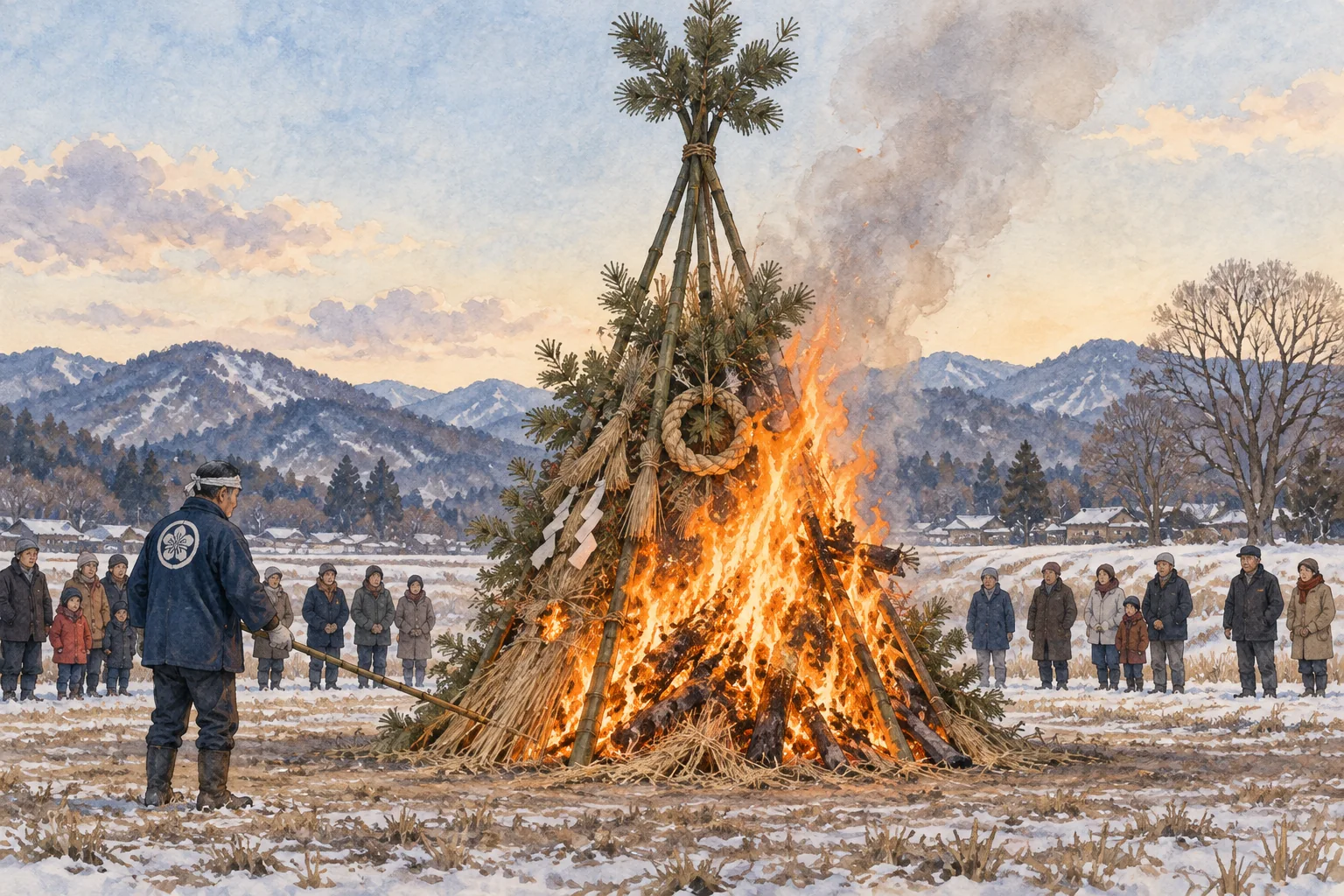
A frame of green bamboo and straw is built in a rice field, a riverbed or a shrine yard, sometimes several meters tall, and lit in the morning or at dusk. The bamboo cracks loudly as it burns. The idea is that the deity who visited for the New Year goes home in the smoke, and the fire purifies the year ahead.
People skewer rice cakes on long branches and toast them in the embers, and eating one is said to keep you from getting sick. Children throw in the calligraphy they wrote at New Year, and if the burning paper rises high, their handwriting is supposed to improve. The names differ by region, which is worth knowing before you ask about it.
日本の正月飾りは、ふつうのごみとしては捨てません。一月十五日ごろ、地域の人が各家の戸口から下ろしたもの、松飾りやしめ縄を集め、多くの地方で「どんど焼き」と呼ばれる火祭りでまとめて燃やします。
田んぼや河原や神社の境内に青竹と藁で骨組みを立て、ときに数メートルの高さになり、朝か夕暮れに火を入れます。竹が燃えて大きな音で爆ぜます。正月に来ていた年神が煙とともに帰り、火がこれからの一年を清めるという考えです。
長い枝に餅を刺しておきで焼き、それを食べると病気をしないと言われます。子どもは正月に書いた書き初めを投げ入れ、燃えた紙が高く舞い上がれば字が上達するとされます。呼び名は地域で違うので、尋ねる前に知っておくとよいでしょう。
こう聞かれたら
外国人から実際にされる質問と、その答え方。
Is it called dondo yaki everywhere?
どこでも「どんど焼き」と呼ぶのですか。
No, and this is one of the clearest examples of regional variation in Japan. Sagicho is another widely used name, and there are many local names besides. If you ask using a different one, people will usually know what you mean, though they may tell you their own name for it.
違います。これは日本の地域差がはっきり出る例の一つです。左義長という呼び名も広く使われ、ほかにも土地ごとの呼び名が数多くあります。違う名で尋ねてもたいてい通じますが、地元の呼び名を教えてくれるかもしれません。
Can I bring my own decorations to burn?
自分の家の飾りを持って行って焼いてもらえますか。
Usually yes if you live in the area, but check what they accept. Many places now refuse plastic parts, wire and anything that gives off fumes, so you have to strip the decoration first. Shrines also accept old charms and arrows at the same fire.
その地域に住んでいればたいてい持ち込めますが、受け付けるものを確認してください。今はプラスチックの部品や針金、煙の出るものを断る場所が多く、飾りをほどいてから持っていく必要があります。神社では古いお守りや破魔矢も同じ火で受けてくれます。
Why the mid-month rather than New Year's Day?
どうして元日ではなく月の半ばなのですか。
The fifteenth was the first full moon of the year on the old lunar calendar and was treated as a New Year in its own right, sometimes called Little New Year. Many customs that look oddly late in January are tied to that older reckoning.
旧暦では十五日が年が明けて最初の満月で、それ自体が正月として扱われ、小正月と呼ばれました。一月の半ばという中途半端に見える時期の習慣の多くは、この古い数え方と結びついています。
そのまま使えるフレーズ
- We burn the New Year decorations in mid-January.正月飾りは一月半ばに燃やします。
- Toast a rice cake over the embers.おきで餅を焼いてください。
- If the ashes fly high, your handwriting improves.灰が高く舞うと字が上手になると言われます。
- Take the plastic parts off before you bring it.持ってくる前にプラスチックの部分を外してください。
- It has a different name where I'm from.私の地元では別の名前で呼びます。
説明に使う語句
- bonfire焚き火・火祭り
- New Year decorations正月飾り
- embersおき・残り火
- purify清める
- lunar calendar旧暦
動画で見る
YouTube より豆知識
どんど焼きは正月飾りや書き初めを燃やす小正月の火祭りで、呼び名は地域によって大きく異なり、左義長、とんど、さいと焼き、道祖神祭りなど多くの名があります。青竹を組むのは、燃えるときに大きな音で爆ぜることが邪気を払うと考えられたためと説明されます。火で焼いた餅を食べると健康でいられる、書き初めの紙が高く舞い上がると字が上達する、といった言い伝えが各地に伝わります。神社では古いお守り、破魔矢、だるまをこの火で納めることが多く、年の区切りの意味も持ちます。近年は住宅が近いことや大気汚染への配慮から、規模を縮小したり、プラスチックや金具のついた飾りの持ち込みを断ったりする地域が増えています。
