注連縄しめなわ
shimenawa
the sacred rope
縄の向こうは神の領域。だから縄を張るだけで境界になる。
一言で言うと
これだけ覚えれば最低限伝わる一文
A shimenawa is a twisted rice-straw rope that marks off a sacred space.
注連縄とは、神聖な場所を区切るために張られた藁をよった縄です。
30秒で説明する
外国人に説明するときの標準サイズ
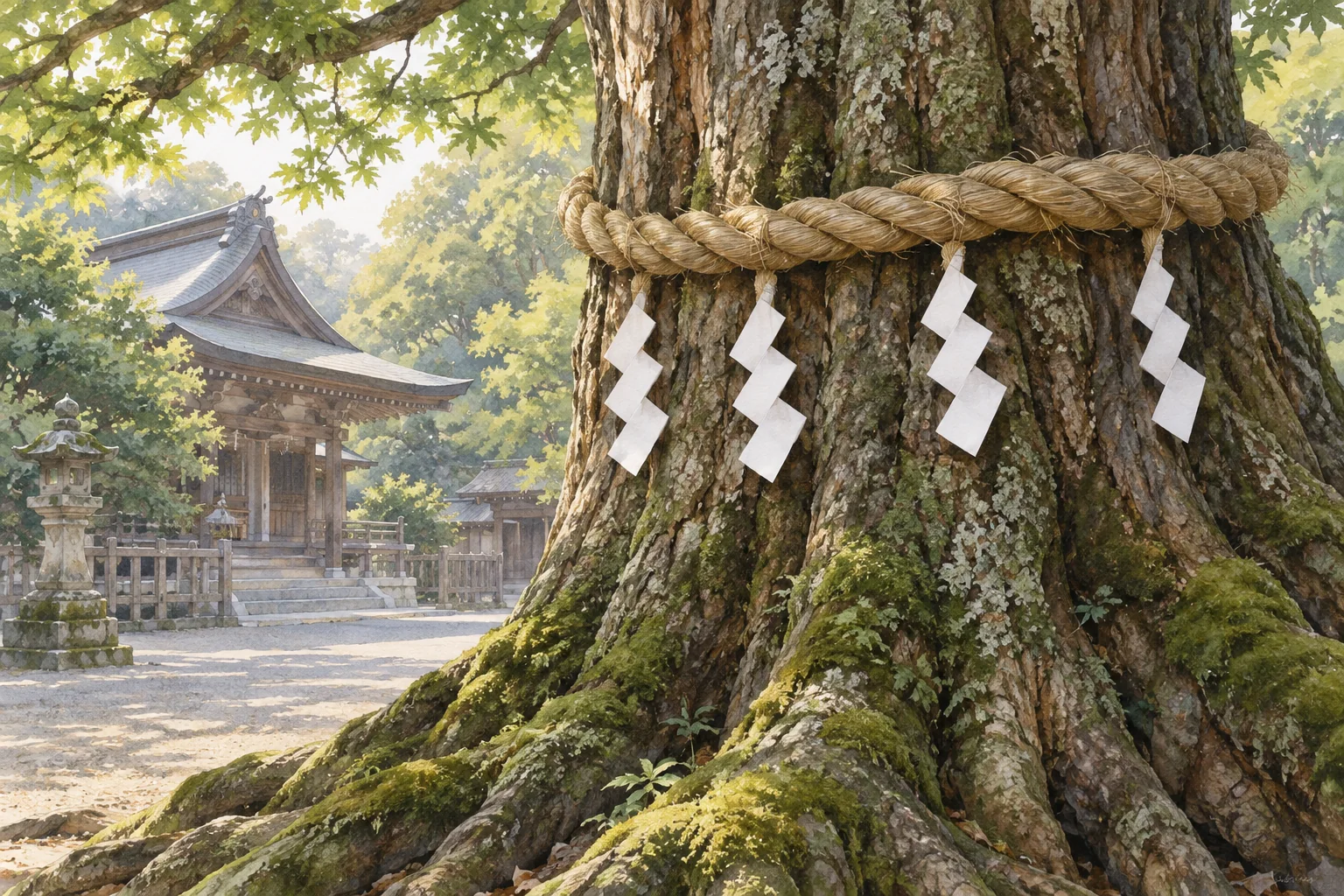
A shimenawa is a rope of twisted rice straw hung across a shrine gate, around a tree or rock, or above a household altar. It marks a boundary: what is inside is sacred, what is outside is ordinary. Zigzag strips of white paper usually hang from it. A tree or a stone with one around it is being treated as a dwelling place of a deity.
注連縄とは、稲藁をよった縄で、神社の門に渡したり、木や岩に巻いたり、神棚の上に掛けたりします。境を示すものです。内側は神聖で、外側は日常です。たいてい白い紙を折った紙垂が下がっています。注連縄を巻かれた木や岩は、神の宿る場所として扱われています。
スピーチ・英作文
通訳案内士の二次口述・大学入試の自由英作文に
A shimenawa is a rope made of twisted rice straw, and its job is to draw a line. Hang it across the gate of a shrine, tie it around a great tree or a rock by the road, stretch it above the small altar in a house, and everything on the inner side is marked as sacred while everything outside stays ordinary.
There is usually a row of folded white paper strips hanging from it, cut in a zigzag. What is striking is how little it takes: no wall, no door, just a rope, and the boundary is understood. You will see a rope around an old tree in the middle of a parking lot, or around a pair of rocks standing in the sea.
The most famous examples are enormous, several meters around, and are replaced by the local community in a scheduled ceremony. At New Year a small version is hung on the front door of an ordinary house.
注連縄は稲藁をよった縄で、その役目は線を引くことです。神社の門に渡し、大木や道端の岩に巻き、家の神棚の上に張る。すると内側はすべて神聖なものとして印づけられ、外側は日常のままです。
たいてい、白い紙を稲妻形に折った紙垂が並んで下がっています。印象的なのは、それがいかに少ない手立てで成り立っているかです。壁も扉もなく、ただ縄が一本あるだけで、境が了解される。
駐車場の真ん中の古木に巻かれた縄や、海に立つ二つの岩を結ぶ縄を見かけることがあります。最も名高いものは巨大で、太さは数メートルに及び、地元の人々が決められた儀式で掛け替えます。正月には、ふつうの家の玄関にも小さなものが掛けられます。
こう聞かれたら
外国人から実際にされる質問と、その答え方。
Can I touch it or walk under it?
触ったり、くぐったりしてもいいですか。
Walking under one at a shrine gate is exactly what it is there for. Touching is different: do not pull at it or hang anything on it, and do not climb a tree or rock that has one. Treat it as you would a fence marking private ground.
神社の門に渡されたものの下をくぐるのは、まさにそのためにあります。触れるのは別で、引っ張ったり物を掛けたりしないでください。注連縄のある木や岩に登るのも避けてください。私有地を示す柵と同じように扱ってください。
Why is there one on someone's front door in January?
どうして1月に家の玄関にあるのですか。
It marks the house as purified and ready to receive the New Year deity. It goes up before the new year and comes down after the first week or two, and many communities burn them together at a shrine in mid-January.
その家が清められ、年神を迎える用意ができていることを示すためです。年内に掛け、松の内が明けたころに外します。多くの地域では、1月の半ばに神社で一緒に焼く行事があります。
そのまま使えるフレーズ
- The rope marks a sacred boundary.あの縄は神聖な境を示します。
- The white paper strips hang from it.白い紙垂が下がっています。
- A tree with one is treated as sacred.縄の巻かれた木は神聖なものとして扱われます。
- Houses hang a small one at New Year.正月には家にも小さなものを飾ります。
説明に使う語句
- sacred rope注連縄
- boundary境
- rice straw稲藁
- paper streamer紙垂
動画で見る
YouTube より豆知識
注連縄は左よりにするのが一般的で、日常の縄とは逆の向きによることで、非日常の場であることを示すとされます。出雲大社の神楽殿の大注連縄は太さも重さも非常に大きく、数年ごとに地元で作り替えられます。三重県の夫婦岩を結ぶ注連縄も知られています。正月の玄関に掛ける「注連飾り」は、これを小型にして縁起物を添えたもので、地域ごとに形が異なります。相撲の横綱が締める綱も、同じ考え方によるものです。
