神社と寺の違いじんじゃとてらのちがい
jinja to tera no chigai
how to tell a Shinto shrine from a Buddhist temple
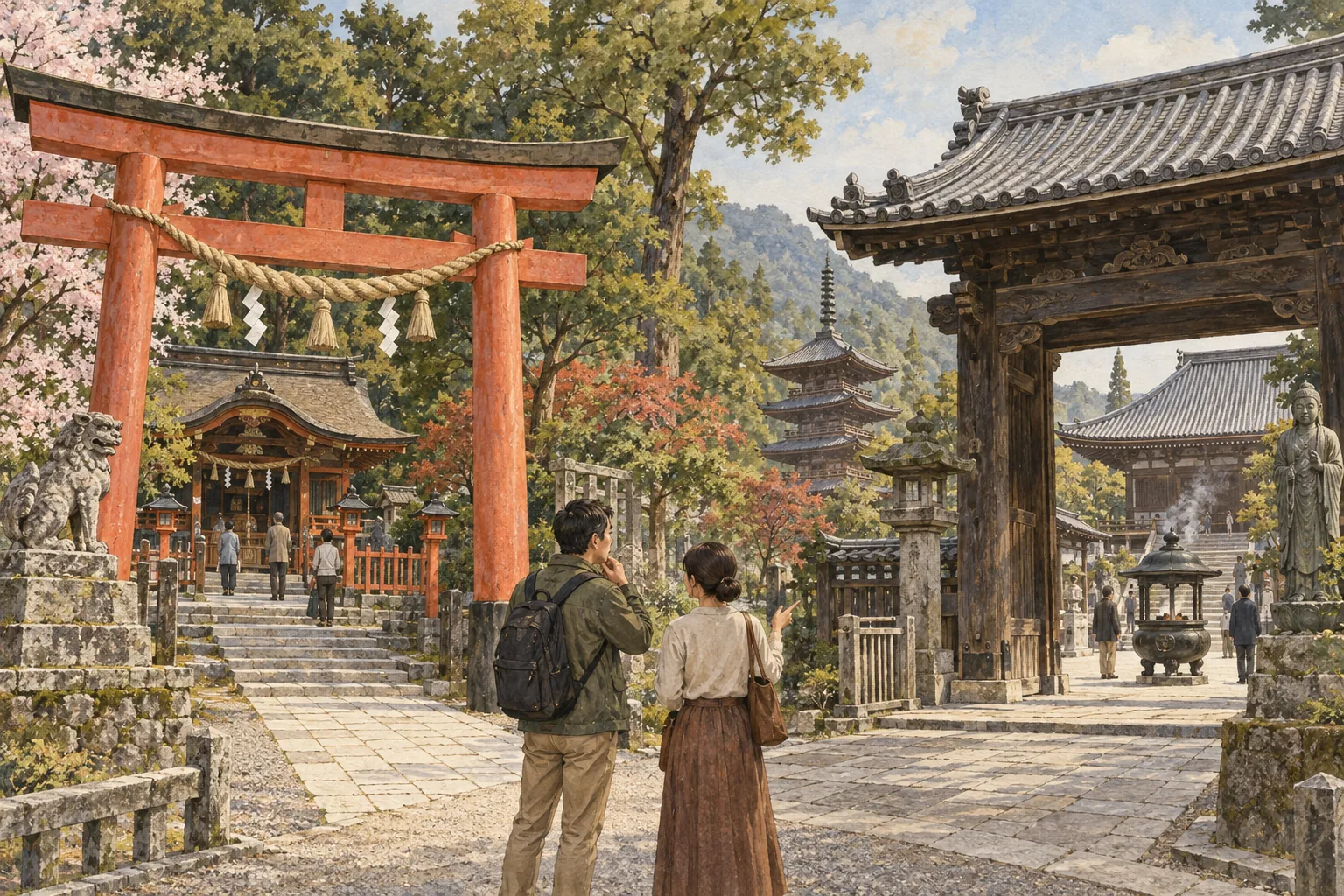
鳥居があれば神社、仏像があれば寺。見分け方を3つ言えれば、ガイドとして及第点。
一言で言うと
これだけ覚えれば最低限伝わる一文
Jinja to tera no chigai is the shrine-temple difference: shrines are Shinto with torii gates, temples Buddhist with Buddha statues.
神社と寺の違いとは、神社は神道で鳥居があり、お寺は仏教で仏像がある、という違いです。
30秒で説明する
外国人に説明するときの標準サイズ
A shrine is Shinto and a temple is Buddhist, and there are easy ways to tell them apart. A shrine has a torii gate, guardian animal statues, and you clap when you pray. A temple has a roofed gate, an incense burner, Buddha statues and often a graveyard, and you do not clap. Most Japanese people use both, for different occasions, without seeing a conflict.
神社は神道、お寺は仏教で、見分け方は簡単です。神社には鳥居と狛犬があり、参拝のとき拍手をします。お寺には屋根のある門、香炉、仏像があり、墓地を併設することも多く、拍手はしません。多くの日本人は場面に応じて両方を使い分け、そこに矛盾を感じていません。
スピーチ・英作文
通訳案内士の二次口述・大学入試の自由英作文に
Shrines and temples look similar to a visitor, but they belong to two different religions, and there are three quick ways to tell them apart. First, the entrance. A shrine has a torii, two posts with two crossbeams and no door. A temple has a solid roofed gate, often with fierce guardian statues inside it.
Second, what you find in the grounds. A shrine has a pair of stone guardian animals and a hall you cannot usually enter. A temple has an incense burner, Buddha statues, and very often a graveyard, because most funerals here are Buddhist.
Third, how you pray. At a shrine you clap twice. At a temple you never clap; you put your hands together in silence. The reason they feel so similar is that for over a thousand years they were mixed together, and the two were only separated by law in 1868.
神社とお寺は外国の方には似て見えますが、別の宗教のもので、見分け方は三つあります。まず入口。神社には鳥居があり、2本の柱に2本の横木、扉はありません。お寺には屋根のあるしっかりした門があり、内側に怖い顔の守護像が立っていることが多いです。
次に境内にあるもの。神社には一対の狛犬と、ふつう入れない社殿があります。お寺には香炉と仏像があり、たいてい墓地があります。日本では葬儀の多くが仏式だからです。三つめは参拝の仕方。
神社では二回拍手します。お寺では絶対に拍手せず、静かに手を合わせます。両者がこれほど似て感じられるのは、千年以上にわたって混じり合っていたからで、法律で分けられたのは1868年のことです。
こう聞かれたら
外国人から実際にされる質問と、その答え方。
Why do Japanese people use both?
どうして日本人は両方を使い分けるのですか。
Because the two traditions took different roles. Shinto covers beginnings and this-world events such as New Year, births and weddings; Buddhism covers death and the ancestors. Using both is not a contradiction here.
二つの伝統が別々の役割を担ってきたからです。神道は正月・誕生・結婚といった始まりと現世の出来事、仏教は死と先祖を扱います。両方使うことは日本では矛盾になりません。
What are those stone animals at the gate?
門のところにある石の動物は何ですか。
Komainu, a pair of guardians. One has its mouth open and the other closed, representing the first and last sounds, that is, beginning and end. Inari shrines have foxes instead.
狛犬という一対の守護獣です。一方は口を開け、もう一方は閉じており、最初の音と最後の音、つまり始まりと終わりを表します。稲荷神社では狐になります。
Is it true they used to be in the same place?
もとは同じ場所にあったというのは本当ですか。
Yes. For over a thousand years shrines and temples shared grounds and clergy, a system called shinbutsu shugo. The Meiji government ordered them separated in 1868, and a great deal of Buddhist art was destroyed in the process.
本当です。千年以上にわたり、神社と寺は境内も聖職者も共有していました。これを神仏習合といいます。1868年に明治政府が分離を命じ、その過程で多くの仏教美術が破壊されました。
誤解されやすい
MYTHJapanese people follow either Shinto or Buddhism, and have to choose.
日本人は神道か仏教のどちらかを選んで信仰していると思われがちです。
FACTMost people do not choose. A typical person visits a shrine at New Year, has a Buddhist funeral, and may have a Christian-style wedding, and sees no contradiction in any of it.
多くの人は、どちらかを選んではいません。正月は神社、葬式は仏教、結婚式はキリスト教式ということが普通にあり、そこに矛盾を感じていません。
そのまま使えるフレーズ
- If there's a torii, it's a shrine.鳥居があれば神社です。
- Temples have Buddha statues and usually a graveyard.お寺には仏像があり、たいてい墓地もあります。
- You clap at a shrine but never at a temple.神社では拍手しますが、お寺ではしません。
- Most funerals here are Buddhist; weddings may be Shinto or Christian-style.葬儀の多くは仏式で、結婚式は神前式もキリスト教式もあります。
- They were only separated by law in 1868.法律で分けられたのは1868年のことです。
説明に使う語句
- shrine神社
- temple寺
- guardian statue狛犬、仁王像
- incense burner香炉
- coexist共存する
動画で見る
YouTube より豆知識
文化庁の宗教統計では、神道系と仏教系の信者数の合計が日本の総人口を大きく上回る。これは、氏子として神社に数えられ、檀家として寺にも数えられる人が多いためで、日本の宗教が「所属」より「行為」で成り立っていることを示す数字としてよく引かれる。神仏習合は奈良時代に始まり、寺の中に鎮守の社を置き、神社に神宮寺を建てるのが一般的だった。1868年の神仏判然令により分離が進み、廃仏毀釈と呼ばれる仏教施設の破壊が各地で起きた。狛犬の「阿吽(あうん)」は、口を開いた阿形と閉じた吽形の対で、サンスクリット語の最初と最後の音を表すとされる。
