お墓参りおはかまいり
ohakamairi
visiting the family grave
墓は「訪ねる場所」。掃除して、水をかけて、近況を報告して帰る。
一言で言うと
これだけ覚えれば最低限伝わる一文
Ohakamairi is visiting the family grave to clean it, make offerings and report how you are.
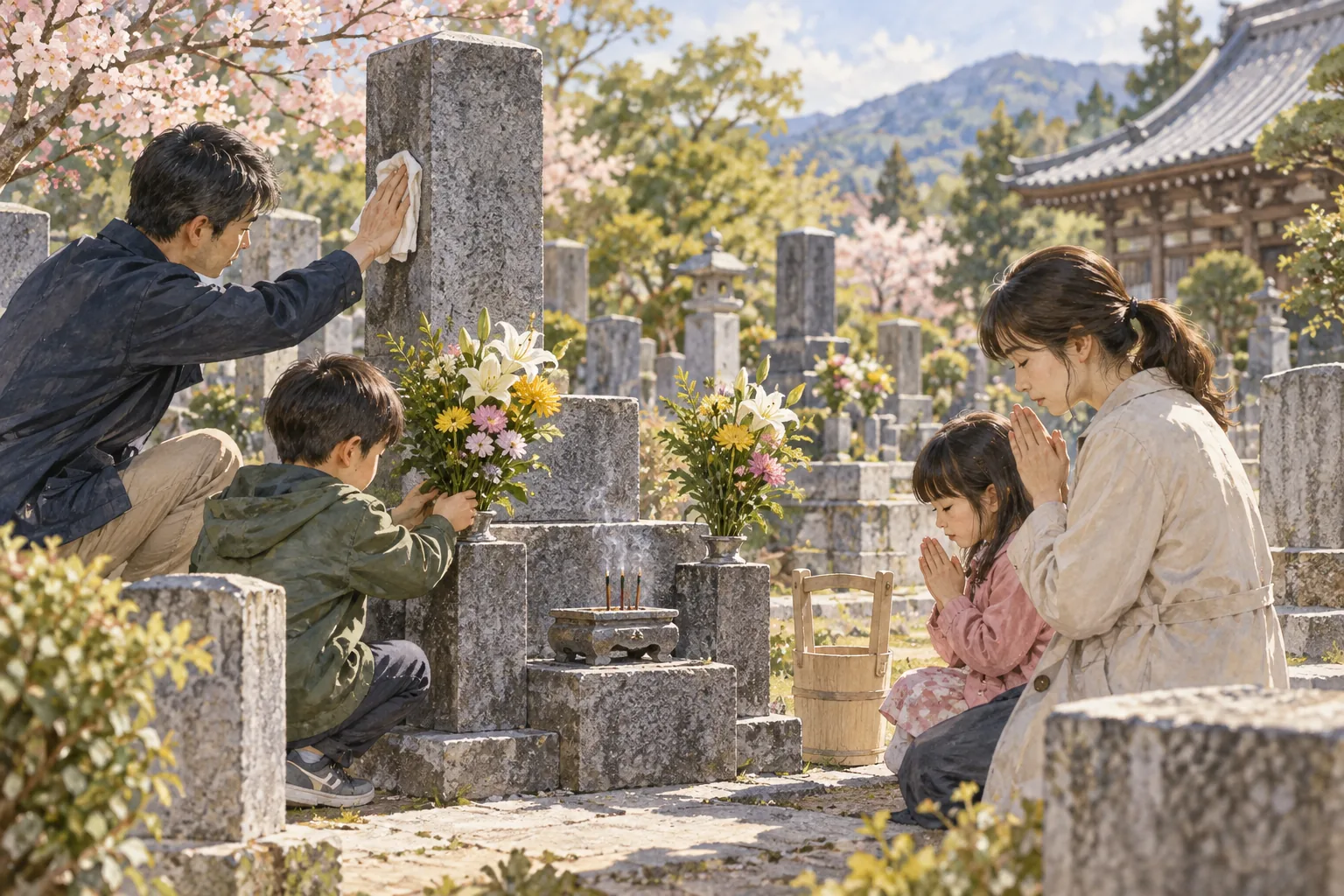
お墓参りとは、家の墓を訪ねて掃除をし、供え物をして、近況を報告することです。
30秒で説明する
外国人に説明するときの標準サイズ
Many Japanese families visit the family grave several times a year, especially at the spring and autumn equinoxes and at Obon. You clean the stone, pull the weeds, pour water over the monument, put flowers and incense in place, and put your hands together. Many families share one grave holding the ashes of several generations.
日本の多くの家庭は年に何度か家の墓を訪ねます。とくに春と秋の彼岸、そしてお盆です。石を掃除し、草を抜き、墓石に水をかけ、花と線香を供え、手を合わせます。多くの家では一つの墓に数世代の遺骨が納められています。
スピーチ・英作文
通訳案内士の二次口述・大学入試の自由英作文に
Visiting the family grave is one of the most ordinary religious acts in Japanese life, and many people do it regardless of what they believe. Families go several times a year: at the spring and autumn equinoxes, at Obon (in August in most regions), and on the anniversary of a death.
What you actually do is practical. You bring a bucket and a ladle, pull the weeds around the plot, scrub the stone, and pour water over the top of it. Then you put fresh flowers in the holders, light incense, and put your hands together for a moment.
Many people speak to the grave, silently or out loud, and tell the family what has happened since last time: a new job, a marriage, a grandchild. Many families share a single grave with the ashes of several generations in it, so you are not visiting one person. You are visiting the household.
お墓参りは、日本の生活のなかで最もありふれた宗教的行為のひとつで、信仰の有無にかかわらず多くの人がします。家族は年に何度か行きます。春と秋の彼岸、お盆(多くの地域では8月)、そして命日です。することは実際的です。
桶と柄杓を持っていき、区画の草を抜き、石を洗い、上から水をかけます。それから花立てに新しい花を挿し、線香をあげ、しばらく手を合わせます。心の中で、あるいは声に出して墓に語りかけ、前回からの出来事を報告する人も多くいます。
仕事が決まった、結婚した、孫が生まれた。多くの家では一つの墓に数世代の遺骨が入っているので、訪ねているのは一人ではありません。家そのものを訪ねているのです。
こう聞かれたら
外国人から実際にされる質問と、その答え方。
Why do you pour water over the gravestone?
どうして墓石に水をかけるのですか。
Partly to clean it, partly as an offering. Water is a basic offering in Buddhism, and in some interpretations it is said to relieve the thirst of the dead. Both explanations are given, and most people do not distinguish.
掃除のためでもあり、供え物でもあります。水は仏教の基本的な供物であり、死者の渇きを癒すという説明もされます。どちらの説明もされ、多くの人は区別していません。
Is a Japanese grave for one person?
日本の墓は一人のためのものですか。
Usually not. A family grave holds the cremated remains of many generations, and the family name is carved on the stone rather than an individual name. Individual names are carved on the side or on a separate stone tablet beside it.
ふつうは違います。家の墓には何世代もの遺骨が納められ、石には個人名ではなく家名が彫られます。個人の名前は側面の墓誌に刻まれます。
What happens if there is nobody left to visit?
お参りする人がいなくなったらどうなるのですか。
This is a growing problem. Graves with no one to tend them are called muenbaka, or abandoned graves, and with the falling birth rate many families are closing their graves and moving ashes to collective or tree burial sites.
これは深刻化している問題です。手入れする人のいない墓を無縁墓といいます。少子化のなかで墓じまいをし、遺骨を合葬墓や樹木葬へ移す家が増えています。
そのまま使えるフレーズ
- We visit the family grave at Obon.お盆にお墓参りに行きます。
- First we clean the stone and pull the weeds.まず石を洗って、草を抜きます。
- We pour water over the top of the monument.墓石の上から水をかけます。
- People tell the grave what's happened since last time.前回からの出来事を報告する人もいます。
- One grave holds several generations.一つの墓に何世代も入っています。
説明に使う語句
- grave墓
- incense線香
- offering供え物
- ashes / remains遺骨
- tend (a grave)墓を守る、手入れする
動画で見る
YouTube より豆知識
日本の火葬率は99%を超え、世界でも最も高い水準にある。墓は多くの場合「◯◯家之墓」と刻まれた家単位のもので、個人名と没年は側面の墓誌に記される。春分・秋分を中日とする各七日間を彼岸といい、この期間に墓参りをする習慣は日本独特で、インドや中国の仏教には見られない。近年は継承者の不在から「墓じまい」が増え、厚生労働省の統計では改葬(遺骨の移動)の件数が長期的に増加している。樹木葬・納骨堂・海洋散骨といった選択肢も広がっている。なお墓石に水をかける習慣については、宗派によって推奨しない場合もある。
