檀家制度だんかせいど
danka seido
why every family has a temple
家の宗派は、江戸時代の寺請制度にさかのぼることが多い。
一言で言うと
これだけ覚えれば最低限伝わる一文
Danka seido, the temple parishioner system, is an arrangement tying each household to one temple, begun as government registration.
檀家制度とは、家ごとに決まった寺に属する仕組みで、もとは行政の戸籍の制度として始まったものです。
30秒で説明する
外国人に説明するときの標準サイズ
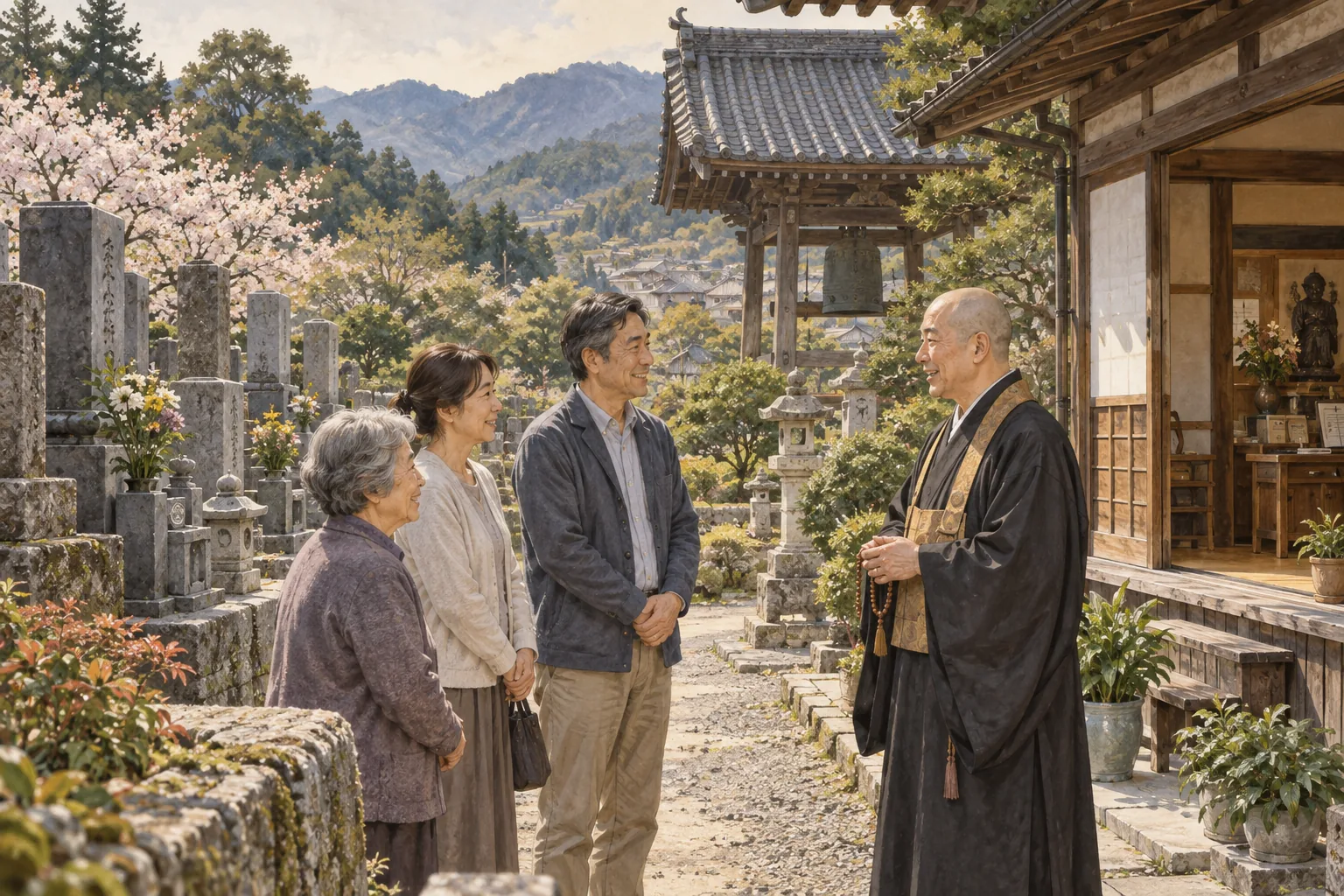
Many Japanese families are attached to one Buddhist temple, which handles their funerals and memorial services and often holds the family grave. The arrangement dates from the Edo period, when every household was required to register at a temple as proof it was not Christian. Belief had little to do with which temple you got.
日本では多くの家が一つの寺に属していて、その寺が葬儀と法事を行い、家の墓を預かっていることも多くあります。この仕組みは江戸時代にさかのぼり、当時はキリシタンでないことの証しとして、すべての家が寺に登録することを求められました。どの寺になるかに、信仰はほとんど関係しませんでした。
スピーチ・英作文
通訳案内士の二次口述・大学入試の自由英作文に
If you ask a Japanese person which Buddhist school their family belongs to, many will have to check, and some will say they only find out at a funeral. That is because the link between household and temple was not originally a matter of belief.
In the Edo period the government required every household to register at a Buddhist temple, partly as a census and partly as proof that the family was not Christian, which was banned. The temple issued the certificate, and in exchange the household supported the temple and used it for funerals.
That relationship, called danka, largely survived the end of the system and is why a family's school of Buddhism is usually inherited rather than chosen. It is now under strain. People move to cities, graves are far away, funeral costs and offerings for posthumous names cause friction, and a growing number of families formally leave the arrangement, a step that has its own name and its own paperwork.
日本人に家の宗派を尋ねると、多くは確かめないと答えられず、葬儀のときに初めて知ったと言う人もいます。家と寺の結びつきが、もともと信仰の問題ではなかったからです。江戸時代、幕府はすべての家に寺への登録を義務づけました。
戸籍の役割を兼ね、同時に、禁じられていたキリシタンでないことの証しとするためです。寺は証文を出し、その代わりに家は寺を支え、葬儀を寺に頼みました。この関係は檀家と呼ばれ、制度そのものが終わったあとも大きくは残りました。
家の宗派が選ばれるのではなく受け継がれるのは、そのためです。今この関係は揺らいでいます。人は都市へ移り、墓は遠くなり、葬儀の費用や戒名のお布施が摩擦を生み、正式にこの関係を解く家が増えています。それには名前も手続きもあります。
こう聞かれたら
外国人から実際にされる質問と、その答え方。
So most Japanese people are not really practicing Buddhists?
では日本人の多くは、実際には仏教を信仰していないのですか。
Most would not describe themselves as believers, yet most still have a Buddhist funeral and observe memorial services. The relationship is with the family's dead and with the temple that handles them, more than with doctrine.
自分を信者だとは言わない人がほとんどですが、それでも大半の人が仏式の葬儀を行い、法事を営みます。結びついているのは教義よりも、家の死者と、それを扱う寺との関係です。
Can a family change temples or leave?
家が寺を変えたり、離れたりできるのですか。
Yes. Formally leaving is called ridan, and it usually involves removing the family remains from the temple grounds, which requires the temple's cooperation and sometimes a payment. Disputes over this have become common enough to generate legal advice columns.
できます。正式に離れることを離檀と呼び、たいていは寺の墓地から遺骨を移す手続きを伴います。これには寺の協力が要り、費用を求められることもあります。この種の争いは、法律相談の記事が出るほどよくあることになりました。
誤解されやすい
MYTHA Japanese family's Buddhist school reflects what they believe.
日本の家の宗派はその家の信仰を表していると思われがちです。
FACTIt is usually inherited from an Edo-period registration requirement, and many families do not know which school they belong to until a funeral.
たいていは江戸時代の登録の義務から受け継がれたもので、葬儀まで自分の家の宗派を知らない人も多くいます。
そのまま使えるフレーズ
- Our family belongs to that temple.うちはあのお寺の檀家です。
- The school is inherited, not chosen.宗派は選ぶのではなく受け継ぐものです。
- The temple handles funerals and memorials.葬儀と法事はその寺が行います。
- Many families are leaving the arrangement.檀家を離れる家が増えています。
説明に使う語句
- parishioner household檀家
- denomination / school宗派
- family grave家の墓
- to inherit受け継ぐ
動画で見る
YouTube より豆知識
江戸幕府の寺請制度により、すべての家はいずれかの寺に登録し、寺請証文を受けることが義務づけられました。キリシタンの禁制と人別の把握が目的です。明治になって制度は廃止されましたが、寺と家の関係は慣習として残りました。近年は墓じまいや永代供養を選ぶ家が増え、地方の寺では檀家の減少が経営の問題になっています。宗派を知りたい場合は、家の仏壇の本尊や位牌、墓石の形から見当がつくことがあります。
