伏見稲荷大社ふしみいなりたいしゃ
Fushimi Inari Taisha
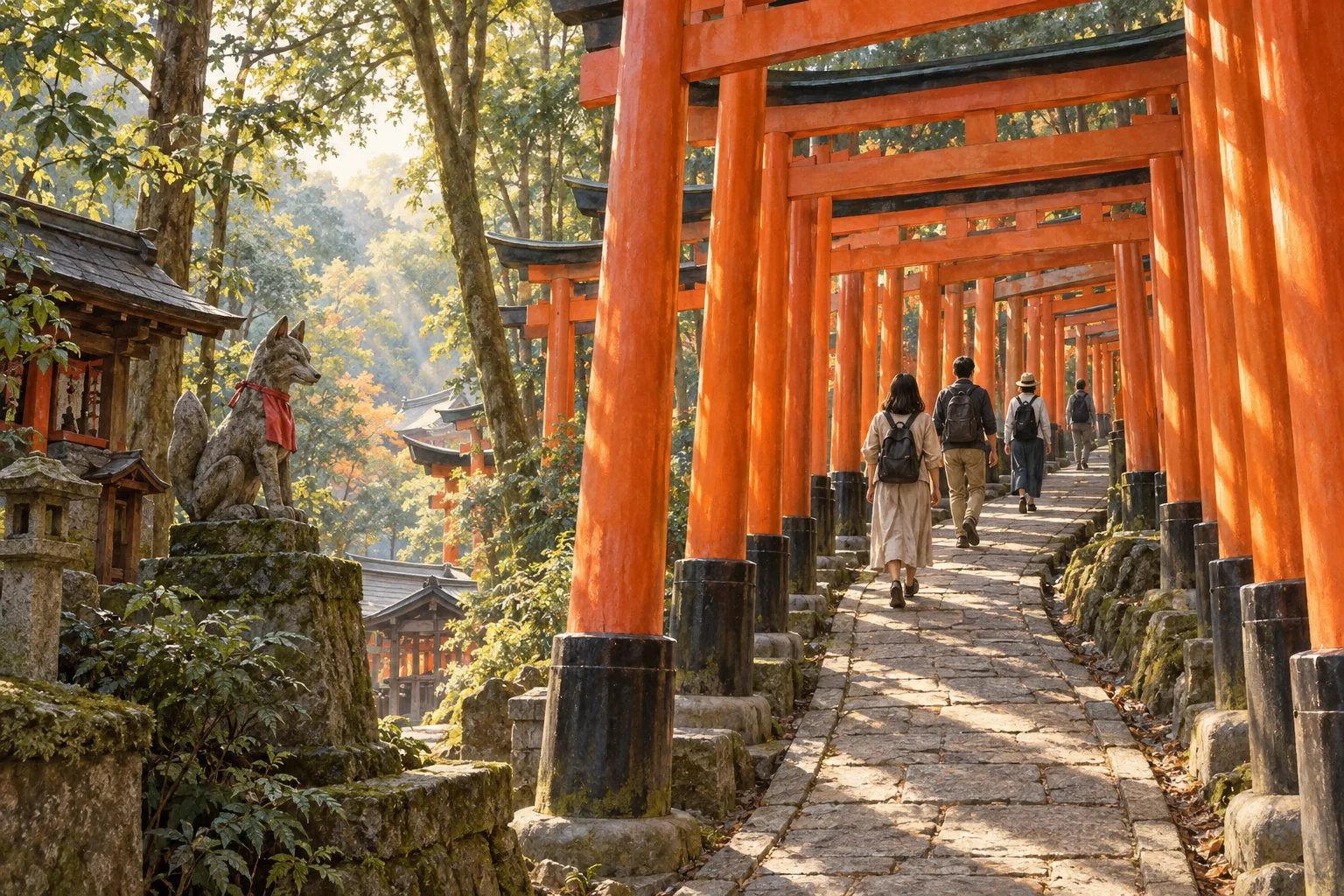
the Kyoto shrine with thousands of vermilion torii gates up a mountain
鳥居はすべて誰かが奉納したもの。裏を見れば、寄進した人の名前と日付が書いてある。
一言で言うと
これだけ覚えれば最低限伝わる一文
Fushimi Inari Taisha is a Kyoto shrine where thousands of vermilion gates form tunnels up a mountainside.
伏見稲荷大社とは、朱色の鳥居がトンネルのように山へ続く京都の神社です。
30秒で説明する
外国人に説明するときの標準サイズ
Fushimi Inari Taisha sits at the foot of a mountain in southern Kyoto. Vermilion torii gates stand one behind another, forming tunnels along paths that climb the whole mountain. There are around ten thousand gates on the mountain in total. Every one was paid for by a person or a company as a votive offering, and the donor's name and date are written on the back of each gate.
伏見稲荷大社は京都の南、山のふもとにあります。朱色の鳥居がいくつも連なってトンネルのようになり、山全体に参道が続いています。山全体では約1万基あります。すべて個人や会社が願いを込めて奉納したもので、それぞれの鳥居の裏には寄進した人の名前と日付が書かれています。
スピーチ・英作文
通訳案内士の二次口述・大学入試の自由英作文に
Fushimi Inari in southern Kyoto is the shrine of the endless orange gates, and it is one of the most popular sights in Japan among foreign visitors. A few things make more sense once you know them. The gates are not decoration.
Each one was donated by a person or a business, usually in thanks for a wish that came true, and if you turn around and look at the back of any gate you will see the donor's name and the date it was put up. The famous Senbon Torii section has about eight hundred and fifty gates, and there are roughly ten thousand on the mountain.
Inari is the deity of rice and, by extension, of business prosperity, which is why so many companies donate. The foxes you see everywhere are not the god; they are the messengers, and they usually hold a key or a sheaf of rice in their mouths. One practical thing: the shrine is open at all hours and free. Go before seven and the tunnels are essentially yours; the full loop takes about two hours.
京都の南にある伏見稲荷大社は、朱色の鳥居がどこまでも続く神社で、外国から来た方に特に人気のある場所の一つです。知っておくと見え方が変わることがいくつかあります。鳥居は飾りではありません。ひとつずつが個人か会社の奉納で、たいていは願いがかなったお礼です。
振り返ってどれか一基の裏を見れば、奉納した人の名前と立てた日付が書いてあります。有名な千本鳥居の区間は約850基、山全体でおよそ1万基です。稲荷は稲の神で、そこから商売繁盛の神とされたので、多くの会社が鳥居を奉納します。
あちこちにいる狐は神そのものではなく使いで、鍵や稲穂をくわえていることが多いです。実用的なことをひとつ。ここは24時間開いていて拝観料もありません。朝7時前に行けば鳥居のトンネルはほぼ貸し切りですし、山頂まで一周すると2時間ほどかかります。
こう聞かれたら
外国人から実際にされる質問と、その答え方。
Why are the gates orange?
どうして鳥居はオレンジ色なのですか。
The color is vermilion, which in Japan has long been associated with warding off misfortune and with the life force. It is also practical: the pigment traditionally contained mercury compounds that helped preserve the wood.
あの色は朱で、日本では古くから災いを防ぎ、生命の力を表す色とされてきました。実用の面もあり、朱の顔料には木を保つ働きのある成分が含まれていました。
Can anyone donate a gate?
誰でも鳥居を奉納できるのですか。
Yes. The shrine accepts donations, and the price depends on the size of the gate. There are also miniature gates that people offer for smaller amounts, which you will see stacked at the sub-shrines.
できます。神社が奉納を受け付けていて、金額は鳥居の大きさによります。小さなミニ鳥居もあり、末社のあたりに積まれているのがそれです。
Do I have to climb the whole mountain?
山を全部登らなければいけませんか。
No. Most visitors walk the famous tunnel section and turn back at the viewpoint partway up. The full loop takes about two hours and gets much quieter the higher you go.
必要ありません。多くの方は有名なトンネルの区間を歩き、途中の見晴らしのよい場所で引き返します。一周は2時間ほどで、上へ行くほど人は減ります。
誤解されやすい
MYTHThe fox statues are the god of the shrine.
狐の像がこの神社の神様だと思われがちです。
FACTThe foxes are messengers of Inari, not the deity. They typically carry a key, a jewel or a sheaf of rice in their mouths, each symbolizing something connected to the rice storehouse.
狐は稲荷の使いであって神そのものではありません。口に鍵や玉、稲穂をくわえていることが多く、それぞれ米倉に関わるものを表しています。
そのまま使えるフレーズ
- Every gate was donated by someone — look at the back.鳥居はどれも誰かの奉納です。裏を見てください。
- The donor's name and the date are written on it.奉納した人の名前と日付が書いてあります。
- Inari is the deity of rice, and so of business too.稲荷は稲の神で、そこから商売の神にもなりました。
- The foxes are messengers, not the god itself.狐は使いであって、神様そのものではありません。
- It's open all night and there's no entrance fee.夜通し開いていますし、拝観料もありません。
説明に使う語句
- torii gate鳥居
- vermilion朱色
- votive offering, donation奉納
- messenger (of a deity)神の使い
- sub-shrine末社
動画で見る
YouTube より豆知識
伏見稲荷大社は全国の稲荷神社の総本宮とされる。稲荷を祀る社の数は、小さな祠まで含めるかどうかで数え方に幅があり、数千とも三万とも言われる。鳥居の奉納は江戸時代に広まったとされ、現在は山全体でおよそ1万基。もっとも有名な千本鳥居の区間は、名前に反して約850基である。祭神の宇迦之御魂大神は穀物の神で、稲がなる、すなわち「いなり」が語源とする説がある。狐が使いとされるのは、稲の実る時期に姿を見せ、鼠を捕るためだという説明がある。拝観料はなく、参道は終日通行できる。
