参拝の作法さんぱいのさほう
sanpai no saho
the two bows, two claps, one bow routine
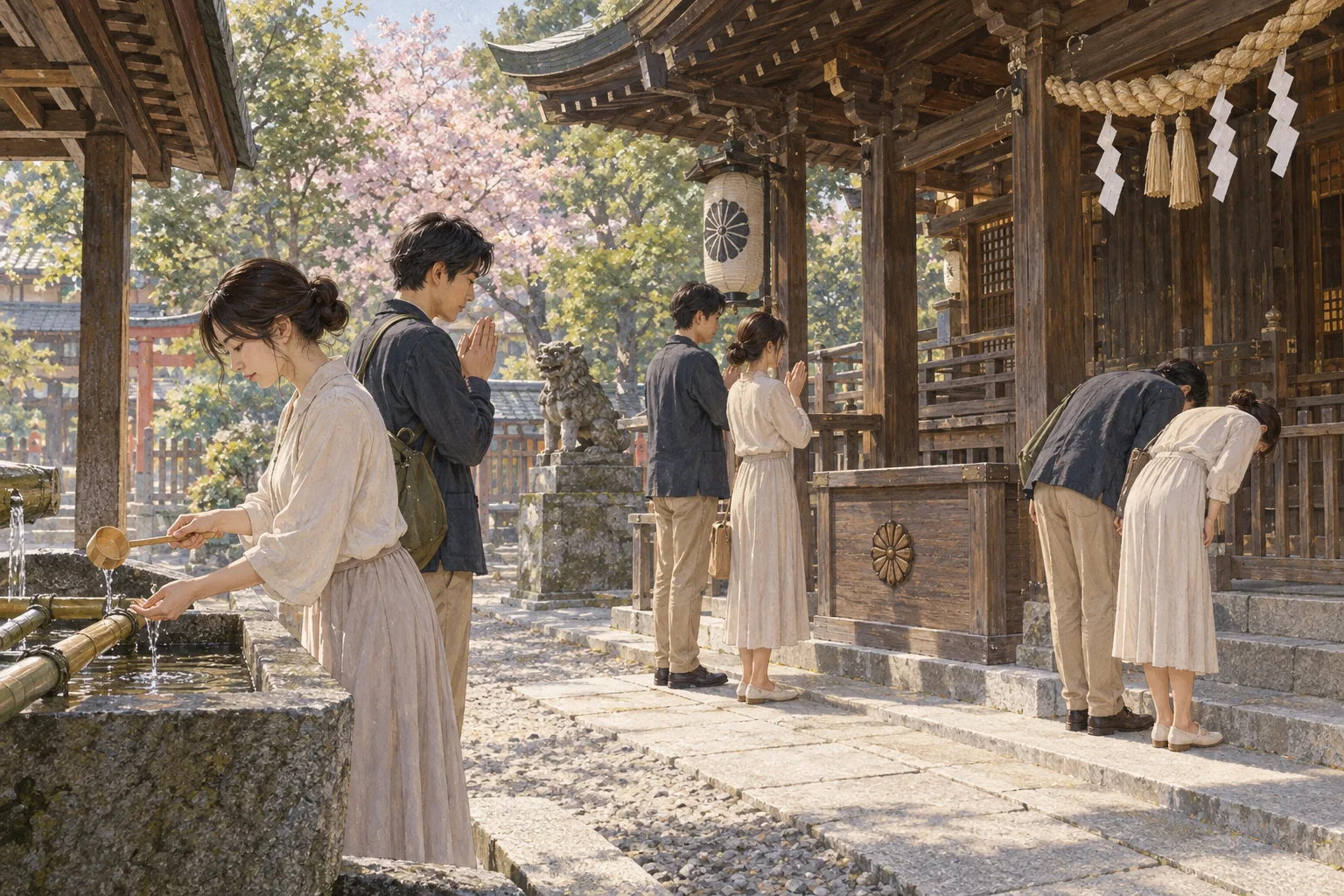
二礼二拍手一礼。手を洗う順番まで含めて、実は全部説明できる。
一言で言うと
これだけ覚えれば最低限伝わる一文
Sanpai no saho, or shrine etiquette, is to rinse hands, offer a coin, bow twice, clap twice, pray and bow.
参拝の作法とは、手を清め、賽銭を入れ、二度礼をし、二度手を打ち、祈って、もう一度礼をする神社での手順です。
30秒で説明する
外国人に説明するときの標準サイズ
There is a set routine. At the water basin near the entrance you rinse your left hand, then your right, then your mouth. At the hall you toss a coin into the box, ring the bell if there is one, bow twice, clap twice, put your hands together and pray, then bow once more. Clapping is only done at shrines, never at a Buddhist temple.
決まった手順があります。入口近くの手水舎で、左手、右手、口の順に清めます。社殿では賽銭を入れ、鈴があれば鳴らし、二度礼をし、二度手を打ち、手を合わせて祈り、最後にもう一度礼をします。拍手をするのは神社だけで、お寺ではしません。
スピーチ・英作文
通訳案内士の二次口述・大学入試の自由英作文に
Visiting a Shinto shrine follows a set routine, and it is easy to learn. Near the entrance there is a water basin with ladles. You take a ladle in your right hand, rinse your left hand, swap hands and rinse your right, then pour a little into your left hand to rinse your mouth, and finally tip the ladle up so the remaining water runs down the handle.
At the main hall, you throw a coin into the offering box, ring the bell if there is one, and then do the part everyone remembers: bow twice, clap twice, hold your hands together and make your wish, and bow once more.
Many people say their name and address silently first, so the kami knows who is asking. One important thing: the clapping is for shrines only. At a Buddhist temple you put your hands together in silence and do not clap.
神社の参拝には決まった手順があり、覚えるのは簡単です。入口近くに柄杓の置かれた手水舎があります。右手で柄杓を取り、左手を清め、持ち替えて右手を清め、左手に水を受けて口をすすぎ、最後に柄杓を立てて柄に水を流します。
社殿では賽銭を入れ、鈴があれば鳴らし、そして誰もが覚えている部分に入ります。二度礼、二度拍手、手を合わせて願い、もう一度礼。多くの人は先に心の中で名前と住所を告げます。
誰が願っているのか神様に分かるように、ということです。大事なことが一つ。拍手は神社だけです。お寺では静かに手を合わせ、打ちません。
こう聞かれたら
外国人から実際にされる質問と、その答え方。
How much money should I put in?
お賽銭はいくら入れればいいですか。
Any amount. A five-yen coin is popular because its name sounds like the word for a good connection. Nobody checks, and there is no expected minimum.
いくらでも構いません。五円玉は「ご縁」と音が通じるため好まれます。誰も確かめませんし、決まった下限もありません。
Can I pray if I'm not Shinto?
神道を信じていなくても祈っていいのですか。
Yes. Shrines are open to anyone and no one will ask about your beliefs. Following the routine respectfully is all that is expected.
できます。神社は誰にでも開かれており、信仰を問われることはありません。作法を丁寧に守れば、それで十分です。
Why two claps?
どうして二回手をたたくのですか。
The clapping is understood as a way of announcing yourself and showing respect. The two-two-one form was standardized relatively recently, and a few shrines use a different count, notably Izumo Taisha, which uses four claps.
拍手は自分の存在を告げ、敬意を表すものとされます。二礼二拍手一礼の形が定まったのは比較的新しく、出雲大社のように四拍手の神社もあります。
そのまま使えるフレーズ
- Rinse your left hand first, then your right.まず左手、次に右手を清めます。
- Two bows, two claps, then one more bow.二礼二拍手一礼です。
- Throw the coin in gently.お賽銭はそっと入れてください。
- Don't clap at a temple — only at shrines.お寺では拍手はしません。神社だけです。
- Anyone can pray here, whatever they believe.信仰にかかわらず、誰でもお参りできます。
説明に使う語句
- purify / rinse清める
- ladle柄杓
- offering box賽銭箱
- bow (verb)礼をする
- clap拍手する
動画で見る
YouTube より豆知識
「二礼二拍手一礼」が全国的な標準として広まったのは明治以降で、それ以前は神社ごとに作法が異なっていた。現在も出雲大社や宇佐神宮などは二礼四拍手一礼を用いる。手水舎の作法は、川や海で全身を清める「禊(みそぎ)」を簡略化したものとされる。柄杓に直接口をつけないのが正式で、近年は感染症対策として柄杓を置かず、流水だけの手水舎も増えた。賽銭に五円玉が好まれるのは「ご縁がありますように」の語呂合わせで、逆に十円玉は「遠縁(とおえん)」に通じるとして避ける人もいる。いずれも語呂合わせであり、教義に基づくものではない。
