初午はつうま
hatsuuma
the February day for the fox shrines
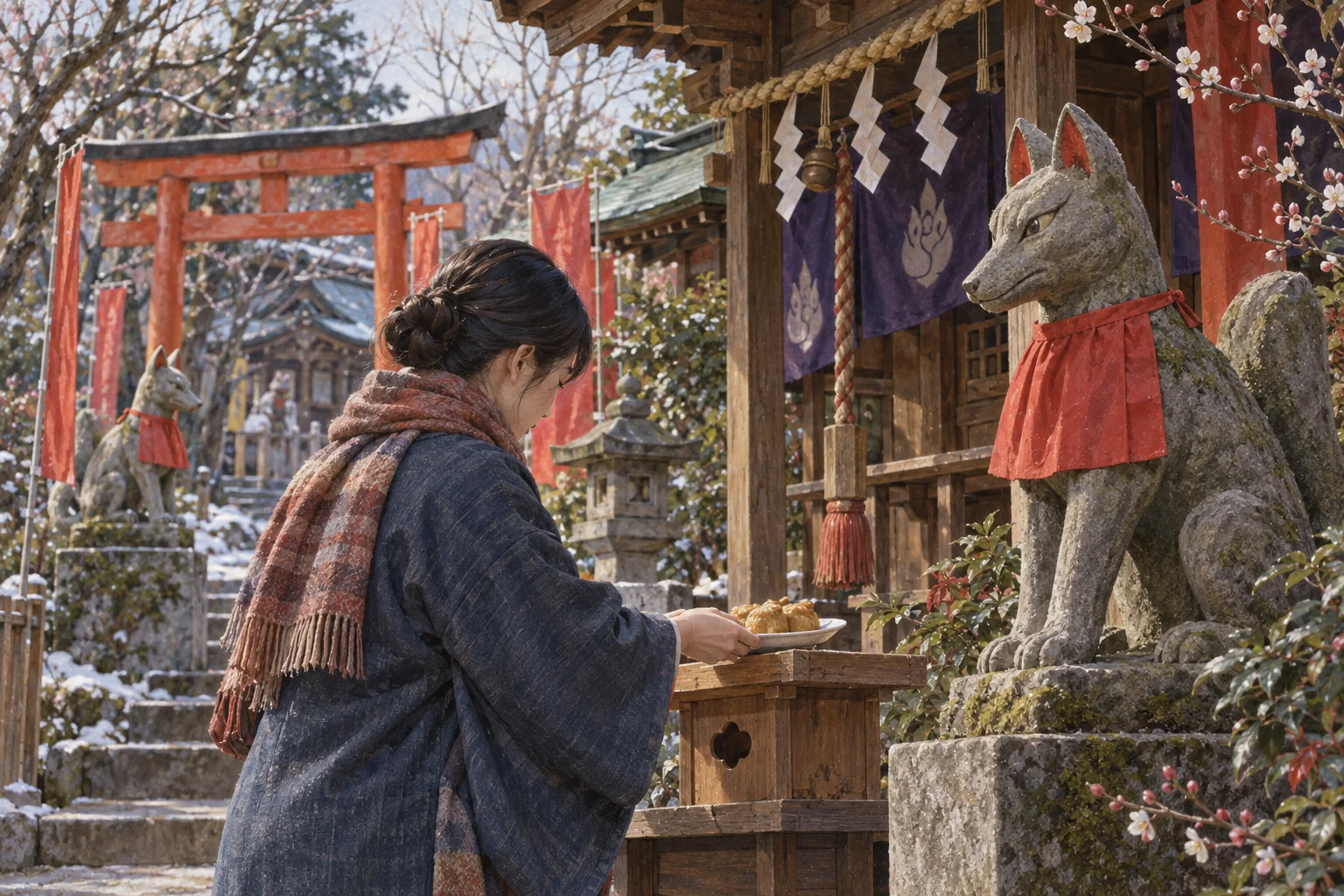
二月最初の午の日、稲荷神社に赤い幟が並ぶ。狐といなり寿司の日。
一言で言うと
これだけ覚えれば最低限伝わる一文
Hatsuuma is the first horse day of February, when Inari shrines hold their main festival.
初午とは二月の最初の午の日で、稲荷神社の大きな祭りが行われる日です。
30秒で説明する
外国人に説明するときの標準サイズ
Inari shrines, marked by rows of red gates and pairs of fox statues, hold their principal festival on the first horse day of February. Red banners are put up, offerings of fried tofu are made, and people pray for good harvests and good business. Families in some regions eat inari-zushi, rice in a sweet fried tofu pouch, on the day. Counting small ones, there are said to be more Inari shrines in Japan than any other kind.
赤い鳥居の列と一対の狐の像で知られる稲荷神社は、二月の最初の午の日に主要な祭りを行います。赤い幟が立ち、油揚げが供えられ、豊作と商売繁盛が祈られます。地域によっては、この日に甘く煮た油揚げにご飯を詰めたいなり寿司を食べます。小さな祠まで数えると、稲荷神社は日本でいちばん数の多い神社だと言われます。
スピーチ・英作文
通訳案内士の二次口述・大学入試の自由英作文に
Hatsuuma means the first horse day, from the old system that gave each day one of twelve animals, and it falls in early February. It is the main festival day for Inari shrines, the ones with tunnels of vermilion gates and stone foxes at the entrance.
Inari is associated with rice, and by extension with harvests, food, and then with commerce, which is why companies sponsor gates and why you find small Inari shrines on the roofs of department stores and in the corners of factory yards. On hatsuuma, banners go up, prayers are said for a good year, and offerings are made of aburaage, sheets of fried tofu, which folk belief holds are the foxes' favorite.
Inari-zushi, rice packed into a sweet fried tofu pouch, is eaten on the day in some regions and takes its name from the same association. The head shrine is Fushimi Inari in Kyoto, where the festival draws large crowds. It is one of those days that is enormous in some neighborhoods and invisible in others.
初午とは最初の午の日という意味で、日に十二の動物を当てる古い数え方から来ていて、二月の初めに巡ってきます。稲荷神社の主要な祭りの日です。朱の鳥居のトンネルと入口の石の狐で知られるあの神社です。
稲荷は稲と結びつき、そこから収穫や食物、さらに商いと結びついたので、企業が鳥居を奉納し、百貨店の屋上や工場の敷地の隅に小さな稲荷があるのです。初午には幟が立ち、その年の実りを祈り、油揚げが供えられます。民間の言い伝えでは、油揚げは狐の好物だからです。
甘く煮た油揚げにご飯を詰めたいなり寿司も、同じ結びつきから名前を得ていて、地域によってはこの日に食べます。総本宮は京都の伏見稲荷大社で、この祭りには大勢が集まります。ある町では盛大に行われ、別の町ではまったく目に入らない、そういう日の一つです。
こう聞かれたら
外国人から実際にされる質問と、その答え方。
Why foxes?
どうして狐なのですか。
The fox is regarded as the messenger of Inari rather than the deity itself, a distinction people here take seriously. Foxes were associated with rice fields, where they hunted the rodents that damaged crops, which is one commonly given explanation for the link, though the origins are debated.
狐は稲荷の神そのものではなく、その使いとされます。この区別は日本では真面目に扱われます。狐は作物を荒らす鼠を捕るため田に結びつけられた、というのがよく挙げられる説明ですが、由来には議論があります。
Is inari-zushi named after this?
いなり寿司の名はここから来ているのですか。
Yes, from the same association between Inari, foxes and fried tofu. It is rice, sometimes mixed with sesame or vegetables, packed into a pouch of aburaage simmered in sweet soy. Shapes differ by region, triangular in the west and bale-shaped in the east being the usual description.
そうです。稲荷と狐と油揚げの同じ結びつきから来ています。ごまや野菜を混ぜたご飯を、甘辛く煮た油揚げの袋に詰めたものです。形は地域で違い、西は三角、東は俵型というのがよく言われる区別です。
そのまま使えるフレーズ
- It's the first horse day of February.二月の最初の午の日です。
- Inari shrines have red gates and fox statues.稲荷神社には赤い鳥居と狐の像があります。
- Fried tofu is the traditional offering.油揚げが伝統的な供え物です。
- The fox is the messenger, not the god.狐は神ではなく、神の使いです。
- We eat inari-zushi on that day.その日にはいなり寿司を食べます。
説明に使う語句
- shrine festival例祭・祭り
- vermilion gate朱の鳥居
- messenger of a deity神の使い
- fried tofu油揚げ
- good harvest豊作
動画で見る
YouTube より豆知識
初午は二月の最初の午の日で、稲荷社の祭日とされます。伏見稲荷大社の社伝では、和銅年間の初午の日に神が鎮座したとされ、これが由来と説明されます。稲荷は稲を象徴する神で、五穀豊穣から商売繁盛、家内安全へと信仰が広がり、企業や個人が鳥居を奉納する習わしが生まれました。稲荷社は全国に数多く、屋敷神などの小さな祠まで含めると最も多いとも言われます。狐は稲荷の神使とされ、供え物の油揚げや、それを用いたいなり寿司も同じ結びつきによります。いなり寿司の形は、関西で三角、関東で俵型とされることが多く、呼び名も地域によって異なります。初午の日には、地域によって旗や幟を立て、子どもに菓子を配る習わしも残っています。
