豆腐とうふ
tofu
bean curd
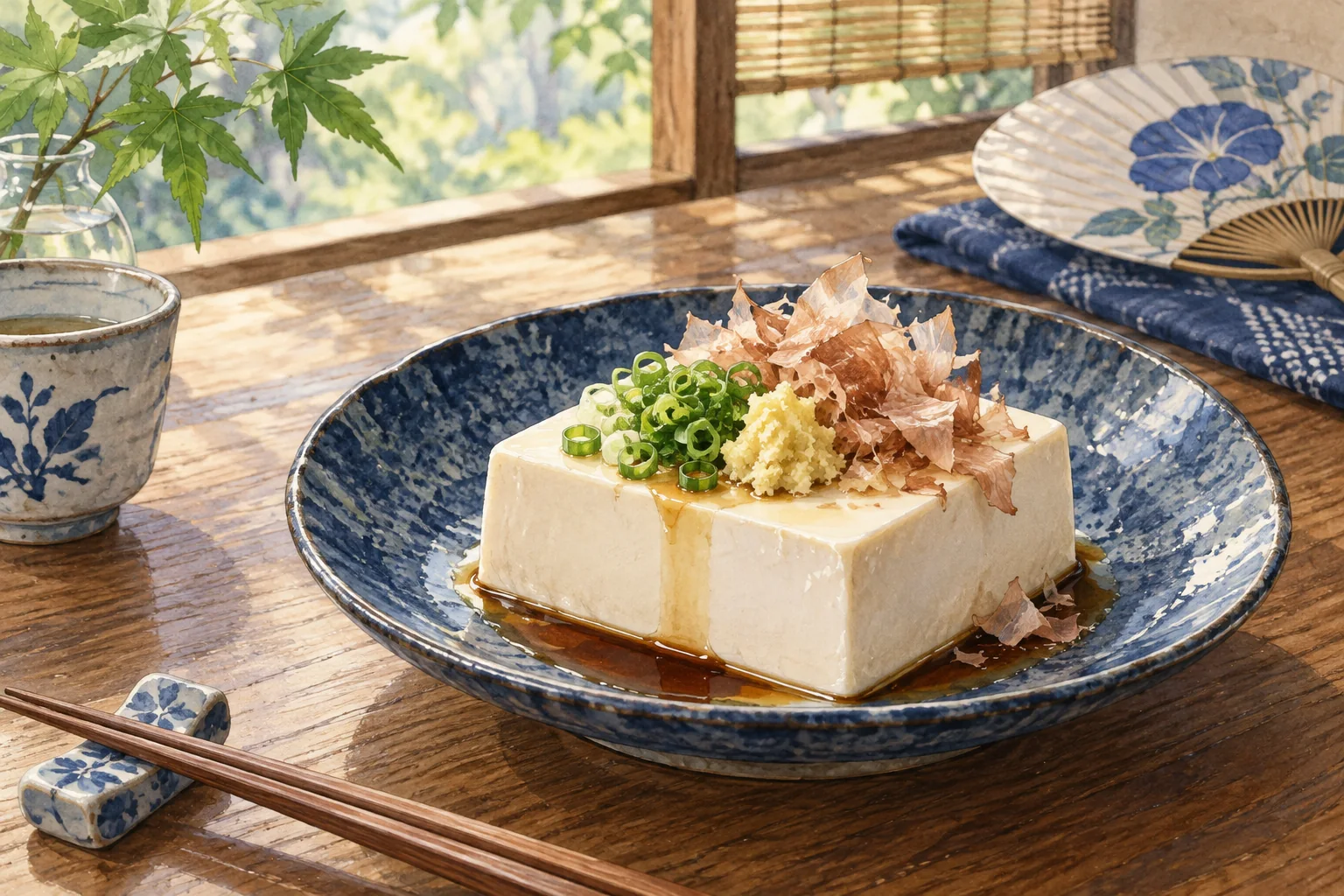
日本では味を消すものではなく、味わうもの。冷たいまま、そのまま食べる。
一言で言うと
これだけ覚えれば最低限伝わる一文
Tofu is curdled soy milk, and in Japan it is often eaten plain and cold rather than disguised.
豆腐とは豆乳を固めたもので、日本では味を隠すのではなく、冷たいまま何もせずに食べることが多くあります。
30秒で説明する
外国人に説明するときの標準サイズ
Tofu is made by curdling soy milk with a coagulant and pressing it. Japan uses two main types: silken, which is soft and delicate, and firm, which holds together in cooking. A common summer dish is simply a cold block with grated ginger, spring onion and soy sauce, with nothing done to it at all.
豆腐は豆乳を凝固剤で固め、水を切って作ります。日本では主に二種類、やわらかく繊細な絹ごしと、煮崩れしにくい木綿が使われます。夏の定番は、冷たいままの一丁に生姜と葱と醤油をのせた冷奴で、何の手も加えません。
スピーチ・英作文
通訳案内士の二次口述・大学入試の自由英作文に
Tofu in Japan is treated differently from how it is often treated abroad. In much Western cooking tofu is a substitute: something to marinate heavily, fry hard, or disguise. In Japan it is more often the point.
The standard summer dish, hiyayakko, is a cold block straight from the packet with grated ginger, chopped spring onion and a little soy sauce, and nothing else, which only works if the tofu itself tastes of something. There are two main types. Silken is set in the container without pressing, is soft and breaks easily, and is often used in miso soup and in the cold dish.
Firm is pressed, holds its shape, and is used for frying and stewing. Good tofu shops still make it fresh each morning and sell out by noon, and a specialist tofu restaurant will serve a whole meal built on it. Buy it with a date close to today and eat it within a day or two.
日本の豆腐は、海外での扱われ方とはかなり違います。西洋の料理では、豆腐は代わりのものとして扱われることが多くあります。強く漬け込み、しっかり焼き、味を隠すもの。日本では、それ自体が目的であることのほうが多いのです。
夏の定番である冷奴は、買ってきた一丁を冷たいまま、おろした生姜と刻んだ葱、少しの醤油だけで食べます。ほかには何もしません。豆腐そのものに味がなければ成り立たない食べ方です。主な種類は二つ。絹ごしは水を切らずに容器の中で固め、やわらかく崩れやすく、味噌汁や冷奴によく使われます。
木綿は押して水を切り、形を保つので、焼くのと煮るのに使います。今も朝ごとに作って昼には売り切れる豆腐屋があり、豆腐の専門店では一食すべてが豆腐で組み立てられます。日付の新しいものを買い、一日か二日で食べてください。
こう聞かれたら
外国人から実際にされる質問と、その答え方。
Which type should I buy?
どの種類を買えばいいですか。
Silken for soup, for eating cold, and for anything where softness is the point. Firm for frying, grilling and stewing, because silken falls apart. Packets are labeled, and the firm one feels noticeably heavier.
汁物、冷たいまま食べるもの、やわらかさが眼目のものには絹ごし。焼く、炒める、煮るには木綿です。絹ごしは崩れます。表示されていますし、木綿のほうが手に持つとはっきり重く感じます。
Does it really taste of anything?
本当に味がするのですか。
Good tofu tastes clearly of soybean, faintly sweet, with a texture that is the other half of the point. Cheap long-life tofu is close to flavorless, which is where the reputation for blandness comes from.
よい豆腐ははっきり大豆の味がし、かすかに甘く、舌ざわりがもう半分の眼目です。長く日持ちする安い豆腐はほとんど味がなく、味気ないという評判はそこから来ています。
誤解されやすい
MYTHTofu is a flavorless meat substitute.
豆腐は味のない肉の代わりだと思われがちです。
FACTIn Japan it is eaten as itself, often cold and plain. The blandness people describe usually comes from long-life supermarket tofu rather than from tofu as such.
日本ではそれ自体として、冷たいまま何もせずに食べられます。味気ないと言われるのは、たいてい日持ちのする売り場の豆腐であって、豆腐そのもののことではありません。
そのまま使えるフレーズ
- We eat it cold, with nothing on it.冷たいまま、何もせずに食べます。
- Silken is soft, firm holds its shape.絹ごしはやわらかく、木綿は崩れません。
- Buy it fresh and eat it quickly.新しいものを買ってすぐ食べてください。
- Good tofu tastes of soybean.よい豆腐は大豆の味がします。
説明に使う語句
- soy milk豆乳
- coagulant凝固剤
- silken tofu絹ごし豆腐
- firm tofu木綿豆腐
動画で見る
YouTube より豆知識
豆腐は中国から伝わり、奈良時代から平安時代にかけて日本に入ったとされます。凝固剤には海水から得るにがりのほか、すまし粉なども使われ、それによって舌ざわりが変わります。絹ごしは絹で漉すのではなく、なめらかさを絹にたとえた呼び名です。京都の南禅寺周辺の湯豆腐、佐賀の嬉野温泉の温泉湯豆腐など、地域ごとの食べ方があります。精進料理では重要なたんぱく源で、寺の門前に豆腐料理の店が見られるのはその名残ともいわれます。
