うなぎうなぎ
unagi
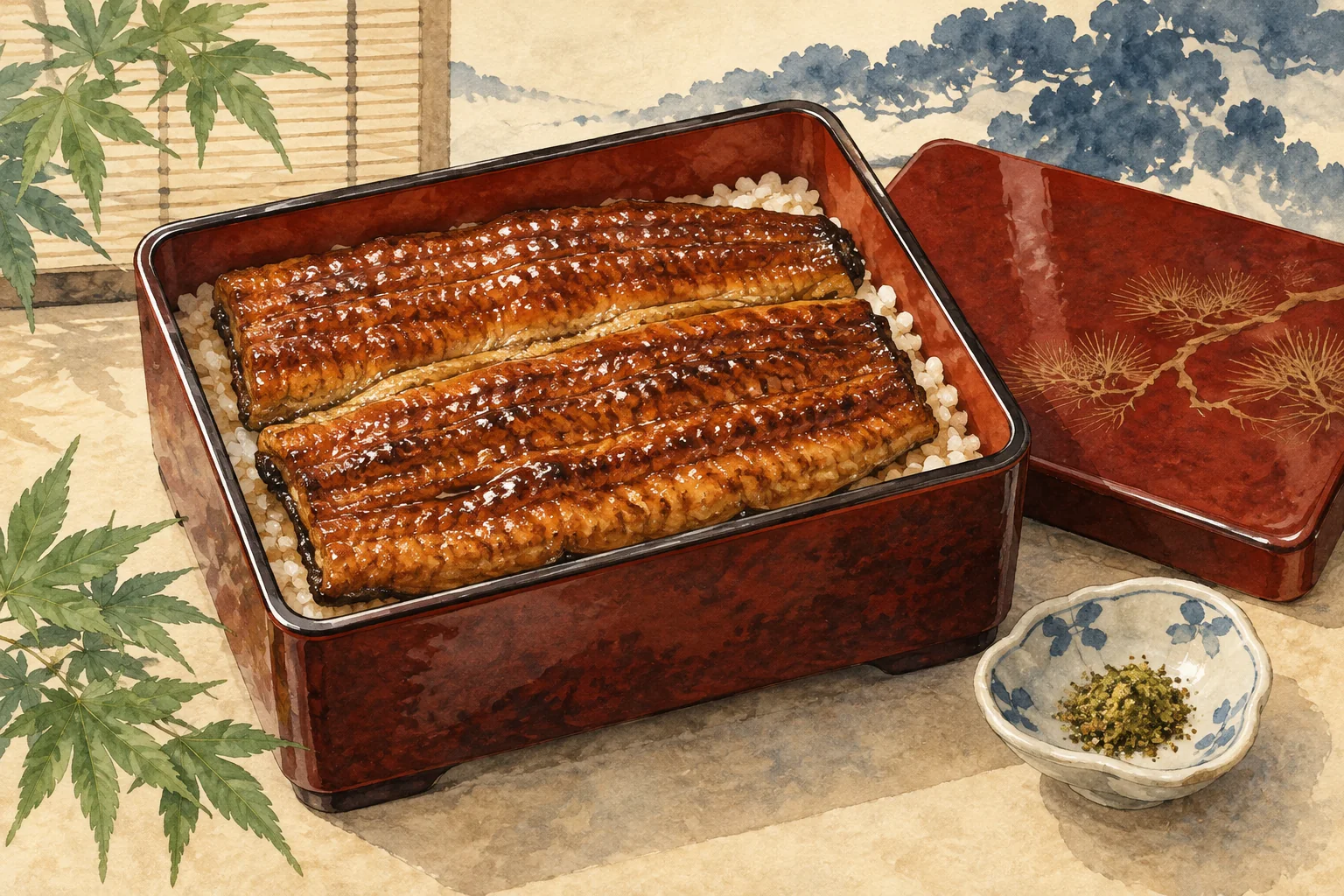
freshwater eel, grilled and glazed
夏に食べる高級魚。おいしいが、絶滅危惧種でもある。両方を言わないと正確にならない。
一言で言うと
これだけ覚えれば最低限伝わる一文
Unagi is freshwater eel, grilled over charcoal and glazed with a sweet soy sauce.
うなぎとは川の鰻のことで、炭火で焼き、甘い醤油だれをかけて食べます。
30秒で説明する
外国人に説明するときの標準サイズ
Unagi is freshwater eel, split open, skewered, grilled over charcoal and brushed with a sweet soy glaze. It is often served on rice in a lacquered box. It is expensive, it is strongly associated with midsummer, and it is also a species in trouble: the Japanese eel is listed as endangered. Both of those things are true at once.
うなぎは川の鰻を開いて串を打ち、炭火で焼いて甘い醤油だれをかけたものです。よく重箱に入れ、ご飯の上にのせて出されます。値段は高く、真夏の食べ物という印象が強く、そして数が減っている魚でもあります。ニホンウナギは絶滅危惧種に指定されています。この二つは同時に本当のことです。
スピーチ・英作文
通訳案内士の二次口述・大学入試の自由英作文に
Unagi, freshwater eel, is one of the dishes Japanese people treat as a small luxury. The eel is split, skewered, steamed in the Tokyo style or grilled straight in the Osaka style, and brushed with a sweet soy glaze while it cooks over charcoal.
It is served over rice, and a good one costs several thousand yen. The strongest association is with midsummer: there is a day in late July or early August, the Day of the Ox, when eel is eaten to get through the heat, and shops sell enormous quantities. Here is the part that should be said as well.
The Japanese eel was listed as endangered by the IUCN in 2014, and Japan's Ministry of the Environment had already listed it the year before. Farmed eel is not a solution, because the young eels are caught wild and then raised, not bred. If you eat it, that is a choice people in Japan make too. It is worth knowing what the choice is.
うなぎは、日本人がささやかな贅沢として扱う料理のひとつです。鰻を開いて串を打ち、関東では蒸してから、関西では蒸さずにそのまま、炭火で焼きながら甘い醤油だれをかけます。ご飯の上にのせて出され、よいものは数千円します。いちばん強く結びついているのは真夏です。
七月下旬から八月上旬に土用の丑の日があり、暑さを乗り切るために鰻を食べる日とされ、店は大量に売ります。ここで言っておきたいことがあります。ニホンウナギは2014年に国際自然保護連合のレッドリストで絶滅危惧種に指定され、環境省はその前年にすでに指定していました。
養殖が解決にならないのは、稚魚を天然から捕って育てているからで、卵から育てているわけではないからです。食べるかどうかは、日本人も同じように選んでいることです。何を選んでいるのかは、知っておく価値があります。
こう聞かれたら
外国人から実際にされる質問と、その答え方。
Why do people eat it in the hottest part of summer?
どうして夏のいちばん暑い時期に食べるのですか。
There is a custom of eating eel on the Day of the Ox in late July or early August, said to help you get through the heat. The nutritional reasoning is often repeated, but the custom's popularity is usually credited to an Edo-period marketing idea.
七月下旬から八月上旬の土用の丑の日に鰻を食べる習慣があり、暑さを乗り切るためとされています。栄養の話がよく語られますが、この習慣が広まったのは江戸時代の宣伝の工夫によるものだと説明されます。
What's the difference between kabayaki and shirayaki?
蒲焼きと白焼きはどう違うのですか。
Kabayaki is grilled with the sweet soy glaze, which is what most people picture. Shirayaki is grilled plain with no sauce, eaten with a little salt or wasabi, and it tastes much cleaner.
蒲焼はたれをつけて焼いたもので、多くの人が思い浮かべるのはこちらです。白焼きはたれをつけずに焼いたもので、塩やわさびで食べます。ずっとさっぱりします。
Is farmed eel better for the species?
養殖のうなぎなら、種にとって良いのですか。
Not in the way people assume. The young eels are caught in the wild and raised in ponds, because breeding eels through their full life cycle at commercial scale has not been achieved. So farmed eel still draws on the wild population.
思われているような意味では違います。稚魚を天然から捕って池で育てているためです。卵から成魚まで商業規模で育てる技術は確立していません。ですから養殖でも天然の資源を使っています。
誤解されやすい
MYTHEel is farmed, so eating it does not affect wild populations.
鰻は養殖だから天然の数には影響しないと思われがちです。
FACTYoung eels are caught wild and then raised. Full life-cycle breeding is not yet done at commercial scale, so farmed eel still depends on the wild stock.
稚魚は天然から捕って育てています。卵から育てる完全養殖は商業規模では実現していないので、養殖も天然の資源に頼っています。
そのまま使えるフレーズ
- It's freshwater eel, grilled with a sweet soy glaze.川の鰻を、甘い醤油だれで焼いたものです。
- People eat it in midsummer to get through the heat.真夏に、暑さを乗り切るために食べます。
- The plain grilled one, without sauce, is called shirayaki.たれをつけずに焼いたものは白焼きといいます。
- It's expensive — this is a treat, not an everyday dish.値段は高いです。ふだんの料理ではなく、ごちそうです。
- The Japanese eel is listed as endangered, so it's a complicated dish.ニホンウナギは絶滅危惧種なので、悩ましい食べ物でもあります。
説明に使う語句
- freshwater eelうなぎ
- glaze, sauceたれ
- charcoal-grilled炭火焼きの
- endangered絶滅危惧の
- fry, young fish稚魚
動画で見る
YouTube より豆知識
うなぎの調理は東西で違う。関東は背開きにして白焼きにしたあと蒸し、もう一度たれをつけて焼く。関西は腹開きにして蒸さずに焼く。背開きになったのは、武家の町である江戸で腹を切るのを嫌ったからという説があるが、確かなことは分かっていない。土用の丑の日に食べる習慣は、江戸時代の平賀源内が夏に売れない鰻屋のために考えた宣伝に由来するという説が広く語られるが、これも裏づけのある話ではない。ニホンウナギは2013年に環境省のレッドリストで絶滅危惧IB類、2014年6月に国際自然保護連合のレッドリストに掲載された。
