年越しそばとしこしそば
toshikoshi soba
New Year's Eve noodles
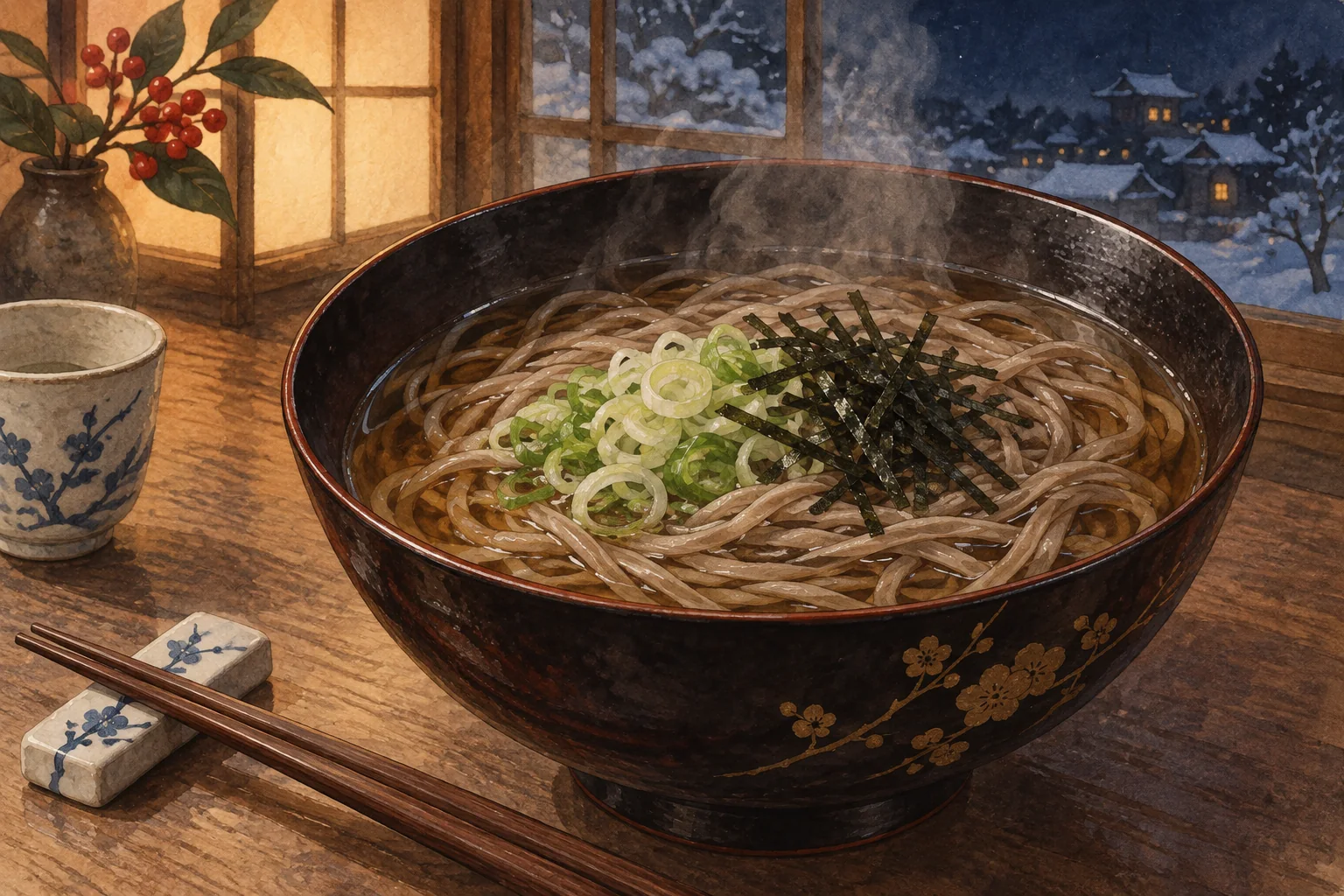
大晦日の夜、除夜の鐘の前にそばをすする。長寿を願う、細く長い一年の締め。
一言で言うと
これだけ覚えれば最低限伝わる一文
Toshikoshi soba are buckwheat noodles eaten on New Year's Eve to wish for a long life and a clean break with the year.
年越しそばとは、長寿と一年の区切りを願って大晦日に食べるそばです。
30秒で説明する
外国人に説明するときの標準サイズ
On December 31st, many Japanese households eat a bowl of soba, thin buckwheat noodles in hot broth, sometime in the evening before midnight. The long noodles stand for a long life, and because soba breaks easily, they are also said to cut off the year's bad luck. Toppings are simple: green onion, tempura or a fried tofu slice. Soba shops are packed all day, and many people simply boil a packet at home while watching television.
十二月三十一日、日本の多くの家庭は真夜中前の夜のどこかで、温かいつゆに入った細いそばを一杯食べます。長い麺は長寿を表し、そばは切れやすいので、その年の厄を断ち切るとも言われます。具は単純で、ねぎ、天ぷら、油揚げなどです。そば屋は一日中混み、多くの人はテレビを見ながら家で袋のそばを茹でるだけです。
スピーチ・英作文
通訳案内士の二次口述・大学入試の自由英作文に
New Year's Eve in Japan is quiet, domestic and ends with a bowl of noodles. Toshikoshi soba, literally year-crossing soba, is eaten on December 31st by many families, usually as a late dinner or a snack while watching the big year-end music show on television. Soba are thin noodles made from buckwheat, served here in a hot soy-flavored broth with chopped green onion and perhaps a piece of shrimp tempura.
There are several explanations for the custom, and nobody is sure which came first: the long, thin noodles represent a long, thin life, meaning a long and steady one; soba noodles snap easily, so eating them cuts off the hardships of the passing year; and buckwheat was believed to be good for the body.
What is certain is that the habit spread among townspeople in the Edo period and never went away. The rule is to finish the bowl before midnight, because leaving it into the new year is said to bring bad luck with money. I think it is a wonderfully calm way to end a year.
日本の大晦日は静かで家庭的で、一杯の麺で終わります。年越しそば、文字どおり「年を越すそば」は、十二月三十一日に多くの家庭が食べ、遅い夕飯か、テレビの年末の大きな歌番組を見ながらの夜食になります。そばはそば粉で作る細い麺で、ここでは刻みねぎと、あればえびの天ぷらを載せた醤油味の温かいつゆで出されます。
この習慣にはいくつかの説明があり、どれが先か誰にも分かりません。細く長い麺は「細く長い」人生、つまり長く穏やかな人生を表すという説、そばは切れやすいので食べると過ぎゆく年の苦労を断ち切れるという説、そば粉は体によいと信じられていたという説です。
確かなのは、この習慣が江戸時代に町人の間で広まり、途切れなかったことです。決まりは真夜中までに食べ終えること。新年に持ち越すと金運が悪くなると言われるからです。とても穏やかな年の終え方だと私は思います。
こう聞かれたら
外国人から実際にされる質問と、その答え方。
Does it have to be soba? What about udon or ramen?
そばでなければいけませんか。うどんやラーメンではだめですか。
Soba is standard, but it is not universal. In Kagawa, the udon prefecture, many people eat udon, and some regions or families have their own noodle. In recent years a few people even eat ramen. The long noodle is the point, not the flour.
そばが標準ですが、全国共通ではありません。うどん県の香川ではうどんを食べる人が多く、地域や家庭で独自の麺もあります。近年はラーメンにする人さえ少数います。大事なのは長い麺であって、粉の種類ではありません。
When exactly should I eat it?
正確にはいつ食べるのですか。
Any time on December 31st, but before midnight. Some families have it for dinner around seven, others as a late snack around eleven while the temple bells begin. Eating it after midnight is considered unlucky, so people do keep an eye on the clock.
十二月三十一日のいつでもかまいませんが、真夜中の前です。七時ごろの夕飯にする家庭もあれば、除夜の鐘が鳴り始める十一時ごろの夜食にする家庭もあります。真夜中を過ぎて食べるのは縁起が悪いとされるので、みな時計を気にします。
Is it a big festive meal?
ごちそうなのですか。
No, the opposite. The feast comes the next day with osechi, the New Year dishes. Toshikoshi soba is deliberately simple and cheap, a bowl of noodles that marks the end rather than celebrates the beginning. Many soba shops close early on the 31st after a rush that starts at lunch.
いいえ、むしろ逆です。ごちそうは翌日のおせち料理です。年越しそばはあえて簡素で安く、始まりを祝うのではなく終わりを刻む一杯です。多くのそば屋は昼から続く混雑のあと、三十一日は早く閉めます。
そのまま使えるフレーズ
- We always have soba on New Year's Eve.うちは大晦日には必ずそばを食べます。
- The long noodles are for a long life.長い麺は長寿を願うものです。
- Finish it before midnight; it's bad luck otherwise.真夜中までに食べ終えてください。そうしないと縁起が悪いんです。
- I'll put some shrimp tempura on top.上にえびの天ぷらを載せます。
- The soba shop had a line out the door.そば屋は店の外まで行列でした。
説明に使う語句
- buckwheat noodlesそば
- New Year's Eve大晦日
- brothつゆ
- long life長寿
- cut off bad luck厄を断ち切る
- before midnight真夜中前に
動画で見る
YouTube より豆知識
年越しそばの由来には、細く長いそばにあやかって長寿を願う説、切れやすいそばで一年の苦労や厄を断つ説、金銀細工の職人がそば粉の団子で金粉を集めたことから金運を願う説など諸説あり、江戸時代の後期には町人の間に定着していたと考えられています。大晦日の夕方から夜にかけてそば屋は一年で最も混み、出前が追いつかないほどで、家庭ではゆでそばや乾麺で済ませることも多くなっています。具は地域や家庭でさまざまで、関東ではえび天やかき揚げが多く、京都ではにしんそばも好まれるとされます。香川ではうどん、福井では大根おろしを載せた越前そば、沖縄では沖縄そばと、麺そのものが変わる地域もあります。年をまたいで食べると縁起が悪いとする言い伝えは広く知られていて、除夜の鐘の前に食べ終えるのが習わしです。
