除夜の鐘じょやのかね
joya no kane
the 108 bells on New Year's Eve
なぜ108回なのか。答えられると、大晦日の説明が一段深くなる。
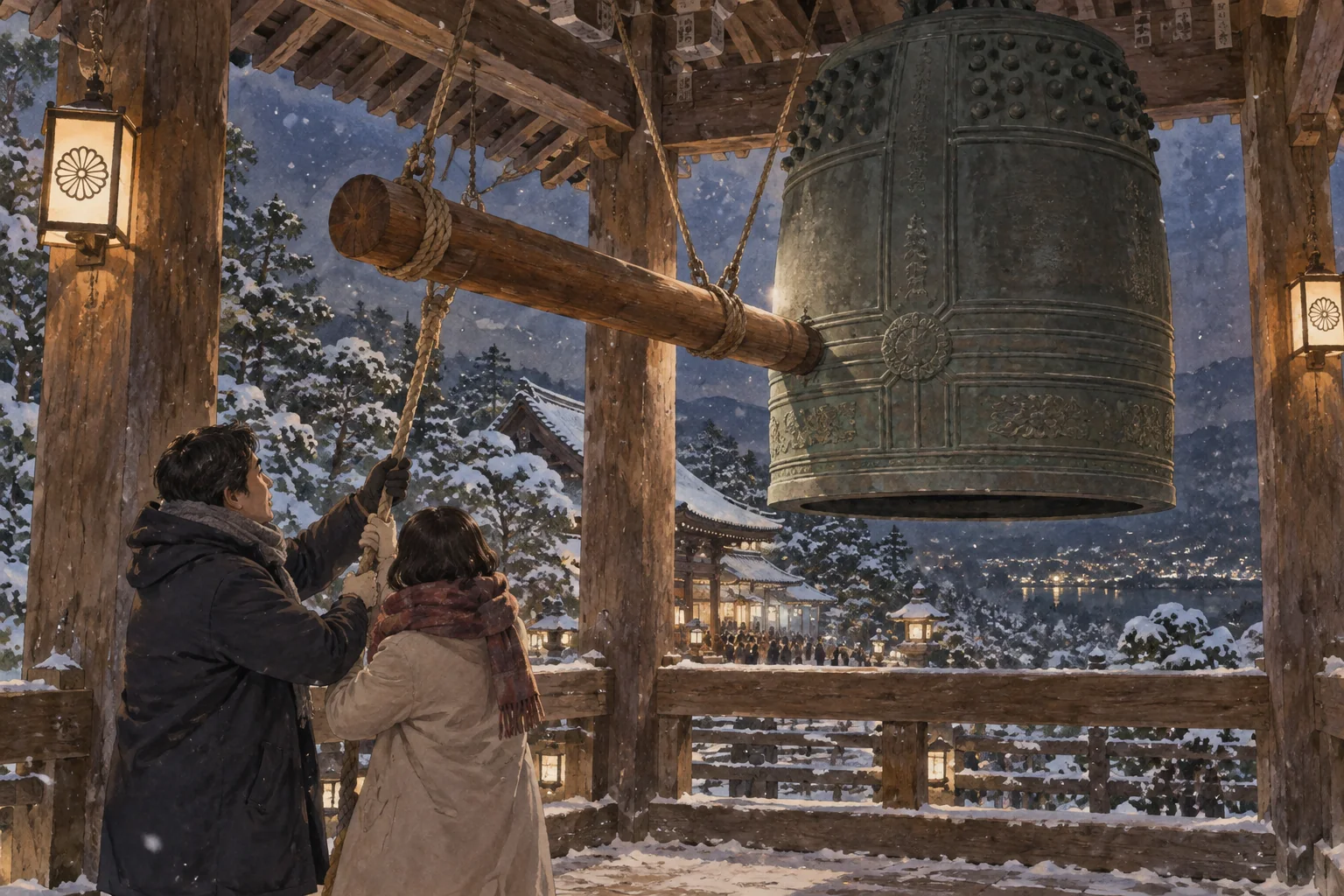
一言で言うと
これだけ覚えれば最低限伝わる一文
Joya no kane is the ringing of temple bells 108 times at midnight on New Year's Eve.
除夜の鐘とは、大晦日の夜に寺の鐘を108回つくことです。
30秒で説明する
外国人に説明するときの標準サイズ
At midnight on December 31st, Buddhist temples across Japan ring their large bells 108 times. The number is said to correspond to the 108 bonno, the desires and attachments that cause human suffering, one struck away with each ring. Many temples let visitors ring it, and at some you have to line up or get a numbered ticket.
12月31日の深夜、日本中の寺が大きな鐘を108回つきます。この数は、人の苦しみのもとになる108の煩悩に対応するとされ、一つずつ払っていくと言われます。多くの寺では一般の人もつくことができ、整理券や行列が必要な寺もあります。
スピーチ・英作文
通訳案内士の二次口述・大学入試の自由英作文に
On New Year's Eve, at around midnight, Buddhist temples all over Japan begin ringing their large bronze bells. Most ring one hundred and eight times, though some let everyone in line take a turn and go well past that. The number comes from Buddhist teaching: one hundred and eight bonno, the desires and attachments said to cause human suffering, and each strike is understood to clear one of them.
Many temples ring one hundred and seven times before midnight and the last one after the year has turned, so the final strike belongs to the new year. Many temples let ordinary people take a turn, and at popular ones you have to wait in line in the cold or collect a numbered ticket in advance.
The sound carries a long way at that hour, and if you are at home watching television, you will hear it in the background of the broadcast. There is one modern footnote: some temples have stopped or moved the ringing to daytime after noise complaints from neighbors.
大晦日の深夜0時ごろ、日本中の寺が大きな梵鐘をつきはじめます。多くは108回ですが、並んだ人全員につかせて108回を大きく超える寺もあります。この数は仏教の教えに由来します。人の苦しみのもとになるとされる108の煩悩で、一打ごとに一つ払うと理解されています。
多くの寺は年内に107回つき、最後の1回を年が明けてからつきます。最後の一打が新年のものになるようにするためです。一般の人にもつかせてくれる寺は多く、人気の寺では寒いなか並ぶか、事前に整理券を取る必要があります。
その時刻の鐘の音は遠くまで届き、家でテレビを見ていても、放送の背景に聞こえてきます。現代的な補足がひとつあります。近隣からの騒音の苦情を受け、中止したり昼間に移したりした寺もあります。
こう聞かれたら
外国人から実際にされる質問と、その答え方。
Can I ring it myself?
自分でついてもいいのですか。
At many temples, yes. Some let anyone who lines up take a turn, others hand out a limited number of tickets earlier in the evening. Some large, famous temples, such as Chion-in in Kyoto, leave it to the monks.
多くの寺ではつけます。並べば誰でもという寺もあれば、夕方に人数分の整理券を配る寺もあります。京都の知恩院のように、僧侶だけでつく有名な大寺院もあります。
What exactly are the 108 bonno?
百八つの煩悩とは具体的に何ですか。
There are several ways of arriving at the number, usually by multiplying the six senses by categories of perception and by past, present and future. The exact scheme varies, and most people simply know the number.
数の導き方は複数あり、六根に感覚の区分や過去・現在・未来を掛け合わせる説明が一般的です。組み立て方には諸説あり、多くの人は数だけを知っています。
Is it related to hatsumode?
初詣と関係があるのですか。
They happen the same night but belong to different traditions. The bell is Buddhist and rings out the old year; hatsumode is usually a shrine visit and starts the new one. Many people do both in one night.
同じ夜の出来事ですが、別の伝統です。鐘は仏教で古い年を送り、初詣はふつう神社への参拝で新しい年を始めます。同じ夜に両方する人は多くいます。
そのまま使えるフレーズ
- The bell is rung 108 times at midnight.深夜0時に鐘を108回つきます。
- The number matches the 108 worldly desires.108という数は煩悩の数に合わせています。
- The last strike comes after the year turns.最後の一打は、年が明けてからつきます。
- At some temples anyone can have a turn.一般の人もつける寺があります。
- You can hear it on the television broadcast.テレビの中継でも聞こえます。
説明に使う語句
- temple bell梵鐘、寺の鐘
- worldly desires煩悩
- strike (a bell)(鐘を)つく
- resonate響く
- line up並ぶ
動画で見る
YouTube より豆知識
除夜の鐘の習慣は中国の宋代の禅寺に由来し、鎌倉時代に日本へ伝わったとされる。107回を年内に、最後の1回を年明けにつく寺が多い。NHKは1927年にラジオで除夜の鐘の放送を始め、1929年には上野の寛永寺から中継した。これがのちの『ゆく年くる年』につながり、除夜の鐘が全国の習慣として定着したのはこのラジオ放送がきっかけだとする見方もある。煩悩の数え方には、六根(眼・耳・鼻・舌・身・意)に好・悪・平の三、浄・染の二、過去・現在・未来の三を掛けて108とする説などがある。近年は騒音の苦情を理由に中止・昼間実施に切り替える寺が各地で報じられ、逆に「除夜の鐘を守ろう」という地域の動きも起きている。
