祭りの屋台まつりのやたい
matsuri no yatai
the food and game stalls at a festival
焼きそば、金魚すくい、射的。祭りの中身の半分は、参道に並ぶ店。
一言で言うと
これだけ覚えれば最低限伝わる一文
Yatai are the stalls lining the approach to a festival, selling food, drinks and simple games.
屋台とは、祭りの参道に並ぶ店のことで、食べ物や飲み物、簡単な遊びを売っています。
30秒で説明する
外国人に説明するときの標準サイズ
At many Japanese festivals, the path to the shrine fills with stalls: fried noodles, squid on a stick, chocolate-coated bananas, shaved ice, and games like scooping goldfish or shooting at prizes with a cork gun. You eat standing up, usually pay in cash, and the stalls are as much the point of the evening as the ceremony itself.
日本の祭りでは、神社へ向かう道に店が並びます。焼きそば、いかの串焼き、チョコバナナ、かき氷。遊びなら、金魚すくいやコルク銃の射的です。立ったまま食べ、支払いはたいてい現金で、その晩の楽しみは神事と同じくらい、この店の並びにあります。
スピーチ・英作文
通訳案内士の二次口述・大学入試の自由英作文に
If you go to a Japanese festival, the first thing you will meet is not the ceremony but the stalls. They line the approach to the shrine, lit by bare bulbs, and the menu is remarkably consistent across the country: yakisoba fried noodles, takoyaki octopus balls, grilled squid, sausages on sticks, candied apples, chocolate-coated bananas and shaved ice.
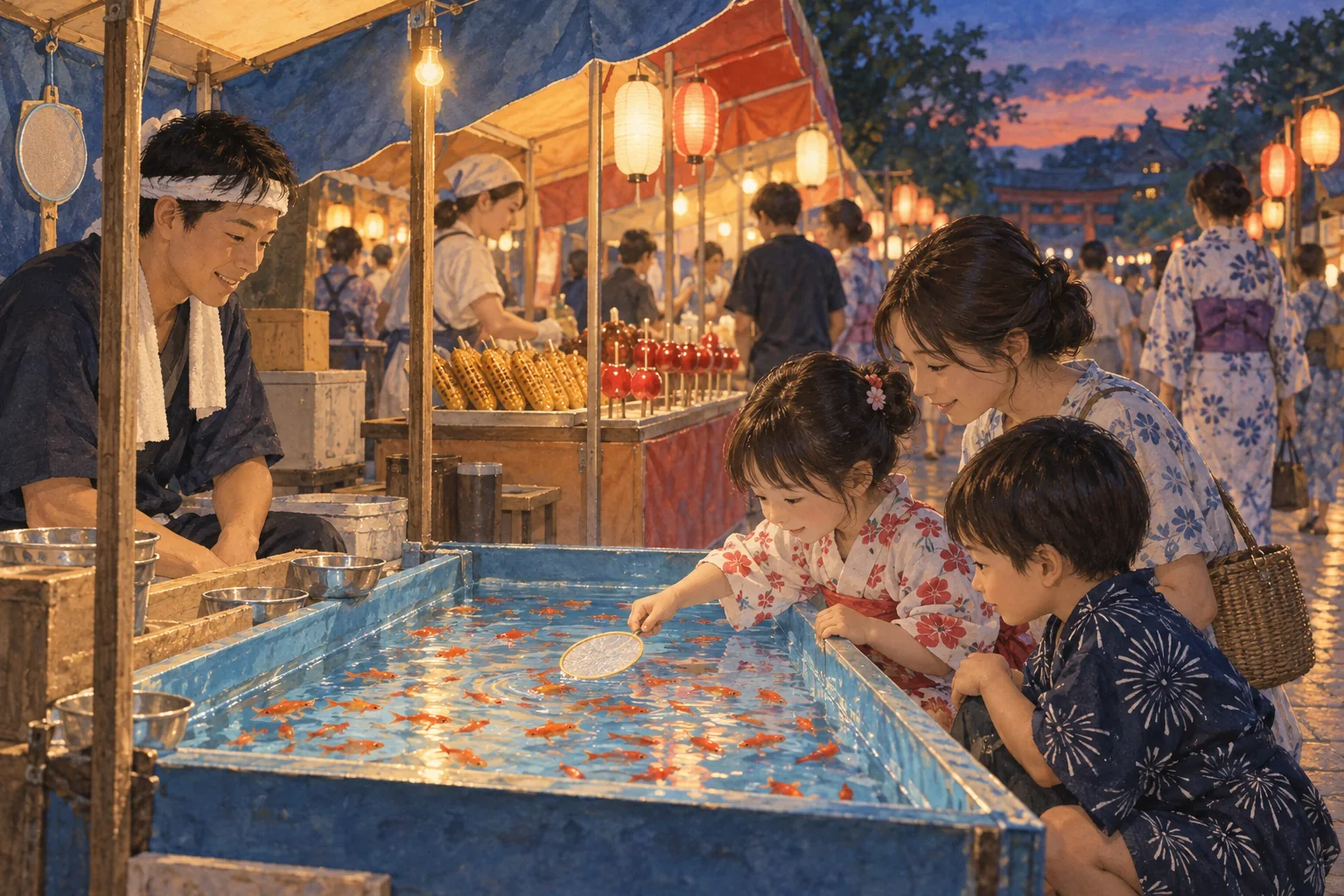
Alongside the food are the games, and those are the ones children save their coins for. Goldfish scooping gives you a paper scoop that tears once it is wet, so the skill is in lifting quickly and at an angle. Cork shooting, ring tossing and a lucky-string draw work on similar principles, which is that winning is possible but unlikely.
Two practical notes. Bring cash in small notes and coins, because many stalls still do not take cards or electronic payment, and use the trash points near the stalls if there are any; if not, take your trash with you. This is also one of the few places in Japan where eating while walking is completely normal.
日本の祭りへ行くと、最初に出会うのは神事ではなく屋台です。裸電球に照らされて神社への道に並び、品書きは全国どこでも驚くほど似ています。焼きそば、たこ焼き、いか焼き、串に刺したソーセージ、りんご飴、チョコバナナ、かき氷。
食べ物と並ぶのが遊びの店で、子どもが小銭を握りしめるのはこちらです。金魚すくいは、濡れると破れる紙の道具を渡されるので、素早く、斜めにすくうのが腕の見せどころです。射的、輪投げ、くじ引きも仕組みは同じで、当たることはあるが、めったに当たらないようにできています。
実用の点が二つ。細かい紙幣と小銭を持っていってください。今も現金しか使えない店が多いです。ごみは、屋台のそばにごみ箱があればそこへ、無ければ持ち帰ってください。ここは、日本で歩きながら食べてもまったく普通とされる、数少ない場面の一つでもあります。
こう聞かれたら
外国人から実際にされる質問と、その答え方。
Is it really acceptable to eat while walking here?
ここでは歩きながら食べてもいいのですか。
At a festival, yes. Eating on the move is generally avoided in Japan, but the stalls exist precisely for it, and everyone around you is doing the same. Outside the festival grounds the normal habit returns.
祭りでは問題ありません。日本では歩きながら食べるのをふつうは避けますが、屋台はそのためにあり、周りの人も同じことをしています。祭りの場を出れば、いつもの習慣に戻ります。
Can I keep the goldfish I scoop?
すくった金魚は持ち帰れますか。
You can, and the stall will bag it in water. Think before you do, because they need a tank and care, and taking one back to a hotel is a bad idea. Many stalls will let a child take a small prize instead.
持ち帰れます。店が水と一緒に袋に入れてくれます。ただし、水槽と世話が必要なので、その前に考えてください。宿へ連れて帰るのはよくありません。代わりに小さな景品をくれる店も多いです。
Are the stalls run by the shrine?
屋台は神社が出しているのですか。
Usually not. Many are run by traveling stallholders who follow the festival calendar around the region, which is why the same faces and the same signs appear at different shrines through the summer. At small local festivals, neighborhood groups may run some stalls themselves.
ふつうは違います。多くは、祭りの日程を追って地域を回る的屋の人たちが出しています。夏のあいだ、別々の神社で同じ顔と同じ看板を見かけるのは、そのためです。小さな地域の祭りでは、町内会などが自分たちで店を出すこともあります。
そのまま使えるフレーズ
- One yakisoba, please.焼きそばを一つください。
- How much is a scoop?一回いくらですか。
- Do you take cards?カードは使えますか。
- Where can I throw this away?ごみはどこに捨てればいいですか。
- Let us look at the stalls first.先に屋台を見て回りましょう。
説明に使う語句
- a stall屋台
- a stallholder屋台の人・的屋
- a prize景品
- on a stick串に刺した
- small change小銭
動画で見る
YouTube より豆知識
屋台の並ぶ場所は、神社の参道や境内、河川敷、商店街などです。品書きは全国で似ていますが、地域の名物が加わることもあり、大阪ならたこ焼き、広島ならお好み焼きの店が目立ちます。金魚すくいの道具はポイと呼び、紙の厚さで難しさが変わります。射的は、コルクの弾で棚の景品を落とせばもらえる遊びです。近年はキャッシュレスに対応する屋台も出てきましたが、現金だけの店がまだ多くあります。ごみは屋台の近くに集積場所が設けられることが多く、そこへ出します。
