盆踊りぼんおどり
bon odori
the summer circle dance
誰でも入れる。振りは繰り返しなので、見ているうちに覚えられる。
一言で言うと
これだけ覚えれば最低限伝わる一文
Bon odori is a summer dance in a circle around a raised platform, open to anyone passing by.
盆踊りとは、櫓を囲んで輪になって踊る夏の踊りで、通りかかった誰でも加われます。
30秒で説明する
外国人に説明するときの標準サイズ
Bon odori is danced in summer, usually in a park or a shrine ground, around a wooden tower with drummers and singers on it. People form a circle and repeat a short sequence of movements for hours. It originated as a dance to welcome and send off ancestral spirits during Obon, and anyone may join.
盆踊りは夏に、たいていは公園や神社の境内で、太鼓と歌い手の乗る櫓のまわりで踊られます。人々は輪をつくり、短い振りを何時間も繰り返します。お盆に先祖の霊を迎えて送るための踊りに始まり、誰でも輪に入ることができます。
スピーチ・英作文
通訳案内士の二次口述・大学入試の自由英作文に
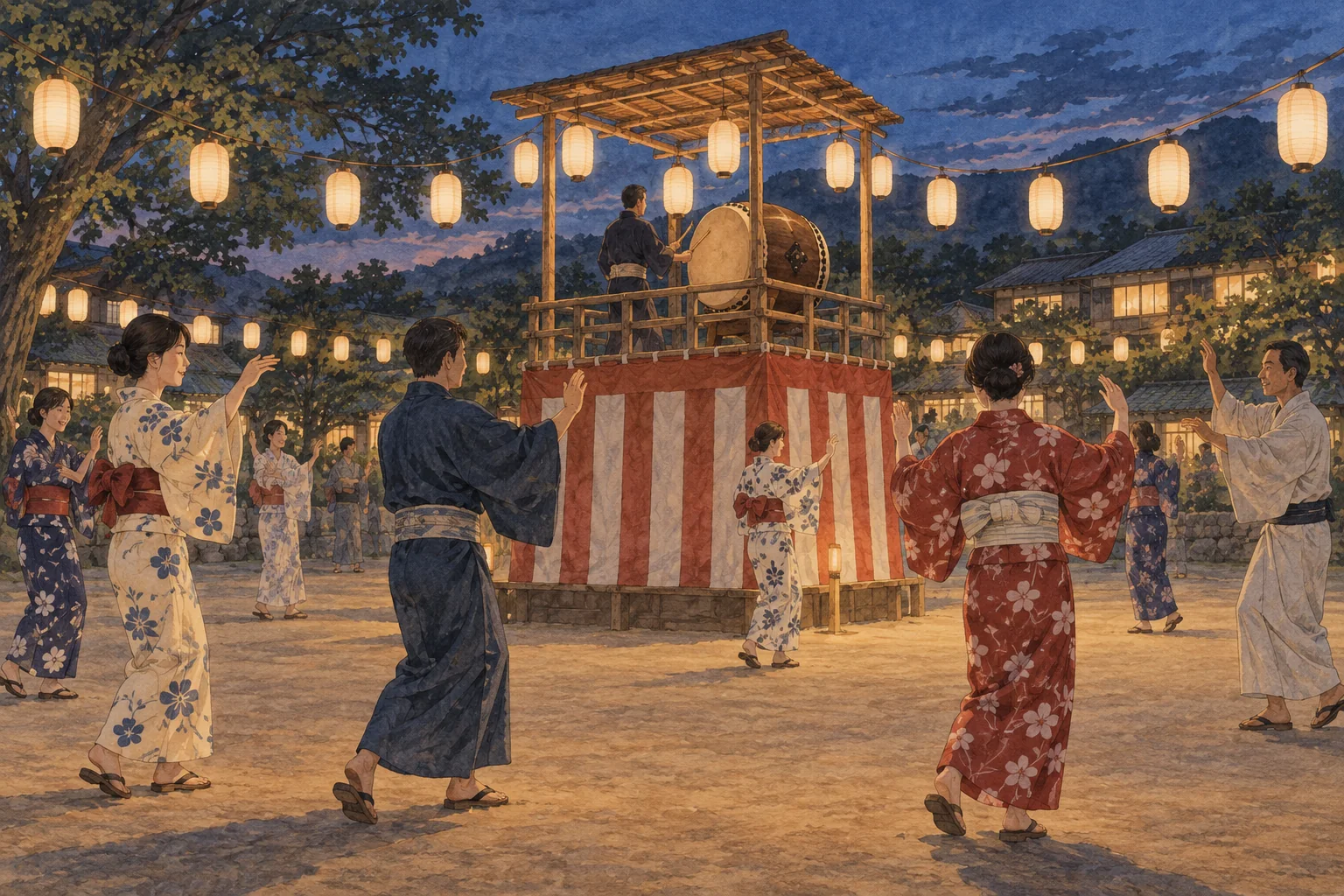
Bon odori is the dance you will run into if you are anywhere in Japan in July or August. A wooden tower is built in a park, a school ground or a shrine precinct, drummers and a singer stand on top, lanterns are strung out from it, and people form a circle and dance around it.
The movements are a short sequence repeated over and over, so you can join the back of the circle, watch the person in front, and be dancing correctly within a few minutes. That is the design: it is meant to be joined, not performed.
It is said to have begun as a Buddhist dance connected with welcoming and sending off the spirits of the dead during Obon, and that origin is still visible in some regional versions. Elsewhere it has become simply a neighborhood summer evening, with food stalls, children in yukata and a raffle at the end. Nobody will stop a foreigner joining in. Standing outside the circle is the only mistake.
盆踊りは、七月か八月に日本のどこかにいれば、必ず行き当たる踊りです。公園や校庭や神社の境内に櫓が組まれ、その上に太鼓の打ち手と歌い手が立ち、そこから提灯が放射状に張られ、人々が輪をつくってまわりを踊ります。
振りは短いひと続きの繰り返しなので、輪の後ろに加わり、前の人を見ていれば、数分のうちにきちんと踊れるようになります。それが設計です。見せるためではなく、加わってもらうためのものだからです。
もとはお盆に死者の霊を迎え、送るための仏教の踊りに始まったとされ、その由来は今も地域によっては残っています。ほかの土地では、屋台が出て、子どもが浴衣を着て、最後に福引がある、ただの近所の夏の夕べになっています。外国の人が加わるのを止める人はいません。唯一の間違いは、輪の外に立っていることです。
こう聞かれたら
外国人から実際にされる質問と、その答え方。
Can I really just join in?
本当に飛び入りで踊っていいのですか。
Yes. Walk to the back of the circle and copy the person in front of you. Nobody is watching your feet, the sequence repeats, and most of the people dancing learned it the same way as children.
入れます。輪の後ろに歩いていって、前の人を真似してください。誰も足元を見ていませんし、振りは繰り返しです。踊っている人の多くも、子どものころに同じやり方で覚えました。
Do I need a yukata?
浴衣は必要ですか。
No, ordinary clothes are completely normal and most adults wear them. If you want to wear a yukata, rental shops near tourist areas will dress you, but it is not expected and it is hot.
要りません。ふだんの服でまったくふつうですし、大人の多くはそうしています。浴衣を着たければ観光地近くの貸衣装店で着付けてもらえますが、求められてはいませんし、暑いです。
Is it religious?
宗教の行事なのですか。
In origin, yes, connected with Obon and the ancestral dead. In practice most neighborhood events are social occasions. Some regional dances, particularly older ones in rural areas, keep a much stronger ritual character.
由来としてはそうで、お盆と先祖の霊に結びついています。実際には、町内の催しは社交の場であることがほとんどです。地方に残る古い踊りには、儀礼としての性格がずっと強いものもあります。
そのまま使えるフレーズ
- Just join the back of the circle.輪の後ろから入ってください。
- The steps repeat, so you'll pick it up.振りは繰り返しなので覚えられます。
- Ordinary clothes are fine.ふだんの服で大丈夫です。
- The drummers are on the tower.太鼓は櫓の上です。
説明に使う語句
- circle dance輪踊り
- raised platform櫓
- paper lantern提灯
- food stall屋台
動画で見る
YouTube より豆知識
盆踊りは、念仏を唱えながら踊った踊り念仏に起源があるとされ、やがて娯楽の色を強めました。徳島の阿波踊り、岐阜の郡上おどり、秋田の西馬音内の盆踊が広く知られています。郡上おどりは夏の間に三十夜ほどにわたって行われ、盆の時期には夜通し踊る日があります。町内会が運営する小規模なものは、飲食の屋台や子ども向けの催しを伴い、夏休みの行事として定着しています。曲は伝統的なものに加え、地域ごとの新しい曲が使われることもあります。
