念仏ねんぶつ
nenbutsu
calling the Buddha's name
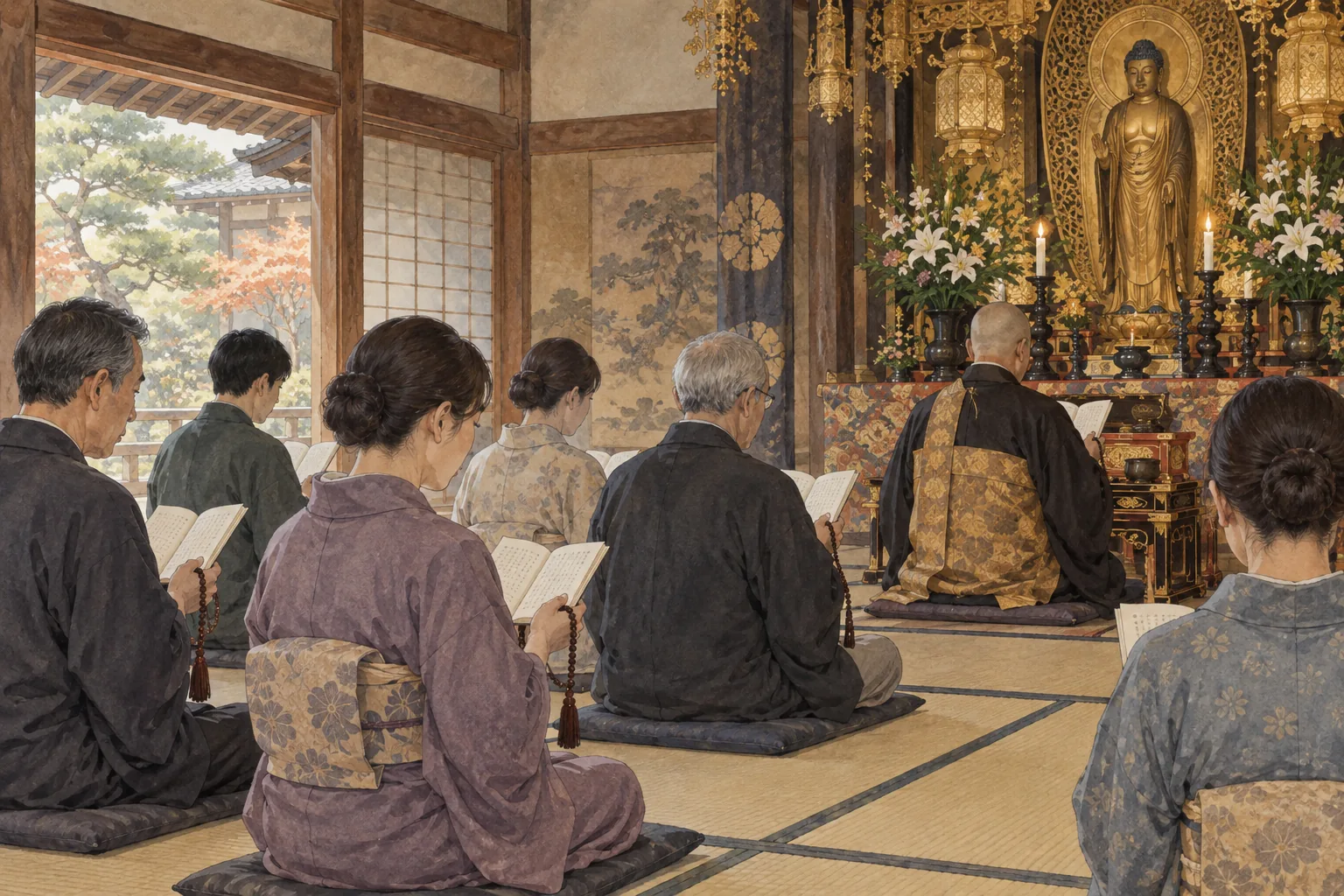
修行も学問も要らない。名を唱えるだけでよい。それが広まった理由だった。
一言で言うと
これだけ覚えれば最低限伝わる一文
Nenbutsu is the practice of reciting the name of Amida Buddha, open to anyone regardless of learning.
念仏とは阿弥陀仏の名を唱える行で、学識の有無にかかわらず誰にでも開かれています。
30秒で説明する
外国人に説明するときの標準サイズ
Nenbutsu means reciting the phrase namu amida butsu, entrusting oneself to Amida Buddha. Pure Land teachers in the twelfth and thirteenth centuries argued that this alone was enough for salvation, without monastic training, literacy or wealth. That made it the form of Buddhism that reached ordinary people, and Pure Land schools, taken together, are generally counted as the largest in Japan today.
念仏とは「南無阿弥陀仏」と唱え、阿弥陀仏に身をゆだねることです。12世紀から13世紀の浄土の教えの祖師たちは、修行も読み書きも財も要らず、これだけで救われると説きました。そのために念仏は庶民に届いた仏教となり、浄土系の宗派は合わせると今日の日本で最大の勢力とされます。
スピーチ・英作文
通訳案内士の二次口述・大学入試の自由英作文に
Nenbutsu is the recitation of namu amida butsu, a phrase meaning roughly I entrust myself to Amida Buddha. Its importance in Japanese history is social as much as religious. Buddhism in Japan had long required things ordinary people did not have: entry to a monastery, the ability to read difficult texts, money to fund ceremonies.
In the twelfth and thirteenth centuries Honen and then Shinran argued that reciting the name in trust was itself sufficient, and that no amount of learning or merit added to it. That put salvation within reach of farmers, fishermen and the illiterate, and the schools that followed are generally counted as the largest in Japan by number of households.
It was controversial at the time and both teachers were exiled. Shinran went further and allowed clergy to marry and eat meat, which is why priests in that tradition live in families and pass temples to their children.
念仏とは「南無阿弥陀仏」と唱えることで、おおよそ阿弥陀仏に身をゆだねます、という意味の言葉です。日本の歴史におけるその重みは、宗教の面と同じくらい社会の面にあります。日本の仏教は長いあいだ、庶民の持たないものを求めてきました。
寺に入ること、難しい経典を読む力、法要を営む財です。12世紀から13世紀にかけて、法然が、続いて親鸞が、信じて名を唱えることそれ自体で足り、学識も功徳もそれに付け加えるものではないと説きました。これによって救いは、農民にも漁民にも、読み書きのできない人にも届くところに来ました。
その流れをくむ宗派は、檀家の数で日本最大とされます。当時これは物議をかもし、二人とも流罪になりました。親鸞はさらに進んで、僧が妻帯し肉を食べることを認めます。この系統の僧が家庭を持ち、寺を子に継がせるのは、そのためです。
こう聞かれたら
外国人から実際にされる質問と、その答え方。
Does the number of recitations matter?
唱える回数に意味はあるのですか。
The schools differ. Honen's teaching emphasized continued recitation; Shinran taught that the entrusting heart is what matters and that a single recitation is enough, with further ones expressing gratitude rather than adding merit.
宗派によって違います。法然は唱え続けることを重んじ、親鸞は、ゆだねる心こそが要であり一度で足りる、それ以後は功徳を積むためではなく感謝を表すものだと説きました。
Why can priests in some schools marry?
どうして宗派によっては僧侶が結婚できるのですか。
Because Shinran, who married openly in the thirteenth century, taught that the precepts could not be the ground of salvation. That tradition has had married clergy ever since, and after 1872 the state permitted it across all schools.
13世紀に公然と妻帯した親鸞が、戒律を救いの根拠とはしないと説いたからです。この伝統では以後ずっと僧が家庭を持ちました。1872年以降は、国の側でもすべての宗派に対して妻帯を認めています。
そのまま使えるフレーズ
- You just recite the name.名を唱えるだけです。
- No training or learning is required.修行も学問も要りません。
- This is one of the largest schools in Japan.日本で最大級の宗派です。
- Priests in this tradition marry.この宗派の僧は妻帯します。
説明に使う語句
- to recite唱える
- salvation救い
- founder (of a school)祖師
- precepts戒律
動画で見る
YouTube より豆知識
法然は浄土宗を、その弟子とされる親鸞は浄土真宗を開いたとされます。ともに旧来の仏教勢力の反発を受け、流罪に処されました。親鸞の言葉を弟子がまとめたとされる『歎異抄』は、今も広く読まれています。浄土真宗では亡くなった人の名を「戒名」ではなく「法名」と呼び、線香を立てずに折って寝かせるなど、他の宗派と作法が異なります。踊りながら念仏を唱える踊り念仏は、のちの盆踊りにつながったとされます。
