町内会と回覧板ちょうないかいとかいらんばん
chonaikai and kairanban
the neighborhood association and its circulating folder
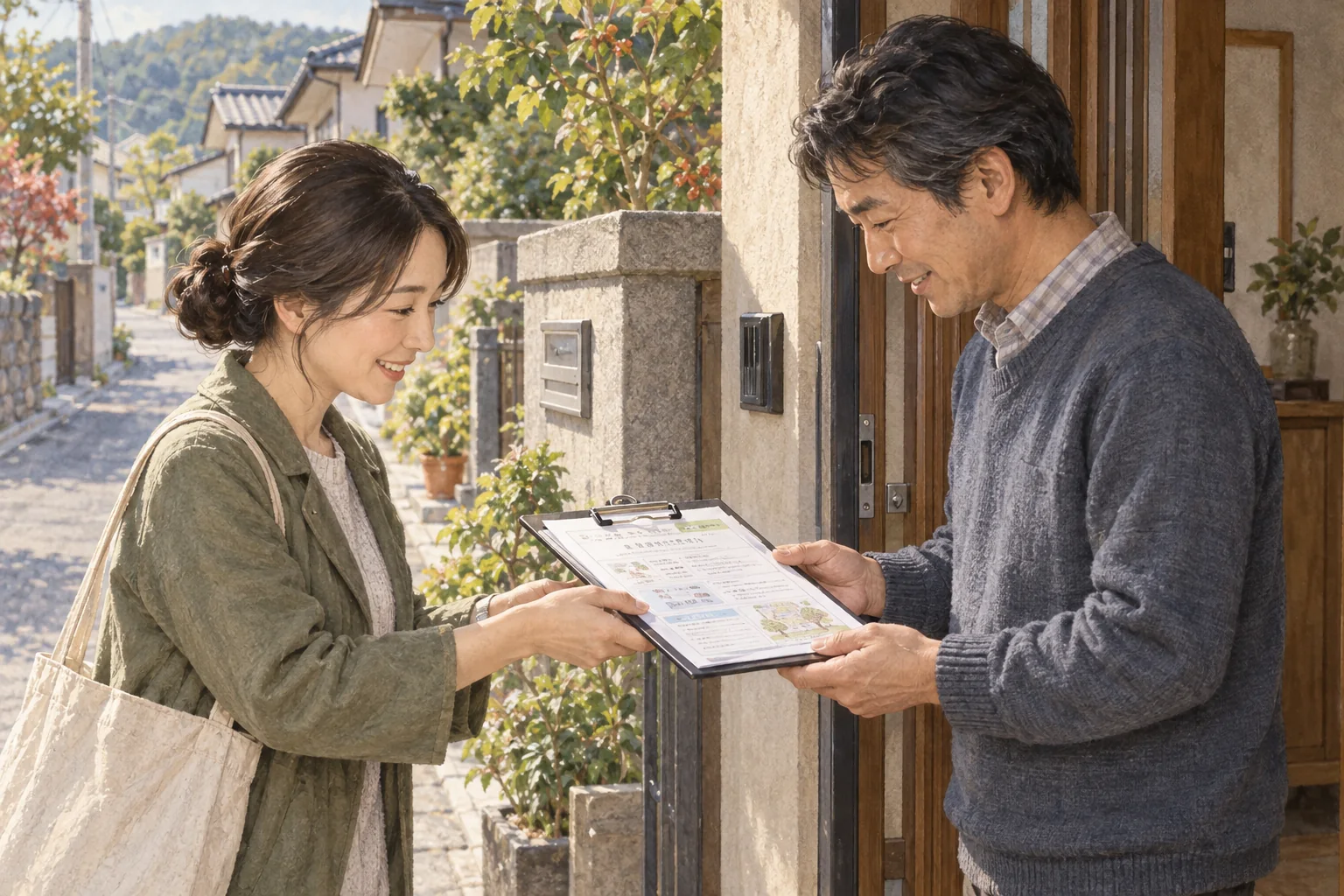
紙のお知らせを、隣の家へ手渡しで回す。今でも。
一言で言うと
これだけ覚えれば最低限伝わる一文
A chonaikai is a neighborhood association, and the kairanban is the folder of notices passed house to house.
町内会とは地域の住民組織で、回覧板はその知らせを家から家へ手渡しで回す綴りです。
30秒で説明する
外国人に説明するときの標準サイズ
A chonaikai is a voluntary neighborhood association that organizes the local festival, manages the garbage collection point, runs disaster drills and passes on notices from the city. The kairanban is a folder of printed notices that circulates from house to house: you read it, sign or stamp it, and take it next door.
町内会は任意の住民組織で、地域の祭りを取り仕切り、ごみの集積所を管理し、防災訓練を行い、市からの知らせを伝えます。回覧板はその印刷物を綴じたもので、家から家へ回ります。読んだら署名か押印をして、隣の家へ持っていきます。
スピーチ・英作文
通訳案内士の二次口述・大学入試の自由英作文に
A chonaikai is a neighborhood association, and in many parts of Japan it is the layer of organization between the household and the city office. It runs the local festival, maintains the garbage collection point, organizes the disaster drill, keeps an eye on elderly residents, and distributes information from the municipality.
Membership is legally voluntary, but in a settled neighborhood declining can be awkward, and there is usually a small annual fee. The kairanban is its most visible artifact: a board or folder holding printed notices, which goes from house to house in a fixed order.
You read it, stamp or check off your name, and carry it to the next address, usually within a day. People from abroad find it charmingly analog and also slightly startling, because it means your neighbors know whether you have read it. Participation is falling in cities, and some associations now send the same notices by messaging app instead.
町内会は地域の住民組織で、日本の多くの場所では、家庭と役所の間にある組織の層です。地域の祭りを運営し、ごみの集積所を保ち、防災訓練を行い、高齢の住民に目を配り、自治体からの情報を配ります。
加入は法律上は任意ですが、落ち着いた住宅地では断りにくいことがあり、たいてい少額の年会費があります。回覧板はその最も目に見える道具です。印刷した知らせを挟んだ板か綴りで、決まった順番で家から家へ回ります。読んだら名前の欄に押印か印をつけ、ふつうは一日のうちに次の家へ持っていきます。
外国から来た人はこれを、味わい深く手作業的だと感じると同時に、少し驚きます。読んだかどうかを近所が把握しているということだからです。都市では参加が減っていて、同じ知らせをメッセージアプリで送る町内会も出てきました。
こう聞かれたら
外国人から実際にされる質問と、その答え方。
Do I have to join?
加入しなければいけませんか。
Legally no. In practice it depends on the neighborhood. In an apartment in a big city many residents never join and nothing happens. In a small town, the association may control access to the garbage point and the festival, so not joining is more visible.
法律上は必要ありません。実際には地域によります。大都市の集合住宅では加入しない住民が多く、それで問題は起きません。小さな町では、ごみの集積所や祭りを町内会が取り仕切っていることがあり、加入しないことが目につきます。
What do I do when the folder arrives?
回覧板が回ってきたら、どうすればいいですか。
Read the notices, put your seal or a check mark next to your name on the list, and take it to the next house on that list within a day. If nobody is home, leave it in the mailbox rather than keeping it.
知らせに目を通し、名簿の自分の欄に押印か印をつけ、一日のうちに名簿の次の家へ持っていきます。留守なら、手元に置かずに郵便受けに入れてください。
そのまま使えるフレーズ
- Pass it to the next house on the list.名簿の次の家に回してください。
- Put your seal next to your name.自分の欄に押印してください。
- The association runs the garbage point.ごみの集積所は町内会が管理しています。
- Joining is voluntary, strictly speaking.厳密には加入は任意です。
説明に使う語句
- neighborhood association町内会
- circulating notice board回覧板
- membership fee会費
- disaster drill防災訓練
動画で見る
YouTube より豆知識
町内会や自治会は法律上の行政組織ではなく、任意の団体です。それでも、ごみの集積所の管理、防犯灯の維持、祭りの運営、災害時の安否確認など、実際には公共に近い役割を担ってきました。加入率は都市部を中心に下がり続けており、担い手の高齢化も課題になっています。回覧板は紙のまま残る地域が多い一方、電子化を進める自治体もあります。回覧板が回ってこない場合は、そもそも未加入であることが多いです。
