ラジオ体操らじおたいそう
rajio taiso
the national radio exercise routine
音楽を聞けば体が動く。多くの日本人が同じ動きを覚えている。
一言で言うと
これだけ覚えれば最低限伝わる一文
Rajio taiso is a short national exercise routine that most Japanese people know by heart.
ラジオ体操とは、日本人の多くが体で覚えている短い国民的な体操です。
30秒で説明する
外国人に説明するときの標準サイズ
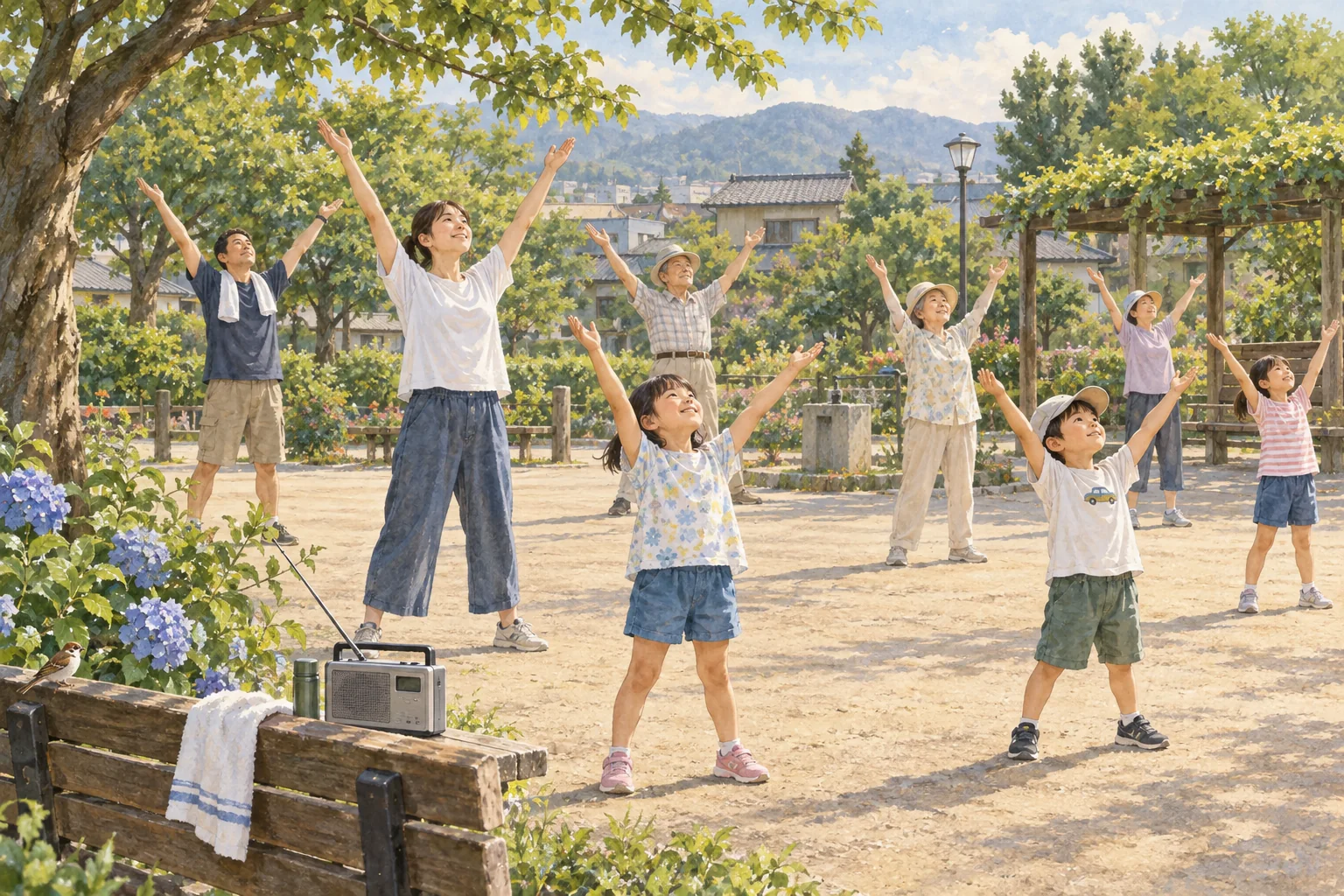
Rajio taiso is a three-minute exercise sequence broadcast on radio and television, set to a piano accompaniment that most Japanese people can recognize instantly. It is done in schools, at workplaces, at construction sites and in parks, and children attend early-morning sessions during the summer holiday to collect stamps.
ラジオ体操は、ラジオとテレビで流れる三分ほどの体操で、日本人のほとんどが即座に分かるピアノの伴奏がついています。学校、職場、建設現場、公園で行われ、子どもは夏休みに早朝の会に通ってスタンプを集めます。
スピーチ・英作文
通訳案内士の二次口述・大学入試の自由英作文に
Rajio taiso is a short exercise routine that has been broadcast in Japan since 1928, and its reach is remarkable. Most Japanese people, of any age, can perform the first routine from memory, because they did it at school and again during summer holidays. The music is a piano accompaniment that functions as a national sound.
There are two routines, the first gentle enough for anyone and the second noticeably harder, and they take about three minutes each. You will see it done at school, at company morning meetings, on construction sites before work starts, and in parks at half past six in the morning, where groups of mostly elderly people gather daily.
The summer holiday version is the one people remember most fondly: children go to a local park early each morning and get a stamp on a card for attending, which is also a way of making them get up.
ラジオ体操は1928年から日本で放送されている短い体操で、その行き渡り方は目を見張るものがあります。年代を問わず日本人の多くが、第一の体操を記憶だけで行えます。学校でやり、夏休みにもまたやったからです。
伴奏のピアノは、いわば国民的な音になっています。体操は二つあり、第一は誰にでもできる穏やかなもの、第二は目に見えて難しくなり、それぞれ三分ほどです。学校で、会社の朝礼で、仕事の始まる前の建設現場で、そして朝六時半の公園で行われます。
公園には主に高齢の方が毎日集まっています。夏休みの形が最もなつかしく語られるものです。子どもたちは毎朝早くに近所の公園へ行き、参加するとカードに印を押してもらいます。これは子どもを起こす手立てでもあります。
こう聞かれたら
外国人から実際にされる質問と、その答え方。
Do adults really do this at work?
大人が職場で本当にやっているのですか。
In some sectors, yes, routinely. Construction sites, factories and some offices start the day with it, partly as a warm-up against injury and partly as a way of getting everyone present and attentive at the same moment.
業種によっては、日常的に行われています。建設現場、工場、一部の事務所では一日の始まりに行います。怪我を防ぐ準備運動としての意味と、全員を同じ瞬間にそろえる意味があります。
Why do children get stamps in summer?
どうして夏に子どもがはんこを集めるのですか。
It is an attendance card, usually run by the neighborhood association or a children's group. Children come to the park each morning, do the routine, and get a stamp, and a full card often earns a small prize at the end of the holiday. The real purpose is a regular waking time.
町内会や子ども会が運営することの多い出席のカードです。子どもは毎朝公園に来て体操をし、印をもらいます。全部そろうと、休みの終わりに景品がもらえることもよくあります。本当の目的は、起きる時間を一定に保つことです。
そのまま使えるフレーズ
- Everyone here knows the movements.みなこの動きを覚えています。
- It's been broadcast since 1928.1928年から放送されています。
- Construction sites do it before work starts.現場では仕事の前にやります。
- Children get a stamp for attending.子どもは参加すると印をもらえます。
説明に使う語句
- warm-up準備運動
- to stretch伸ばす
- routine体操
- attendance card出席カード
動画で見る
YouTube より豆知識
ラジオ体操の放送は1928年に始まりました。アメリカの保険会社が行っていた健康増進の取り組みが参考にされたと伝えられます。戦後に一度中断し、現在の第一と第二は1951年以降に制定されたものです。夏休みのラジオ体操は町内会や子ども会が運営し、出席カードに印を押す形が広く行われています。企業では労働災害を防ぐ準備運動として取り入れられ、建設業では始業前の定例になっています。座ったままできる形も作られています。
