給食きゅうしょく
kyushoku
school lunch
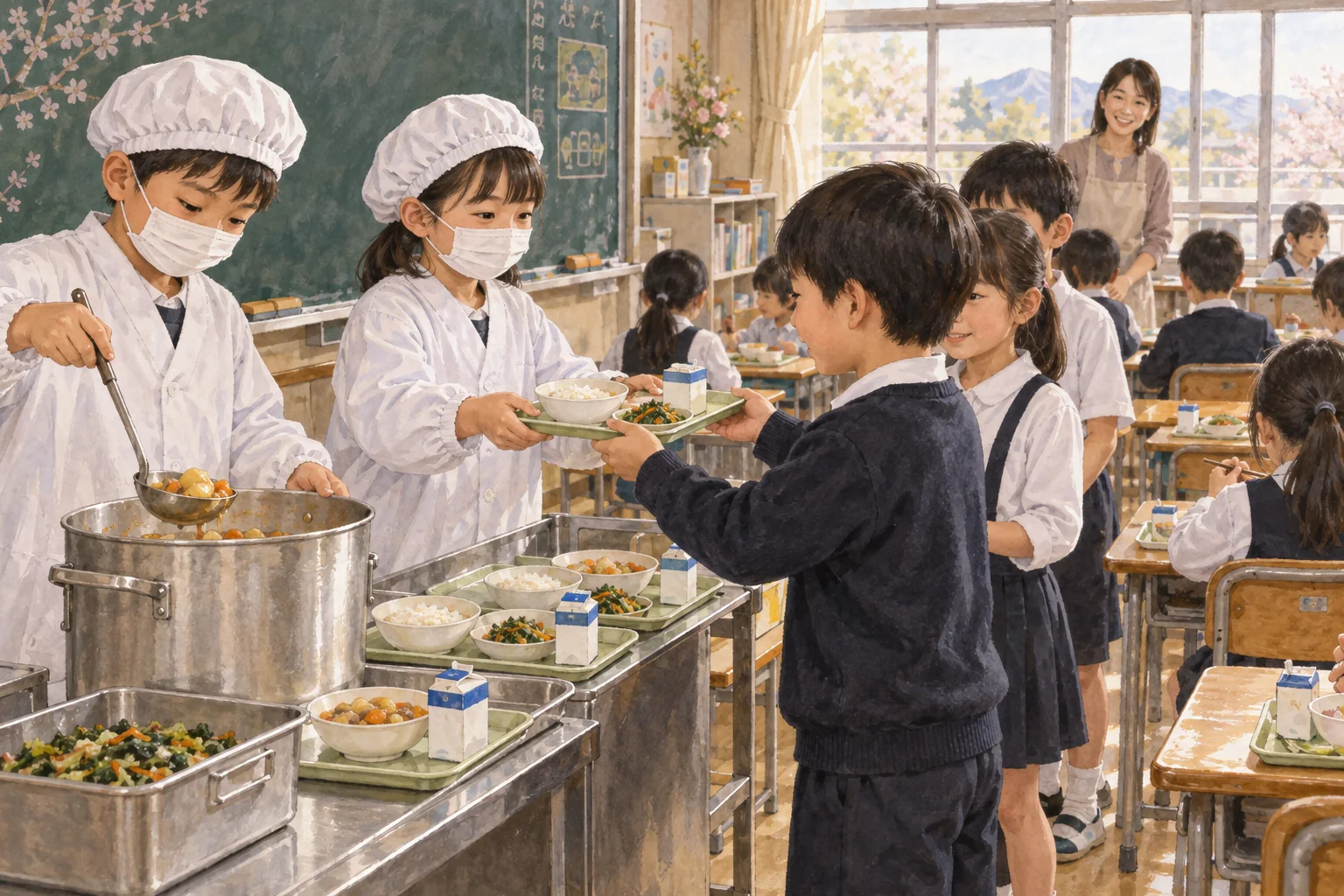
生徒が配膳し、全員が同じものを食べ、残さない。給食は食育という授業。
一言で言うと
これだけ覚えれば最低限伝わる一文
Kyushoku is the school lunch that students serve to each other and eat together in the classroom.
給食とは、生徒が自分たちで配膳し、教室で全員一緒に食べる学校の昼食です。
30秒で説明する
外国人に説明するときの標準サイズ
In Japanese primary and junior high schools, everyone eats the same lunch, cooked that morning, in their own classroom. A rotating team of students in white coats and caps serves it to their classmates. The teacher eats with the class. Menus are designed by a nutritionist, and the meal is treated as a lesson in food, not just a break.
日本の小学校・中学校では、全員が同じ昼食を、その朝作られたものを、自分の教室で食べます。白衣と帽子をつけた当番の生徒がクラス全員に配膳します。先生も一緒に食べます。献立は栄養士が組み、給食は休憩ではなく食の授業として扱われます。
スピーチ・英作文
通訳案内士の二次口述・大学入試の自由英作文に
School lunch in Japan is called kyushoku, and it works differently from a cafeteria. There is no choosing and no lining up. The food is cooked that morning, either in the school kitchen or a central kitchen, and brought to each classroom.
A team of students, wearing white coats and caps, serves it to their classmates, and the same students collect and wash the containers afterwards. Everybody eats the same thing, including the teacher, who sits and eats with the class. Menus are planned by a licensed nutritionist and are legally required to meet nutritional standards.
Local dishes appear regularly so that children learn what their own region eats. The point is not just feeding children. It is called shokuiku, food education, and it is written into law. Children are taught where food comes from, how to serve others, and not to waste it.
日本の学校の昼食は給食といい、カフェテリアとは仕組みが違います。選ぶこともなければ、並ぶこともありません。その朝、学校の給食室か給食センターで調理され、各教室に運ばれます。
白衣と帽子をつけた当番の生徒がクラス全員に配り、片づけと食器の返却も同じ当番が行います。先生を含め全員が同じものを食べ、先生もクラスと一緒に座って食べます。献立は栄養士が組み、栄養の基準を満たすことが法律で求められています。
郷土料理も定期的に出て、子どもは自分の地域が何を食べてきたかを学びます。目的は食べさせることだけではありません。これは食育と呼ばれ、法律に書かれています。食べ物がどこから来るのか、人に配るとはどういうことか、無駄にしないこと。それを教える時間です。
こう聞かれたら
外国人から実際にされる質問と、その答え方。
Can children refuse food they don't like?
嫌いなものは残してもいいのですか。
It varies by school. Forcing children to finish everything used to be common and has been criticized, so many schools now let students reduce their portion before they start rather than making them clear the plate.
学校によります。完食を強いる指導は以前は一般的でしたが批判を受け、今は食べる前に量を減らせるようにして、無理に食べさせない学校が増えています。
What about allergies and religious diets?
アレルギーや宗教上の制限はどうするのですか。
Allergies are handled carefully, with individual menus and checklists, after serious incidents in the past. Religious diets are harder, since menus are fixed, and families sometimes bring a packed lunch instead.
アレルギーは、過去の重大な事故を受けて、個別献立やチェック表で慎重に対応しています。宗教上の食事制限は献立が固定のため難しく、弁当を持参してもらうこともあります。
Is it free?
無料なのですか。
At public primary schools it is now effectively free for most families, because since April 2026 the national and prefectural governments cover the cost up to a set monthly amount. At junior high schools families usually still pay for ingredients, a few hundred yen a meal, though many municipalities cover that too.
公立小学校では、2026年4月から国と都道府県が月ごとの上限額まで費用を負担するようになり、多くの家庭で実質無料になりました。中学校ではふつう食材費として一食数百円程度を家庭が負担しますが、自治体が独自に無償にしている例も多くあります。
そのまま使えるフレーズ
- Everyone eats the same meal, including the teacher.先生も含めて、全員が同じものを食べます。
- The students serve it themselves.配膳は生徒がします。
- It's cooked fresh that morning.その朝に調理されます。
- The menu is planned by a nutritionist.献立は栄養士が組んでいます。
- We say itadakimasu together before eating.食べる前に全員で「いただきます」と言います。
説明に使う語句
- school lunch給食
- serve (food)配膳する
- nutritionist栄養士
- portion一人分の量
- food education食育
動画で見る
YouTube より豆知識
日本の学校給食の起源は1889年、山形県鶴岡町の私立小学校が貧しい家庭の子どもに昼食を出したことにあるとされる。戦後は栄養不足の解消を目的に全国へ広がり、1954年に学校給食法が制定された。2005年には食育基本法が施行され、給食は食育の中心に位置づけられた。パンと脱脂粉乳の時代を経て、1976年に米飯給食が正式に導入され、現在は週3回以上が米飯という学校が多い。給食の食器・食缶を教室まで運ぶ配膳や当番制も、学校給食法の運用の中で定着した仕組みである。
