助数詞じょすうし
josushi
the counters Japanese puts after a number
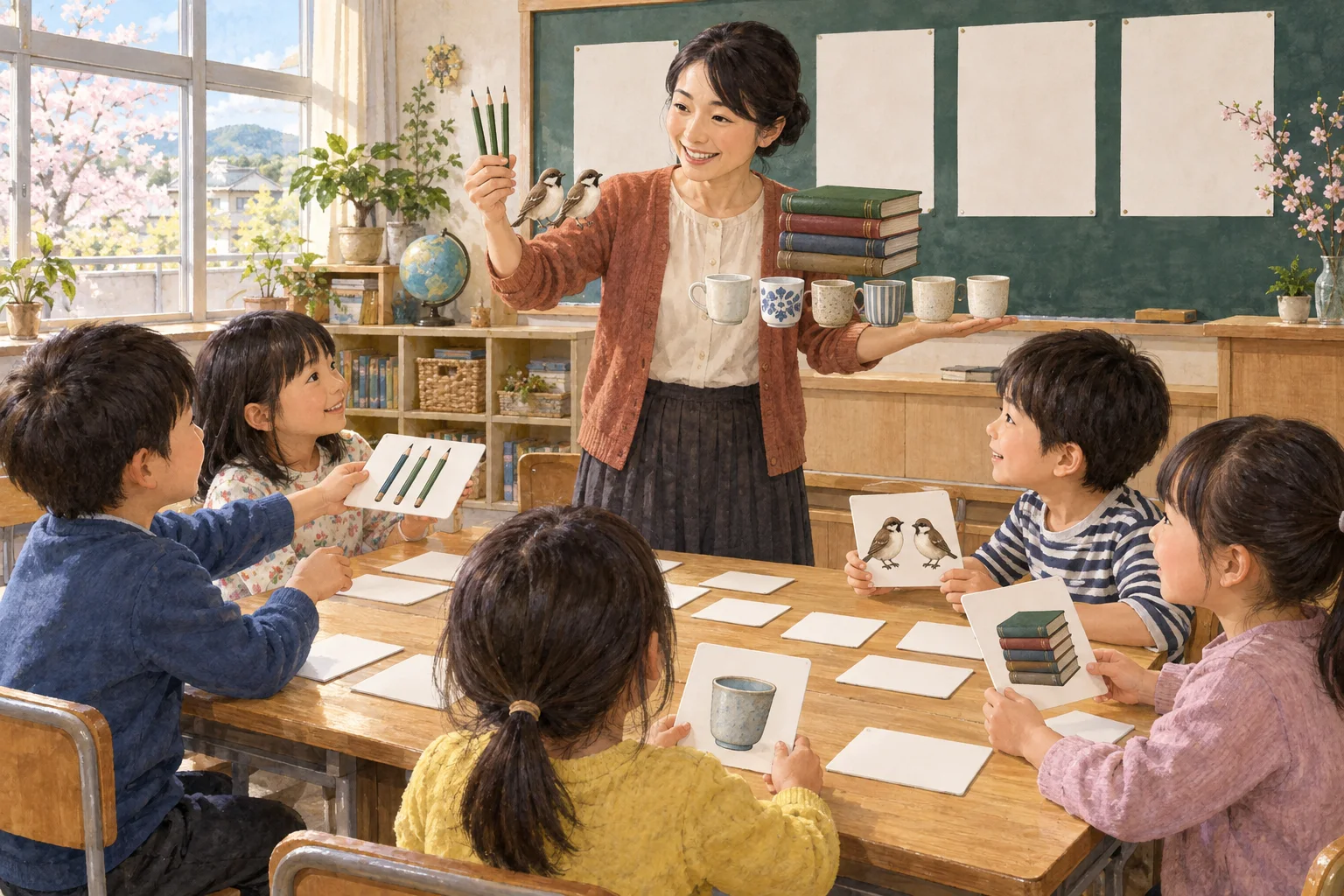
細長いものは本、平たいものは枚。数えるだけで語が変わる。
一言で言うと
これだけ覚えれば最低限伝わる一文
When counting things in Japanese, a counter word naming the kind of thing follows the number.
日本語でものを数えるときは、数のあとに、そのものの種類を表す助数詞を付けます。
30秒で説明する
外国人に説明するときの標準サイズ
In Japanese you do not say two pencils; you say pencils, two long-thin-things. Every countable noun takes a counter chosen by shape or category: hon for long thin things, mai for flat things, hiki for small animals, dai for machines. There are hundreds of them, but about twenty cover ordinary life, and native speakers hesitate over the rare ones too.
日本語では、鉛筆を二つとは言いません。鉛筆を二本と言います。数えられるものには、形や種類によって決まる助数詞が付きます。細長いものは本、平たいものは枚、小さな動物は匹、機械は台です。数百ありますが、日常に必要なのは二十ほどで、珍しい助数詞になれば日本人もためらいます。
スピーチ・英作文
通訳案内士の二次口述・大学入試の自由英作文に
One of the first things that trips up a learner of Japanese is that you cannot simply count. Every object takes a counter word, chosen by its shape or its category. Long thin things take hon, which covers pencils, bottles, umbrellas and, confusingly, home runs and telephone calls.
Flat things take mai: paper, shirts, plates, tickets. Small animals take hiki and large ones take to. Machines take dai, books take satsu, pairs of shoes take soku. Then the pronunciation shifts: one, three and six of the same counter come out as ippon, sanbon and roppon.
There are hundreds in dictionaries and about twenty in daily use, and even Japanese speakers fall back on the generic set for anything unusual. My favorite oddity is that squid and octopus are counted with the word for cupfuls, and rabbits with the word for birds, for reasons nobody agrees on.
日本語を学び始めた人が最初につまずくことの一つが、ただ数えることができない、という点です。ものには必ず助数詞が付き、形や種類によってどれを使うかが決まります。細長いものは本。
鉛筆も瓶も傘も、そして紛らわしいことに、ホームランも電話も本で数えます。平たいものは枚。紙もシャツも皿も切符も枚です。小さな動物は匹、大きな動物は頭。機械は台、本は冊、靴は足。さらに音が変わります。同じ本でも、一本、三本、六本と読みが揺れます。
辞書には数百、日常で要るのは二十ほどで、珍しいものになると日本人も、ひとつ、ふたつという一般的な数え方に逃げます。私が面白いと思うのは、烏賊や蛸を杯で数え、兎を羽で数えることです。理由については、どれが正しいか定まっていません。
こう聞かれたら
外国人から実際にされる質問と、その答え方。
What do I do if I do not know the counter?
助数詞がわからないときはどうすればよいですか。
Use hitotsu, futatsu, mittsu, the native counting series. It works for most concrete objects up to ten, sounds perfectly natural, and is what Japanese speakers themselves reach for when unsure.
ひとつ、ふたつ、みっつという和語の数え方を使ってください。十までのたいていのものに使えて、まったく自然に聞こえます。日本人も迷ったときはこれを使います。
Why are rabbits counted like birds?
どうして兎を羽で数えるのですか。
Nobody knows for certain. The most repeated explanation is that Buddhist restrictions on eating four-legged animals made it convenient to classify rabbits as birds, but this is a folk etymology rather than an established fact.
確かなことはわかっていません。四つ足の動物を食べることが仏教で避けられたため、兎を鳥として扱ったという説がよく語られますが、これは俗説の域を出ません。
Does English have anything like this?
英語にも似たものはありますか。
Partly: two sheets of paper, three loaves of bread, a head of cattle. English uses them mostly for uncountable nouns; Japanese applies the same idea to everything, which is the difference.
似たところはあります。「two sheets of paper」のような言い方です。英語では主に数えられない名詞に使いますが、日本語はすべてのものに同じ考えを当てはめます。そこが違いです。
そのまま使えるフレーズ
- Two beers, please.ビールを二本ください。
- I would like three of these.これを三つください。
- How do you count this?これは何と数えますか。
- Four people, please.四名でお願いします。
- Just one, thank you.ひとつだけで結構です。
説明に使う語句
- counter word助数詞
- long thin objects本
- flat objects枚
- people人
- small animals匹
動画で見る
YouTube より豆知識
日本語の助数詞は、ものの形や種類によって使い分けます。細長いものは本、平たいものは枚、小さな動物は匹、大きな動物は頭、機械は台、書物は冊、履物は足です。数と結びつくと音が変わり、一本、三本、六本のように読みが揺れます。烏賊や蛸を杯、兎を羽で数えるといった例外もあり、兎については仏教の食の禁忌に由来するという説が語られますが、確かな根拠はありません。神は柱で数え、箸は膳、羊羹は棹で数えます。
