ただいま・おかえりただいま・おかえり
tadaima and okaeri
the greeting exchanged when someone comes home
帰ってきた人と迎える人が、対で言う。一人暮らしでも言う人がいる。
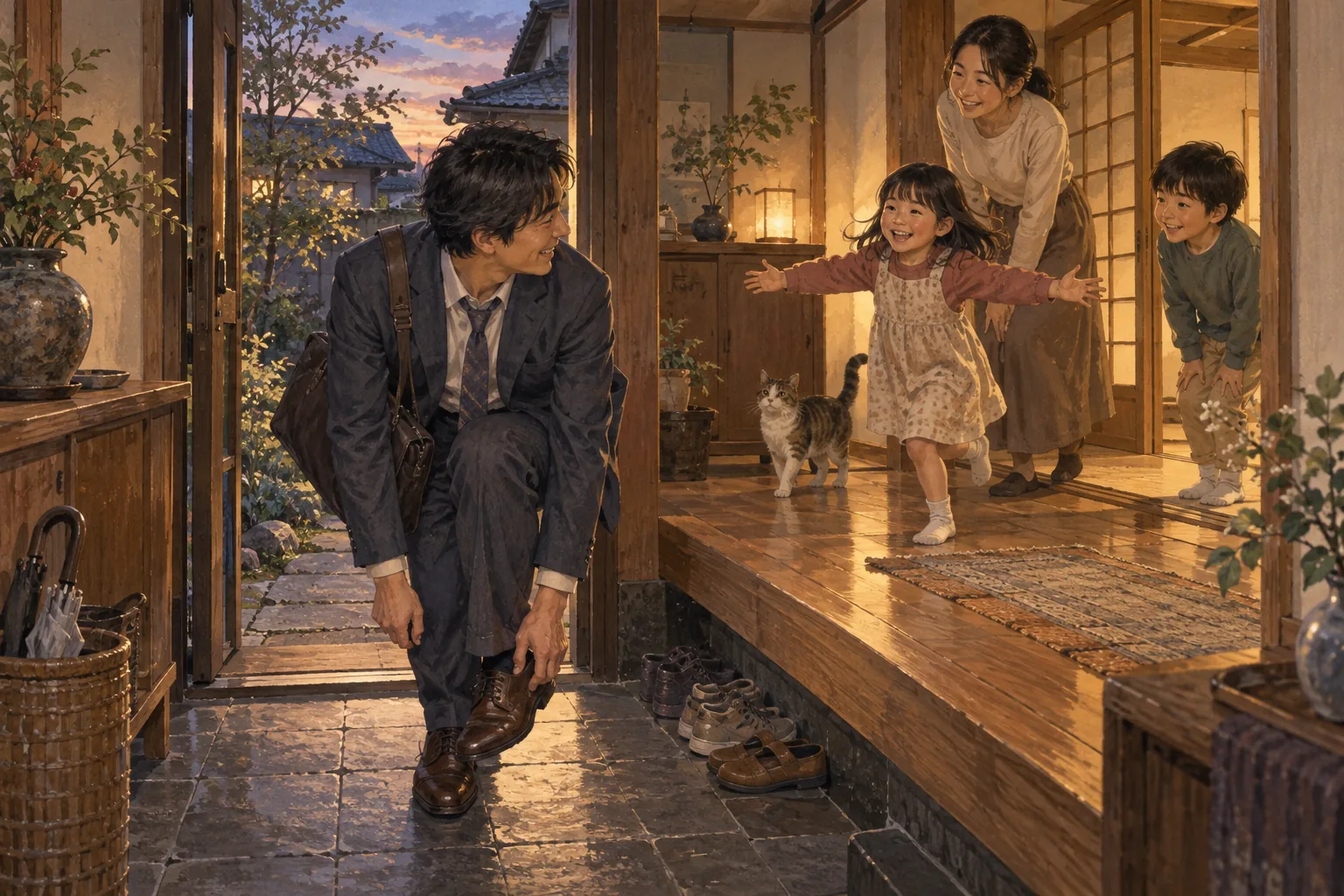
一言で言うと
これだけ覚えれば最低限伝わる一文
Tadaima is said by the person coming home, and okaeri is the fixed reply from whoever is already there.
ただいまは帰ってきた人が言い、おかえりは家にいた人が必ず返す言葉です。
30秒で説明する
外国人に説明するときの標準サイズ
When a Japanese person comes home, they call out tadaima, and anyone inside answers okaeri. It works as a pair: one call, one answer. Tadaima is short for "I have returned just now," and okaeri means "you have come back." Children are taught it before they can read, and it continues into adult life.
日本人が帰宅すると「ただいま」と声をかけ、家にいる人が「おかえり」と返します。これは対になっていて、呼びかけと返事で一組です。ただいまは「ただいま帰りました」の略、おかえりは「お帰りなさい」の略です。字が読める前に教わり、大人になっても続きます。
スピーチ・英作文
通訳案内士の二次口述・大学入試の自由英作文に
One small thing about Japanese homes that visitors notice is the greeting at the door. When you come home you say tadaima, and whoever is inside answers okaeri. English has nothing that works the same way. "I'm home" exists but nobody is required to answer it, and there is no fixed reply.
In Japanese the pair is compulsory in the sense that leaving it out feels wrong. Tadaima is shortened from a longer sentence meaning I have returned just now, and okaeri is shortened from a phrase meaning welcome back. What makes it interesting is that people say it even when nobody is there.
Living alone, a lot of Japanese people still say tadaima into an empty apartment, and some report feeling strange if they do not. There is also a matching pair for leaving: itterasshai from the person staying, and ittekimasu from the person going out.
日本の家について、外から来た方が気づく小さなことに、玄関での挨拶があります。帰ってくると「ただいま」と言い、家にいる人が「おかえり」と返します。英語には同じ働きをするものがありません。
I'm home はありますが、誰かが返す決まりはなく、決まった返答もありません。日本語では、この対は言わないと落ち着かないという意味で必須です。ただいまは「ただいま帰りました」の短縮、おかえりは「お帰りなさい」の短縮です。
面白いのは、誰もいなくても言うことです。一人暮らしでも、誰もいない部屋に向かって「ただいま」と言う日本人はたくさんいますし、言わないと変な感じがするという人もいます。出かけるときにも対があります。見送る側の「いってらっしゃい」と、出る側の「いってきます」です。
こう聞かれたら
外国人から実際にされる質問と、その答え方。
Is it rude not to answer?
返事をしないのは失礼ですか。
Not rude exactly, but it feels like leaving a sentence unfinished. Children are corrected for not answering, and in a family the reply usually comes automatically from another room.
失礼というより、文が途中で切れたような感じになります。子どもは返さないと注意されますし、家庭では別の部屋から自然に返事が返ってきます。
What's the pair for going out?
出かけるときの組み合わせは何ですか。
Ittekimasu from the person leaving, meaning I will go and come back, and itterasshai from the person staying, meaning go and come back. Both assume you are returning.
出る人が「いってきます」、残る人が「いってらっしゃい」です。どちらも「行って、帰ってくる」ことを前提にした言い方です。
Do people really say it alone?
一人のときでも本当に言うのですか。
Many do. It is often described as marking the switch from outside to inside, so the habit persists regardless of whether anyone hears it.
言う人は多いです。外から内への切り替えの合図だと説明されることが多く、聞く人がいるかどうかに関係なく習慣として残ります。
そのまま使えるフレーズ
- I'm home.ただいま。
- Welcome back.おかえり。
- I'm off — see you later.いってきます。
- Have a good day, see you when you get back.いってらっしゃい。
- The two halves normally go together.この二つはふつう対で使います。
説明に使う語句
- greeting挨拶
- come home帰宅する
- fixed reply決まった返し
- out of habit習慣として
- household家庭、世帯
動画で見る
YouTube より豆知識
「ただいま」は「ただ今帰りました」の略。「おかえり」は「お帰りなさい」の略。「なさい」は尊敬語「なさる」の命令形だが、ここでは命令の意味はほとんどなく、帰ってきた人を迎える決まった言い方になっている。「いってきます」と「いってらっしゃい」も同じく対になっており、どちらも帰ってくることを前提にしている点が特徴とされる。出征する兵士に「いってらっしゃい」と言うことの重みが語られるのは、この前提があるからである。近年は一人暮らし向けに、帰宅時に「おかえり」と返す音声機器やアプリが売られており、この挨拶が対であることの心理的な働きを示す例としてしばしば紹介される。
