玄関げんかん
genkan
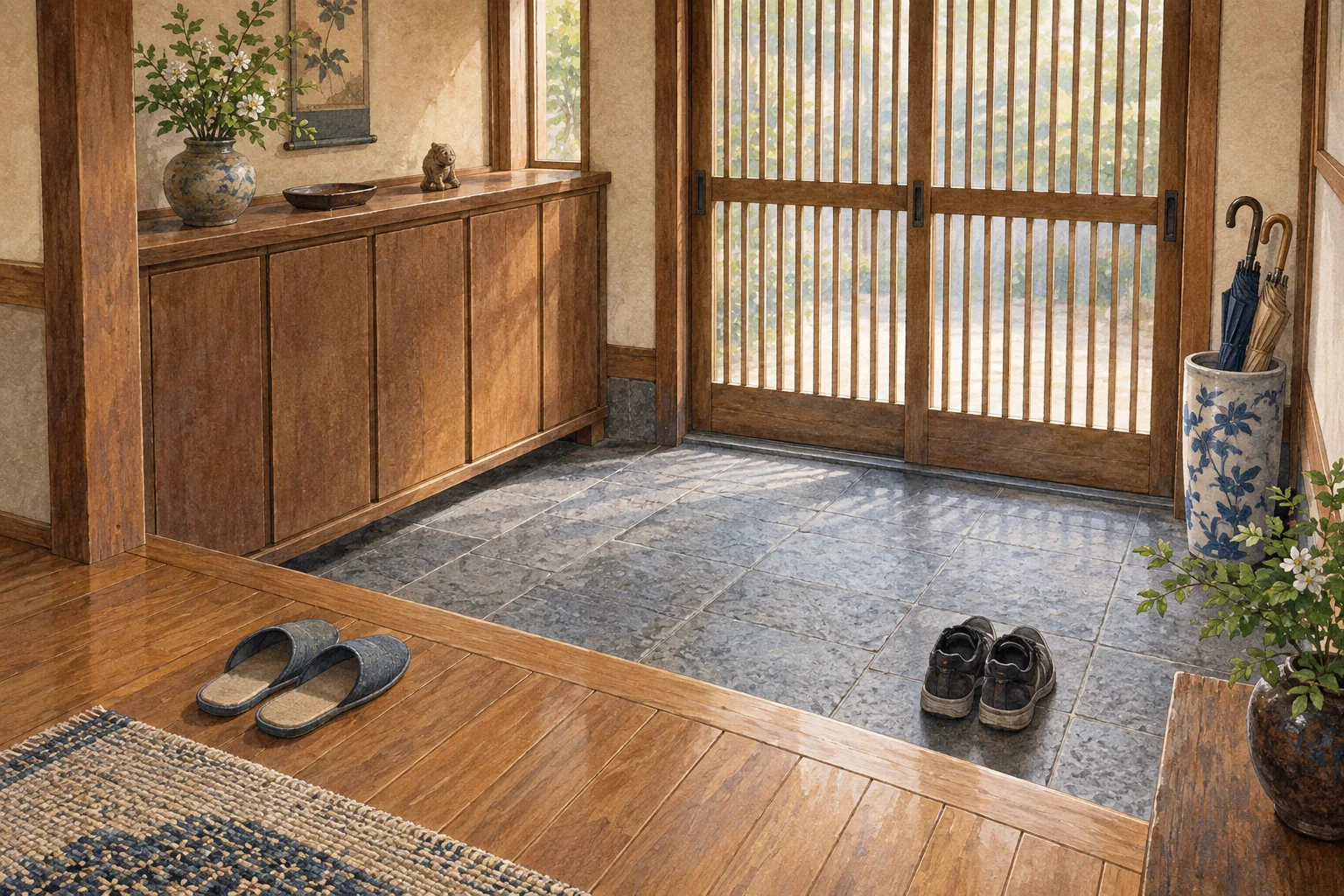
the sunken entryway of a Japanese home
「玄関」は廊下ではなく、家の内と外を分ける装置。段差に意味がある。
一言で言うと
これだけ覚えれば最低限伝わる一文
The genkan is the lowered entrance area where you take off your shoes before stepping up into the house.
玄関とは、靴を脱いでから一段上がって家に入る、一段低い入口の空間です。
30秒で説明する
外国人に説明するときの標準サイズ
Almost every Japanese home, and many offices, schools and clinics, has a genkan: a floor-level area just inside the door, lower than the rest of the building. Shoes come off there and stay there. The step up is the line between outside and inside, and it is also where visitors are received without being invited further in.
日本のほとんどの家に、そして多くの会社・学校・診療所にも玄関があります。ドアのすぐ内側にある、建物の他の部分より一段低い空間です。靴はそこで脱ぎ、そこに置いたままにします。この段差が外と内の境界線であり、家に上げずに来客の応対をする場所でもあります。
スピーチ・英作文
通訳案内士の二次口述・大学入試の自由英作文に
The genkan is the entrance area of a Japanese home, and it is a small piece of architecture doing a lot of work. When you open the front door you are standing on a hard floor at ground level. In front of you is a step up, and above that step the house proper begins.
You take your shoes off on the lower level and step up in socks, and the shoes stay down there, turned to face the door. The step is not just practical. It is the boundary between outside and inside, and it is treated as such.
A delivery driver or a neighbor returning something will stand in the genkan and talk to you from there without ever stepping up, and that is completely normal and not rude. Being invited to step up is being invited into the home. There is a phrase, agatte kudasai, please come up, that is used where English would say come in.
玄関は日本の家の入口ですが、小さな空間が実に多くの仕事をしています。ドアを開けると、地面と同じ高さの固い床の上に立っています。目の前には段差があり、その上から家の本体が始まります。低いほうで靴を脱ぎ、靴下で上がります。
靴はそこに残し、つま先をドアのほうへ向けておきます。この段差は実用だけのものではありません。外と内の境界であり、実際にそう扱われます。配達の人や、物を返しに来た近所の人は玄関に立ったまま話し、一度も上がらずに帰ります。
それはごく普通のことで、失礼ではありません。上がるよう促されることが、家に招き入れられるということです。英語の come in にあたる言葉が「上がってください」なのは、そのためです。
こう聞かれたら
外国人から実際にされる質問と、その答え方。
Why is it lower than the rest of the house?
どうして家の中より一段低いのですか。
So that dirt stays at that level and does not come up into the living space. Traditional houses were raised off the ground for damp and ventilation, and the genkan is where the two levels meet.
汚れがその高さで止まり、生活空間に上がってこないようにするためです。伝統的な家は湿気と風通しのために床を上げており、玄関はその二つの高さが出会う場所です。
Should I turn my shoes around?
靴の向きは変えるべきですか。
Yes, toes facing the door. In a formal situation you step up first and then kneel to turn them, rather than turning your back on the room while you do it.
つま先をドアのほうへ向けます。改まった場では、先に上がってから膝をついて揃えます。部屋に背を向けないためです。
What is the shoe cupboard by the door?
入口にある靴の棚は何ですか。
The getabako, a built-in cabinet for the household's shoes. Schools and offices have banks of them, one per person, and at school you change into indoor shoes there.
下駄箱です。家族の靴を入れる作りつけの棚で、学校や職場には一人一つの下駄箱が並び、学校ではそこで上履きに履き替えます。
そのまま使えるフレーズ
- Please come up.どうぞお上がりください。
- Leave your shoes here, facing the door.靴はここで、つま先を外に向けて置いてください。
- I'll just speak to you from here.ここで失礼します。
- The step marks where the house begins.この段差から家の中です。
- There's a cupboard for shoes just there.そこが下駄箱です。
説明に使う語句
- entryway玄関
- step up上がる、上がり框
- shoe cupboard下駄箱
- threshold敷居、境目
- doorstep戸口
動画で見る
YouTube より豆知識
「玄関」はもともと禅宗の用語で、「玄妙な道に入る関門」を意味し、寺の入口を指した。それが武家住宅に取り入れられ、やがて一般の住宅の入口を指すようになった。段差の部分を「上がり框(かまち)」といい、和風建築では化粧材として良い木が使われる。土間の部分は「三和土(たたき)」と呼ばれ、もとは土・石灰・にがりの三種を叩き固めて作ったことに由来する。玄関で来客の応対を済ませることを「玄関先で」と言い、家に上げるかどうかは親しさの度合いを示す。学校の下駄箱は上履きに履き替えるための設備で、地域によって「靴箱」「シューズボックス」など呼び方が異なる。
