夏休みの宿題なつやすみのしゅくだい
natsuyasumi no shukudai
the summer holiday homework, including the free research project
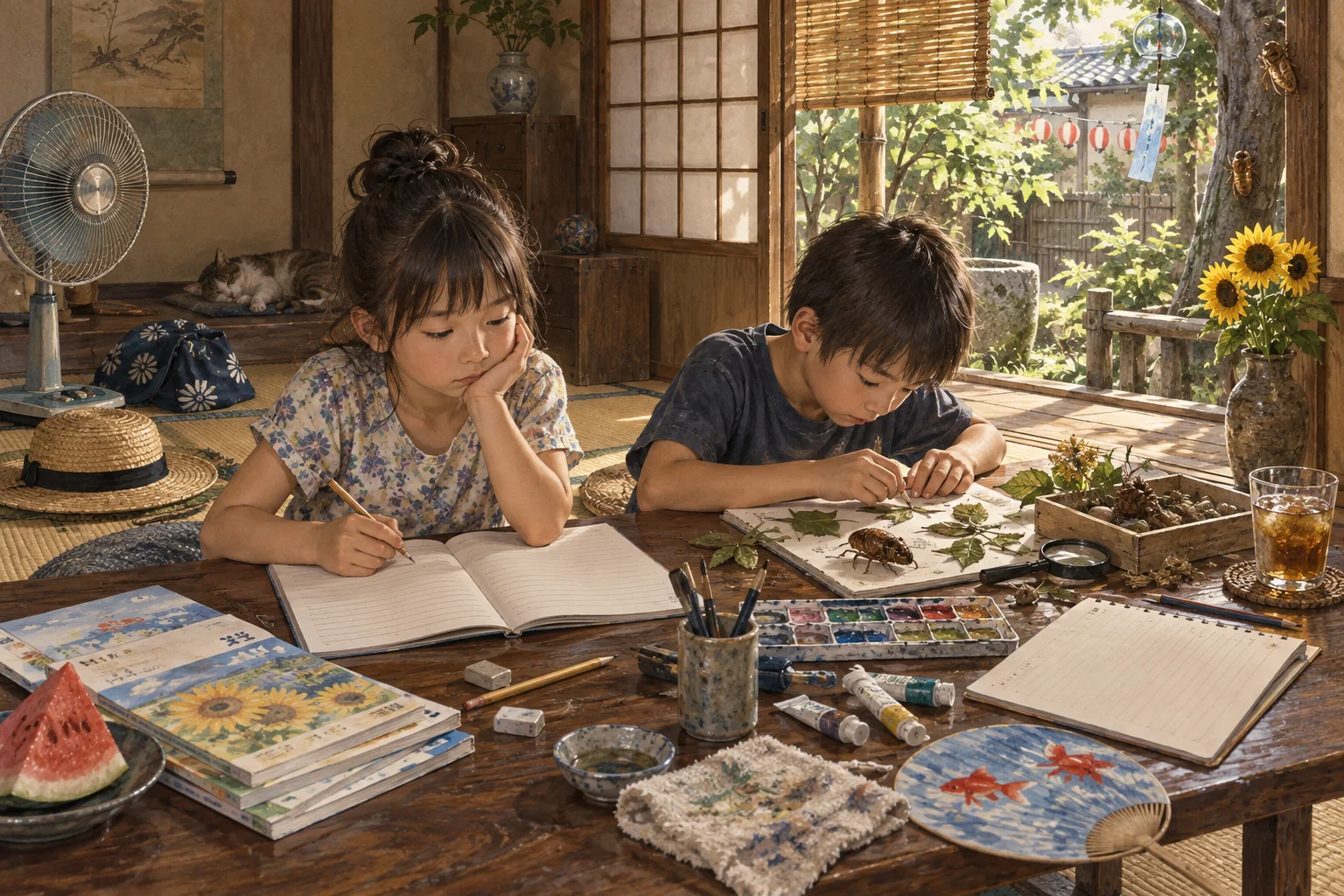
ドリルと絵日記と自由研究。最後の三日で全部やる子が、毎年いる。
一言で言うと
これだけ覚えれば最低限伝わる一文
Natsuyasumi no shukudai, or summer homework, is the set of holiday assignments Japanese pupils get, including a self-chosen research project.
夏休みの宿題とは、日本の児童生徒が夏休みに出される宿題の一式で、自分で題を選ぶ自由研究も含むものです。
30秒で説明する
外国人に説明するときの標準サイズ
Summer holidays come with a package: drill books for math and kanji, a reading report, a picture diary, often a daily record of the weather, and the free research project, in which the pupil investigates anything they like and presents it. Leaving it all to the last few days is a well-known summer ritual in itself.
夏休みには一式の宿題が付いてきます。算数と漢字のドリル、読書感想文、絵日記、天気の記録、そして自由研究です。自由研究では、好きな題を自分で選んで調べ、まとめて提出します。最後の数日にまとめて片づけるのも、それ自体がよく知られた夏の風物詩です。
スピーチ・英作文
通訳案内士の二次口述・大学入試の自由英作文に
Japanese summer holidays are about forty days and they come with homework, which surprises visitors from countries where a holiday means no school work at all. The package is fairly standard: drill books to keep math and kanji skills from slipping, a book report, a picture diary, and for younger children a chart where you record the weather or the temperature each day.
The distinctive item is jiyu kenkyu, free research. The pupil picks a topic, investigates it over the holiday and presents the result on a board or in a booklet: why ice melts faster in salt water, a survey of insects in the local park, how a local factory makes something. The best of them are displayed at school in September.
For parents it is a long-running source of both pride and dread, since a six-year-old's independent research project tends to require a suspicious amount of adult help. And every year, on the last weekend of August, some families can be found finishing forty days of weather records from memory.
日本の夏休みはおよそ四十日あり、宿題が付いてきます。休みとは学校の課題が一切ないことだ、という国から来た方は驚きます。中身はだいたい決まっています。算数と漢字を鈍らせないためのドリル、読書感想文、絵日記、低学年なら毎日の天気や気温を書き込む表。
特徴的なのが自由研究です。児童生徒が自分で題を選び、休みのあいだ調べて、模造紙や冊子にまとめて出します。塩水のほうが氷が早く溶けるのはなぜか、近くの公園の虫の調べ、地元の工場が何をどう作っているか。よくできたものは九月に校内に展示されます。
親にとっては、長らく誇りでもあり、頭痛の種でもあります。六歳の子の自主的な研究には、どうも大人の手がかなり入りがちだからです。そして毎年、八月最後の週末になると、四十日分の天気の記録を記憶でうめている家族が、どこかに必ずいます。
こう聞かれたら
外国人から実際にされる質問と、その答え方。
How long is the summer holiday?
夏休みはどれくらいありますか。
Around forty days at most schools, from late July to the end of August, though it is shorter in northern areas where the winter holiday is longer. Club activities and study sessions often run through it.
多くの学校でおよそ四十日、七月の下旬から八月の終わりまでです。冬の休みが長い北の地域では短くなります。部活動や補習が、その間に入っていることも多いです。
What counts as free research?
自由研究とは何をするのですか。
Almost anything investigated and presented: an experiment, a survey, observation of a plant or insect, a visit to a factory or museum written up. Schools usually display strong examples when term restarts.
調べてまとめたものなら、ほとんど何でも当てはまります。実験、調査、植物や虫の観察、工場や博物館を訪ねた記録など。学期が始まると、よいものが校内に展示されるのがふつうです。
Do parents help?
親は手伝うのですか。
Widely, and everyone knows it. Shops sell kits for research projects, and there is recurring debate about whether the assignment tests the child or the household. Some schools have reduced or dropped it.
広く手伝われており、それは誰もが知っています。店では自由研究の道具の一式が売られ、あの課題が試しているのは子どもか家庭かという議論が、毎年のように起こります。減らした学校や、やめた学校もあります。
そのまま使えるフレーズ
- Have you finished your homework yet?宿題は終わりましたか。
- I still have the research project to do.自由研究がまだ残っています。
- What topic did you choose?何を題材にしましたか。
- The holiday is about forty days.夏休みは四十日ほどです。
- I left it all until the last week.最後の一週間まで残してしまいました。
説明に使う語句
- homework宿題
- a drill bookドリル
- a book report読書感想文
- a research project自由研究
- to put something off後回しにする
動画で見る
YouTube より豆知識
自由研究は、理科に限らず、社会や工作の題材でもかまいません。夏の科学館や博物館は、この時期に子ども向けの催しを組みます。読書感想文には全国の規模のコンクールがあり、応募する学校も多いです。絵日記は低学年の定番で、一日一枚、絵と短い文を書きます。ラジオ体操は、地域で朝に集まり、参加すると台紙に判を押してもらう形が続いてきました。宿題の量については見直しの動きがあり、自由研究を任意にする学校も出ています。
