掃除そうじ
soji
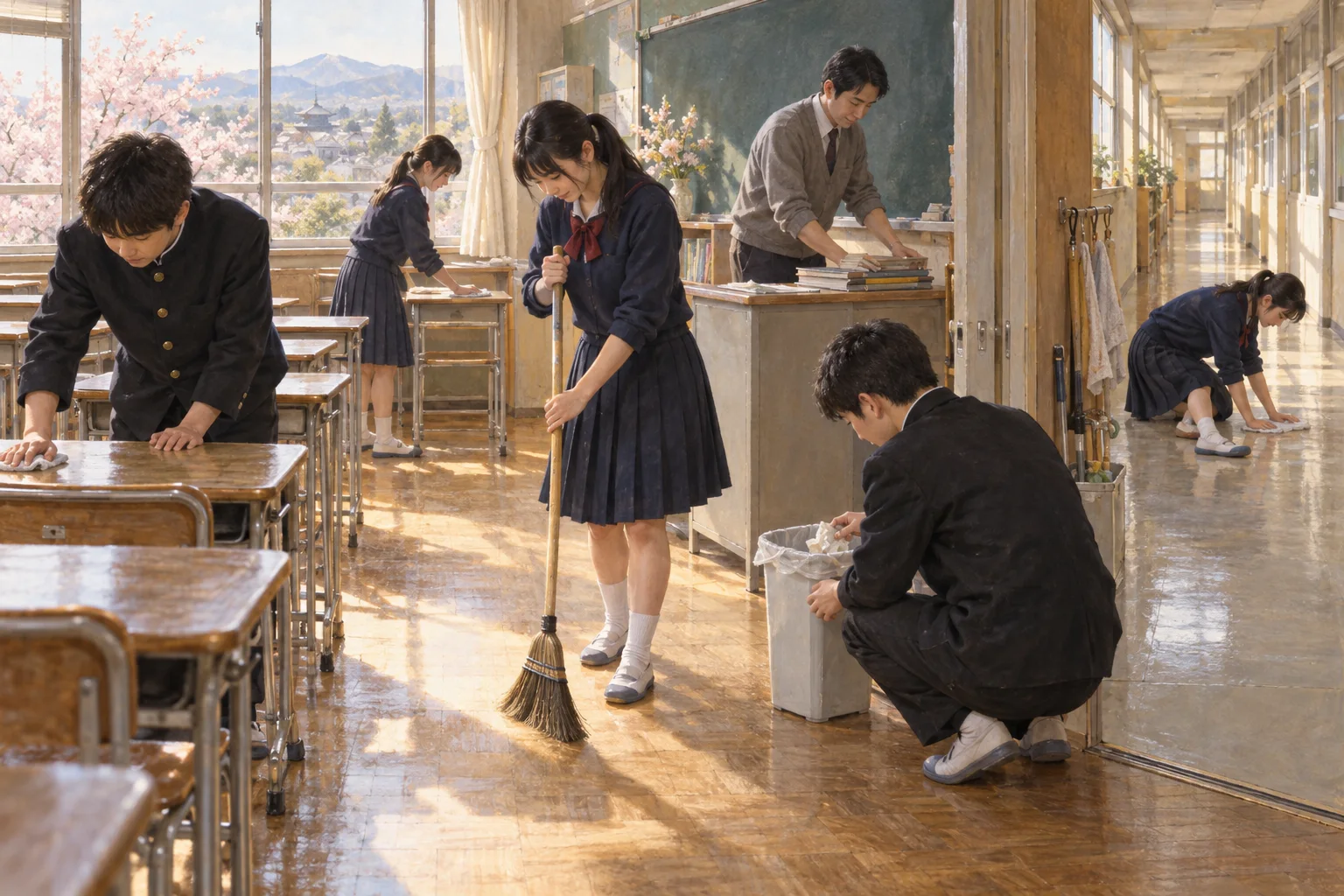
students cleaning their own school
「掃除の人はいないの?」と本気で驚かれる。世界中で記事になる日本の習慣。
一言で言うと
これだけ覚えれば最低限伝わる一文
Japanese students clean their own classrooms, corridors and toilets every day.
日本の生徒は毎日、自分たちの教室・廊下・トイレを自分で掃除します。
30秒で説明する
外国人に説明するときの標準サイズ
Most Japanese schools have no cleaning staff for the classrooms. Instead, about fifteen minutes are set aside each day for students to sweep, wipe the floors, clean the blackboards and, yes, clean the toilets. Students are put into rotating teams, and the same system runs from primary school through high school. It is treated as part of education, not as a chore.
日本の学校の多くには、教室を掃除する清掃員がいません。かわりに毎日15分ほどが掃除の時間にあてられ、生徒が掃き、床を拭き、黒板を消し、そしてトイレも掃除します。生徒は班に分かれて交代で担当し、この仕組みは小学校から高校まで続きます。雑用ではなく、教育の一部として扱われています。
スピーチ・英作文
通訳案内士の二次口述・大学入試の自由英作文に
In Japan, students clean their own school. There is usually no cleaning staff for the classrooms. Every day, for about fifteen minutes, the whole school stops and students sweep the floors, wipe the desks, clean the windows and the corridors, and clean the toilets.
They work in small teams that rotate, so everyone does every job. Visitors often ask why, and the answer schools give is that it teaches you to look after a shared space and to notice the work that keeping it clean requires. If you have cleaned the toilet yourself, you are less likely to make a mess in it.
I will be honest that not every student enjoys it, and some teachers question whether children should be cleaning toilets at all. But if you want to explain why Japanese public spaces are clean, this is probably where it starts: everybody has done the cleaning.
日本では、生徒が自分たちで学校を掃除します。教室を掃除する清掃員はふつういません。毎日15分ほど、学校全体が動きを止め、生徒が床を掃き、机を拭き、窓や廊下をきれいにし、トイレを掃除します。班を組んで交代するので、全員がすべての役割を経験します。
なぜかとよく聞かれますが、学校の説明は、共有の場所を自分で手入れすること、そしてそれを保つのに必要な労力に気づくことを学ぶため、というものです。自分でトイレを掃除したことがあれば、そこを汚しにくくなります。
正直に言えば、全員が楽しんでいるわけではありませんし、子どもにトイレ掃除をさせることに疑問を持つ教員もいます。それでも、日本の公共の場がきれいな理由を説明するなら、出発点はおそらくここです。全員が掃除をしたことがある、ということです。
こう聞かれたら
外国人から実際にされる質問と、その答え方。
Do they really clean the toilets?
本当にトイレまで掃除するのですか。
Yes, in most schools. It is usually done in teams with gloves and brushes, and the job rotates so no one is stuck with it. This is the detail that surprises people most.
多くの学校で本当にやります。手袋とブラシを使い、班で交代するので誰か一人に固定されることはありません。ここが最も驚かれる部分です。
Isn't that taking a job away from someone?
それは誰かの仕事を奪っていませんか。
That criticism exists in Japan too. Schools still employ caretakers for maintenance and heavy work; what students do is daily upkeep of their own rooms.
その批判は日本にもあります。設備の保守や重い作業には用務員がいます。生徒がするのは自分たちの部屋の日々の手入れです。
Has this spread to other countries?
ほかの国にも広がっているのですか。
Some schools abroad have tried it, and it is reported on regularly in foreign media. Whether it transfers well depends a lot on whether the whole school does it together, which is the part that makes it work here.
海外の一部の学校が導入を試み、外国のメディアで定期的に取り上げられます。うまく移植できるかは、学校全体で一斉にやるかどうかに大きく左右されます。日本で機能しているのは、そこだからです。
そのまま使えるフレーズ
- There are no cleaners for the classrooms.教室の清掃員はいません。
- The whole school cleans at the same time each day.毎日、学校全体が同じ時間に掃除します。
- Yes, the students clean the toilets too.はい、トイレも生徒が掃除します。
- The jobs rotate, so everyone does everything.役割は交代するので、全員がすべてやります。
- If you've cleaned it, you don't want to mess it up.自分で掃除した場所は、汚したくなくなります。
説明に使う語句
- sweep掃く
- mop / wipe拭く
- take turns交代でやる
- shared space共有の場所
- take responsibility for〜に責任を持つ
動画で見る
YouTube より豆知識
文部科学省の学習指導要領では、清掃は「特別活動」の一環として位置づけられ、教科ではないが教育課程の一部として行われる。床を雑巾で拭くとき、手で押しながら走る「雑巾がけ」は日本独特の光景で、木造校舎の時代の名残でもある。近年は衛生面や負担を理由にトイレ清掃を業者に委託する学校も増えている。海外での紹介は多く、いくつかの国の学校が試験的に導入した例が報じられている。なお、掃除の時間に音楽を流す学校が多く、その曲が卒業後も記憶に残る、というのは日本人によくある共通体験である。
