しつけしつけ
shitsuke
bringing up a child to behave considerately
漢字は日本で作られた字。身を美しくする、と書く。
一言で言うと
これだけ覚えれば最低限伝わる一文
Shitsuke is the everyday training of a child in manners and consideration for others.
しつけとは、子どもに作法と、人への気配りを日々教えていくことです。
30秒で説明する
外国人に説明するときの標準サイズ
Shitsuke covers what a family teaches a child about behaving: greetings, table manners, tidying up, not disturbing others. The emphasis falls heavily on not causing trouble for people around you. The character used to write it was created in Japan and combines the elements for body and beautiful.
しつけとは、家庭が子どもに教える振る舞いのことです。挨拶、食事の作法、片づけ、人の迷惑にならないこと。重きが置かれるのは、まわりの人に迷惑をかけないという点です。この語を書く漢字は日本で作られた字で、身と美を組み合わせています。
スピーチ・英作文
通訳案内士の二次口述・大学入試の自由英作文に
Shitsuke is the bringing up of a child in everyday behavior, and the word itself tells you something. It is written with a character invented in Japan, combining the elements for body and for beautiful, and the underlying image is of a way of carrying yourself that has been trained in until it is natural.
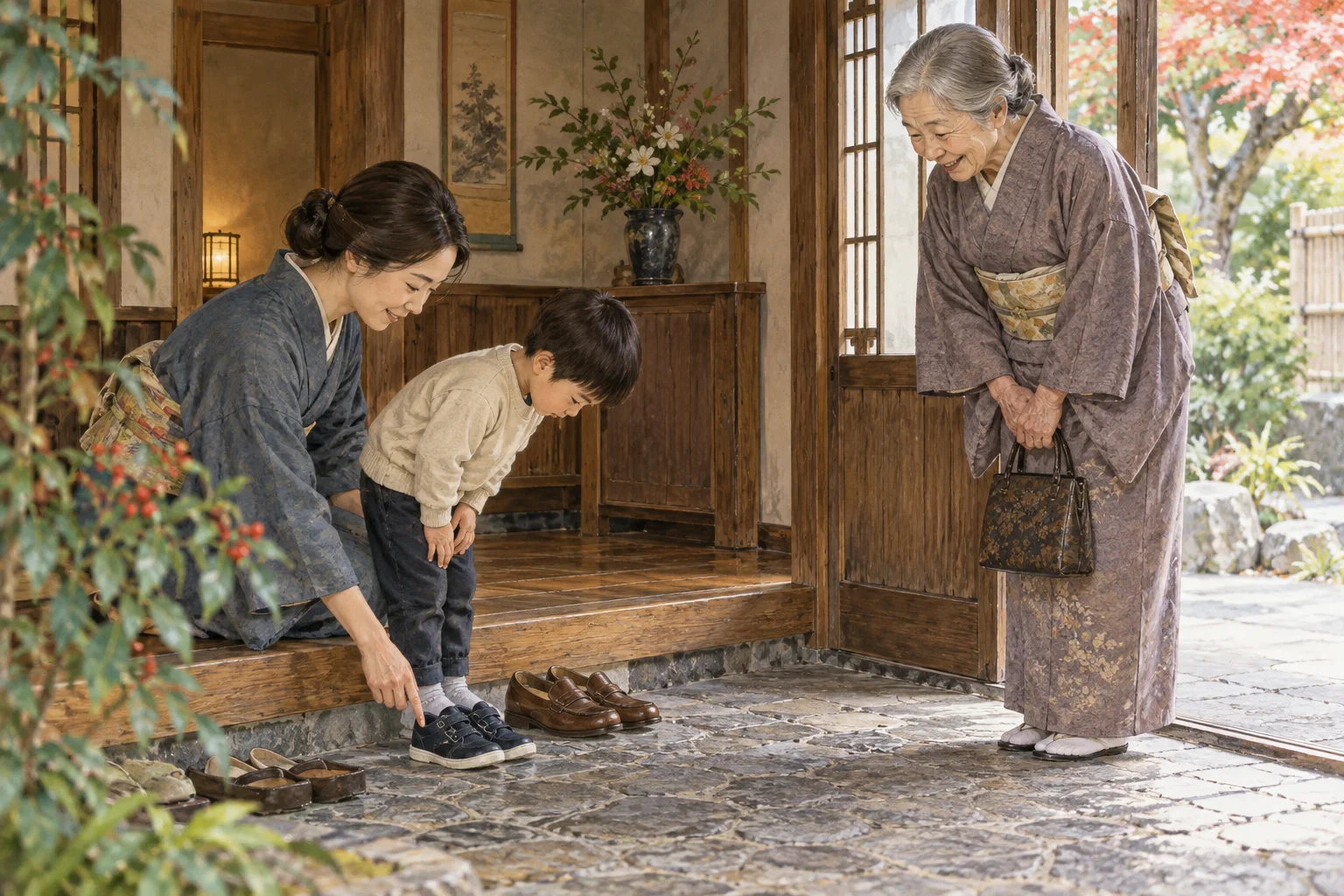
In practice it covers greetings, shoes lined up at the entrance, saying the phrases before and after a meal, tidying what you used, and above all not causing trouble for other people. That last phrase, meiwaku wo kakenai, is repeated so often to Japanese children that many adults describe it as the central lesson of their upbringing.
Visitors often notice the result on trains, where small children are quiet, and draw the conclusion that Japanese children are naturally well behaved. The honest version is that a great deal of instruction has gone into it, that the standard falls most heavily on mothers, and that there is criticism inside Japan of how much pressure this places on parents and how it discourages families from going out at all.
しつけとは、日々の振る舞いについて子どもを育てることで、語そのものが多くを語っています。書くのに使う漢字は日本で作られた字で、身と美を組み合わせています。背景にあるのは、身につくまで繰り返して自然になった身のこなし、という像です。
実際には、挨拶、玄関で靴をそろえること、食事の前後の言葉、使ったものを片づけること、そして何より、人に迷惑をかけないことを含みます。この最後の言い方は、日本の子どもに繰り返し伝えられるので、大人になってから、育てられた中心はこれだったと述べる人が多くいます。
訪れた方は、その結果を電車の中で見て、小さな子が静かなことに気づき、日本の子どもはもともと行儀がよいのだと考えます。正直に言えば、そこにはたいへんな量の教えが注がれています。その基準は母親にいちばん重くのしかかり、親にかかる圧力の大きさや、そのせいで家族が外出しにくくなることについては、日本の中にも批判があります。
こう聞かれたら
外国人から実際にされる質問と、その答え方。
Does it involve physical punishment?
体罰を伴うのですか。
It did in the past and it is now prohibited. Revisions to the child abuse prevention and child welfare laws that took effect in April 2020 banned corporal punishment by parents, and public guidance has pushed the same way.
かつてはありましたが、今は禁じられています。2020年4月に施行された児童虐待防止法などの改正で、親による体罰が禁じられ、公の啓発も同じ方向へ進んできました。
What is the single most repeated lesson?
いちばん繰り返し教えられることは何ですか。
Not to cause trouble for others. It shapes a great deal: lining up, keeping your voice down in public, taking your trash home, and apologizing quickly when you have gotten in someone's way.
人に迷惑をかけないことです。ここから多くが育ちます。列に並ぶこと、公共の場で声を落とすこと、ごみを持ち帰ること、人の邪魔になったときすぐ謝ることです。
Are Japanese children really that quiet in public?
日本の子どもは、外で本当にあれほど静かなのですか。
Often, and not always, and the difference is training rather than temperament. Parents work hard at it, and there is open debate here about whether the standard is too demanding on families.
静かなことは多く、いつもではありません。違いは気質ではなく、教えられてきたかどうかです。親はそれに力を注いでおり、その基準が家族に厳しすぎないかという議論も、公然と行われています。
誤解されやすい
MYTHJapanese children are naturally obedient, so parents do not have to do much.
日本の子どもはもともと素直だから親は苦労しないと思われがちです。
FACTIt is sustained, repetitive teaching from a very early age, and it falls unevenly on mothers. Japanese parents themselves discuss the pressure of it, including the reluctance to take small children to restaurants or on trains.
ごく幼いうちから繰り返し教え続けた結果であり、その負担は母親に偏っています。小さな子を飲食店や電車へ連れて行きにくいことを含め、その圧力について日本の親たち自身が語り合っています。
そのまま使えるフレーズ
- Please do not disturb the people around you.まわりの人の迷惑にならないようにしてください。
- Line your shoes up at the entrance.玄関で靴をそろえてね。
- Say it properly before you eat.食べる前に、ちゃんと言いましょう。
- Put back what you used.使ったものは戻してください。
- Greet people when you come in.入るときは挨拶をしましょう。
説明に使う語句
- to bring up a childしつける・育てる
- manners作法
- consideration for others人への気配り
- to cause trouble迷惑をかける
- to tidy up片づける
動画で見る
YouTube より豆知識
躾の字は日本で作られた国字で、身と美を組み合わせています。裁縫で仮に縫いとめておく仕付けと同じ語とされ、形が崩れないよう押さえておく、という感覚が重ねられて説明されることがあります。学校では掃除や日直を通じて、家庭でのしつけと地続きのことが教えられます。体罰については、2020年4月に施行された法律の改正で、親が子に体罰を加えることが禁じられました。近年は、静かにさせることを求める圧力が子育て世帯を追い込むとして、見直しを求める声も出ています。
