列に並ぶれつにならぶ
retsu ni narabu
why Japanese queues are so orderly
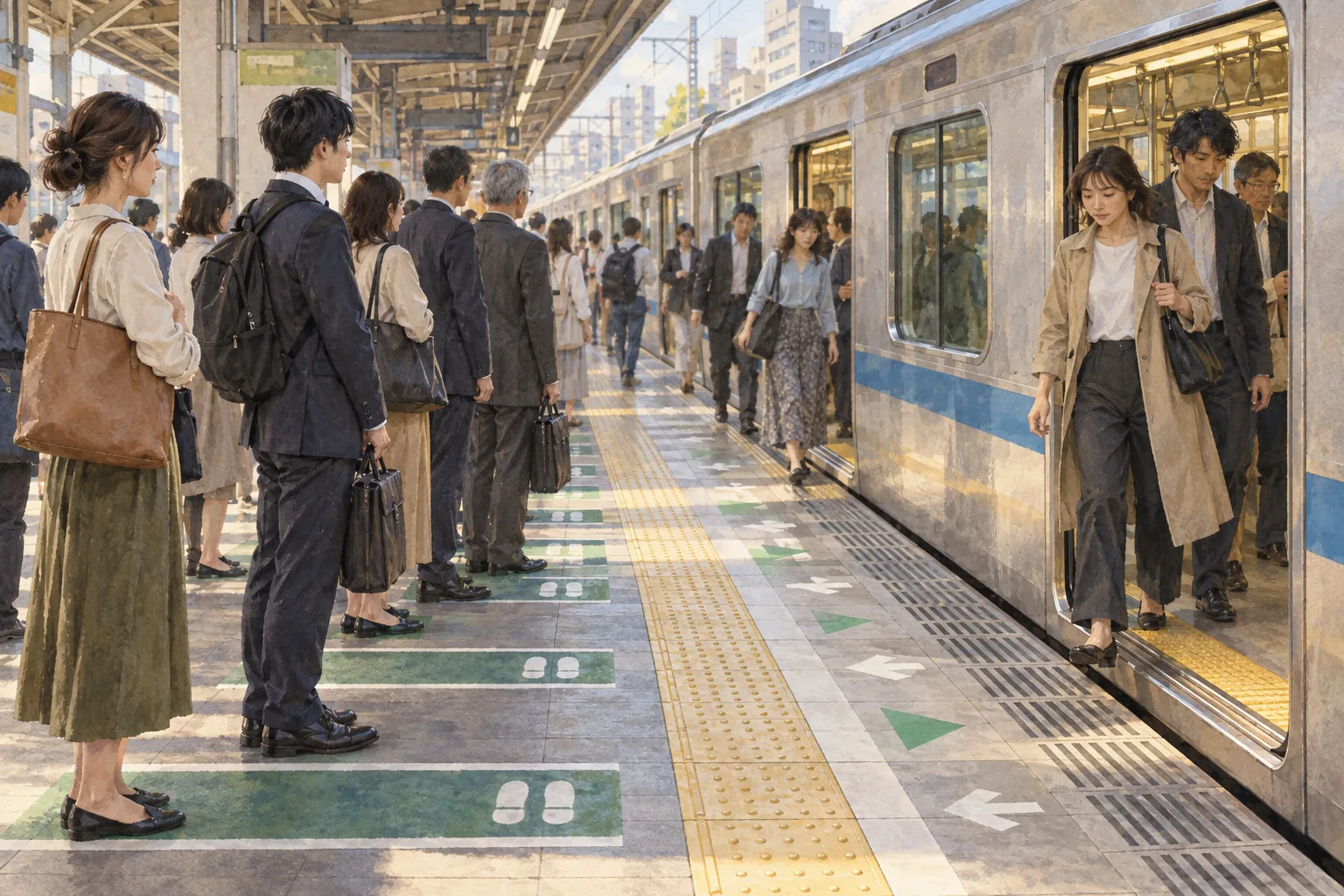
床に印がある。並ぶ場所が指定されている国だ、と言うと伝わる。
一言で言うと
これだけ覚えれば最低限伝わる一文
Japanese queues are orderly partly because the place to stand is physically marked on the ground.
日本の行列が整っているのは、並ぶ場所が地面に印として示されているからでもあります。
30秒で説明する
外国人に説明するときの標準サイズ
Japanese platforms have marks showing where the doors will stop and where to line up. Escalators, store registers and bus stops have similar markings. People queue in two lines beside each door and let passengers off before boarding. It is often explained as national character, but a large part of it is design: the correct behavior is drawn on the floor.
日本の駅のホームには、ドアが止まる位置と並ぶ位置が印で示されています。エスカレーター、レジ、バス停にも同じような表示があります。人はドアの両脇に2列で並び、降りる人を先に通します。国民性で説明されがちですが、その大きな部分は設計です。正しい振る舞いが床に描いてあるのです。
スピーチ・英作文
通訳案内士の二次口述・大学入試の自由英作文に
Visitors often comment on how orderly Japanese queues are, and the usual explanation is national character. I think that is only half the answer. Go to any station platform and look down. There are marks on the floor showing exactly where each train door will stop, and lines showing where to stand and in which direction the queue should extend.
Trains stop with the doors very close to those marks, almost every time, which is what makes the system work. The same thinking appears everywhere: arrows on escalator steps, footprints at bus stops, numbered positions at store registers.
So the behavior is not purely a matter of patience. The correct thing to do has been made obvious and physically easy. That said, there is a genuine social element too. Standing in the wrong place is visible to everyone around you, and that visibility does a lot of the enforcement.
日本の行列が整っていることは、よく話題になります。説明としてはたいてい国民性が挙げられます。私はそれが答えの半分だと思っています。どの駅のホームでもいいので、足元を見てください。どのドアがどこに止まるか、どこに立ち、どちらへ列を伸ばすかが、床に印で示されています。
電車はほぼ毎回、その印のすぐそばにドアが来るように止まります。それがこの仕組みを成り立たせています。同じ発想はあちこちにあります。エスカレーターの段の矢印、バス停の足形、レジの番号のついた立ち位置。
ですから、この振る舞いは忍耐だけの問題ではありません。正しい行動が、目に見える形で、体を動かすうえでも簡単になっているのです。とはいえ、社会的な要素も確かにあります。違う場所に立てば周囲の全員に見えますし、その見えることが、かなりの部分を担っています。
こう聞かれたら
外国人から実際にされる質問と、その答え方。
What are the marks on the platform?
ホームの床の印は何ですか。
They show where each train door will stop and where the two queues for that door should form. Different marks are used for trains with different numbers of cars.
どのドアがどこに止まるか、そのドアの二列をどこに作るかを示しています。車両数の違う列車には、別の印が使われます。
Do people really let others off first?
本当に降りる人を先に通すのですか。
Yes, and the queues are positioned to the sides of the door precisely so that the middle stays clear. Pushing your way on before passengers have gotten off is the clearest way to annoy a platform full of people.
その通りで、列がドアの両脇に作られるのは、真ん中を空けるためです。降りる人がいるうちに乗り込むのは、ホーム中の人を最も確実に苛立たせる行為です。
Is it always this orderly?
いつもこんなに整然としているのですか。
No. At peak rush hour in central Tokyo the queues break down and people push, and platform staff intervene. The orderly version is the norm, not a law of nature.
常にではありません。都心のラッシュのピークでは列は崩れ、押し合いになり、駅員が整理に入ります。整った形は標準であって、自然法則ではありません。
誤解されやすい
MYTHJapanese people queue perfectly because of their patient national character.
日本人が整然と並ぶのは忍耐強い国民性のおかげだと思われがちです。
FACTDesign does much of the work. Doors stop on marks, standing positions are painted on the floor, and the correct behavior is made visible. Where those cues are absent, queues break down here as anywhere.
実際は設計がかなりの部分を担っています。ドアは印の上に止まり、立つ位置は床に描かれ、正しい振る舞いが目に見えるようにしてあります。その手がかりがない場所では、日本でも列は崩れます。
そのまま使えるフレーズ
- Line up on the marks.印のところに並んでください。
- Please let passengers off first.降りる人を先に通してください。
- The doors stop exactly on those lines.ドアはその線の上にぴたりと止まります。
- The queue forms on both sides of the door.列はドアの両側にできます。
- At rush hour it does break down.ラッシュのときは崩れます。
説明に使う語句
- queue / line up並ぶ、行列
- alight / get off降りる
- marking表示、印
- orderly整然とした
- cut in line割り込む
動画で見る
YouTube より豆知識
駅のホームの乗車位置表示は、車両数や扉の数ごとに記号や色を変えて示されている。列車が所定の位置に停止できるのは、定位置停止装置(TASC)や運転士の技量によるところが大きい。ホームドアの設置が進んだ路線では、乗車位置が構造として固定される。整列乗車の習慣は戦後の混乱期に鉄道会社と利用者の双方から進められたとされるが、定着の経緯には諸説ある。2011年の東日本大震災の際、停電と混乱のなかで人々が列を保った様子が海外で大きく報じられ、この習慣が国際的に知られる一因になった。
