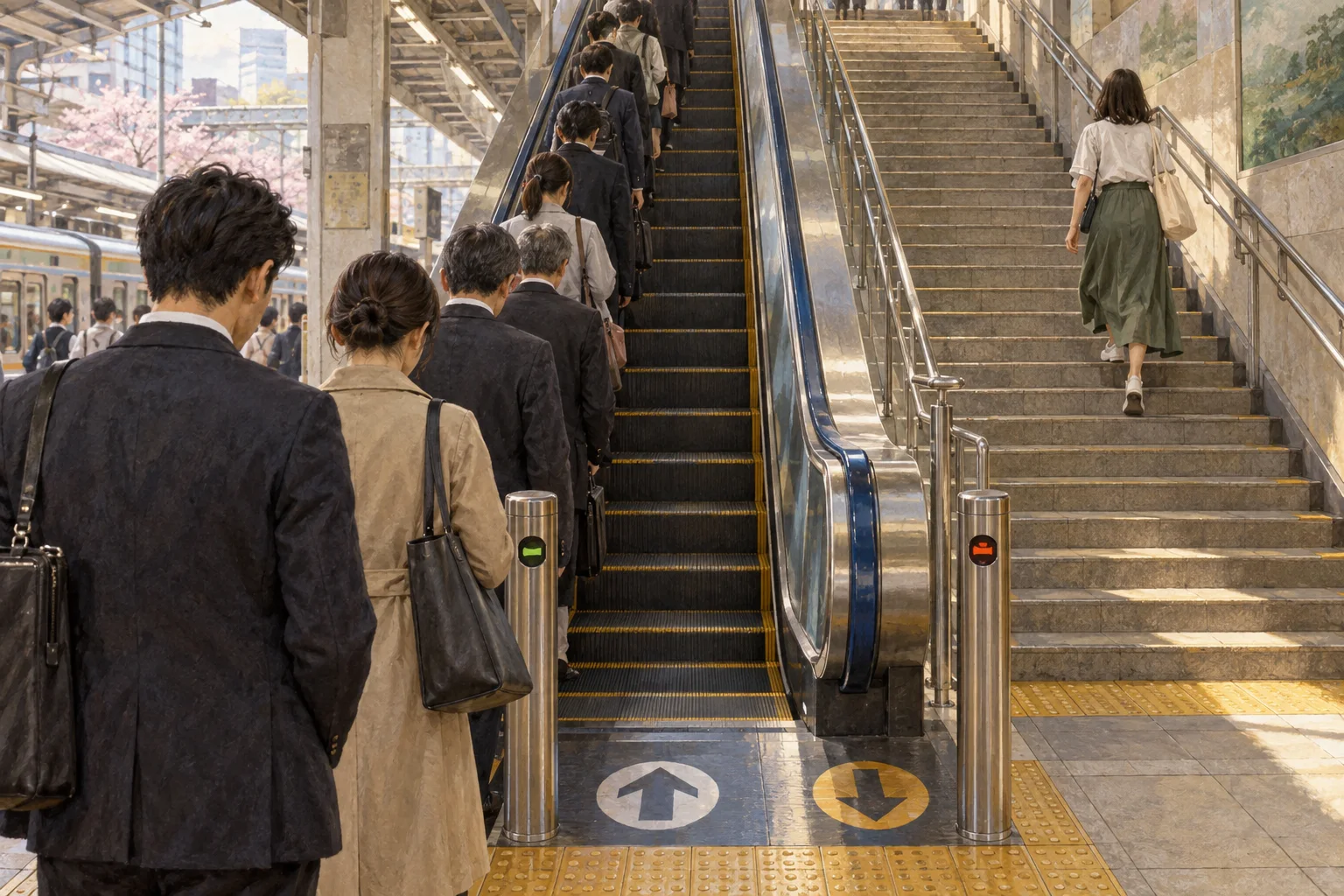
エスカレーターの片側空けえすかれーたーのかたがわあけ
esukareta no katagawa ake
standing on one side, and why that is changing
東京は左、大阪は右。しかも今は「歩かずに立ち止まって」と条例で求める自治体もある。
一言で言うと
これだけ覚えれば最低限伝わる一文
Japanese escalator users leave one side open for walkers, but standing still on both sides is now officially encouraged.
日本ではエスカレーターの片側を歩く人のために空けますが、今は両側に立ち止まることが公式に呼びかけられています。
30秒で説明する
外国人に説明するときの標準サイズ
In Tokyo people stand on the left and walk on the right; in Osaka it is the opposite. Neither is a rule, and both are now discouraged. Walking on escalators causes falls and puts uneven load on the machinery, and Saitama prefecture and Nagoya city have passed ordinances asking people to stand still. Habit is changing slowly.
東京では左に立って右を歩き、大阪では逆です。どちらも規則ではなく、今はどちらも推奨されていません。エスカレーターを歩くと転倒事故が起き、機械にも偏った負荷がかかるため、埼玉県と名古屋市は立ち止まって乗るよう求める条例を作りました。習慣は少しずつ変わりつつあります。
スピーチ・英作文
通訳案内士の二次口述・大学入試の自由英作文に
If you take an escalator in Tokyo, people stand on the left and leave the right side open for anyone in a hurry. Go to Osaka and it is the other way around. This regional split is one of the most quoted pieces of Japanese trivia, and the usual explanation is that Osaka adopted its pattern around the time of the 1970 World Expo, when the left side was called out as the walking lane, while the Tokyo pattern grew up later and independently.
Here is the part that surprises people. Both patterns are now officially discouraged. Walking on a moving escalator causes falls, and some say standing on one side only puts uneven wear on the mechanism.
Escalator manufacturers and railway companies have campaigned against it for years, and Saitama prefecture passed an ordinance in 2021 asking people to stand still, with Nagoya following in 2023. The habit is deeply set, so change is slow, but the direction is clear.
東京でエスカレーターに乗ると、人は左に立ち、急ぐ人のために右側を空けます。大阪へ行くと逆になります。この地域差は、日本の雑学として最もよく引かれるもののひとつです。よくある説明では、大阪は1970年の万博のころに左側を歩く側として案内したことで定着し、東京はその後、別に右空けが広まったとされます。
ここからが驚かれる部分です。今はどちらの形も推奨されていません。動いているエスカレーターを歩くと転倒事故が起きますし、片側だけに立つと機械に偏った摩耗が生じるとも言われます。
エスカレーターの製造会社と鉄道会社は何年も前から呼びかけを続けており、埼玉県は2021年に立ち止まって乗るよう求める条例を作り、名古屋市も2023年に続きました。習慣は根深いので変化は遅いですが、向きははっきりしています。
こう聞かれたら
外国人から実際にされる質問と、その答え方。
Which side do I stand on?
どちら側に立てばいいですか。
In eastern Japan, the left. In the Kansai area including Osaka, the right. But the current official request everywhere is to stand still and not leave a walking lane at all.
東日本では左、大阪を含む関西では右です。ただし今は全国で、立ち止まって乗り、歩く側を作らないよう呼びかけられています。
Why is walking discouraged?
どうして歩くのが勧められないのですか。
Falls are the main reason. Steps are not sized for walking, and a stumble on a moving staircase takes people down with it. Some also say uneven loading wears the machine unevenly.
転倒が主な理由です。段は歩く寸法で作られておらず、動く階段でつまずくと巻き込まれます。片側に荷重が偏ることで、機械の摩耗も偏るとも言われます。
Does anyone actually stand still now?
いまは立ち止まっている人がいるのですか。
It varies. Stations with strong campaigns and staff announcements see more compliance, but in most places the old habit continues. Change of this kind takes a long time.
場所によります。呼びかけや放送に力を入れている駅では守られていますが、多くの場所では古い習慣が続いています。この種の変化には時間がかかります。
誤解されやすい
MYTHLeaving one side open is proper Japanese escalator etiquette.
片側を空けるのが日本の正しいエスカレーターのマナーだと思われがちです。
FACTIt is a habit, not a rule, and the official position is now the opposite. Manufacturers, railway companies and local governments such as Saitama prefecture and Nagoya have asked people to stand still on both sides.
これは規則ではなく習慣で、公式の立場は今や逆です。製造会社も鉄道会社も、そして埼玉県や名古屋市などの自治体も、両側に立ち止まるよう求めています。
そのまま使えるフレーズ
- In Tokyo you stand on the left.東京では左側に立ちます。
- In Osaka it's the other way around.大阪では逆です。
- Please stand still and hold the handrail.立ち止まって、手すりにおつかまりください。
- Walking on them causes falls.歩くと転倒事故が起きます。
- Some local governments have passed ordinances about it.条例を作った自治体もあります。
説明に使う語句
- escalatorエスカレーター
- handrail手すり
- stand still立ち止まる
- ordinance条例
- regional difference地域差
動画で見る
YouTube より豆知識
関西で左側を空ける習慣は、1967年に阪急梅田駅が「お急ぎの方のために左側をお空けください」と案内を始めたことに始まり、1970年の大阪万博で広く定着したとされる。関東の右側空けは1980〜90年代に自然発生的に広まったとされ、成立の経緯には諸説ある。埼玉県は「エスカレーターの安全な利用の促進に関する条例」を2021年3月に公布し、同年10月1日に施行した。全国初の条例である。名古屋市も同種の条例を2023年10月から施行している。いずれも罰則はなく、立ち止まって乗ることを求める理念条例である。日本エレベーター協会も「歩かない・走らない」を継続して呼びかけている。
