電車の中のマナーでんしゃのなかのまなー
densha no naka no mana
why Japanese trains are so quiet
「静かすぎて怖い」と言われる。通話だけが禁止で、会話は禁止ではない。
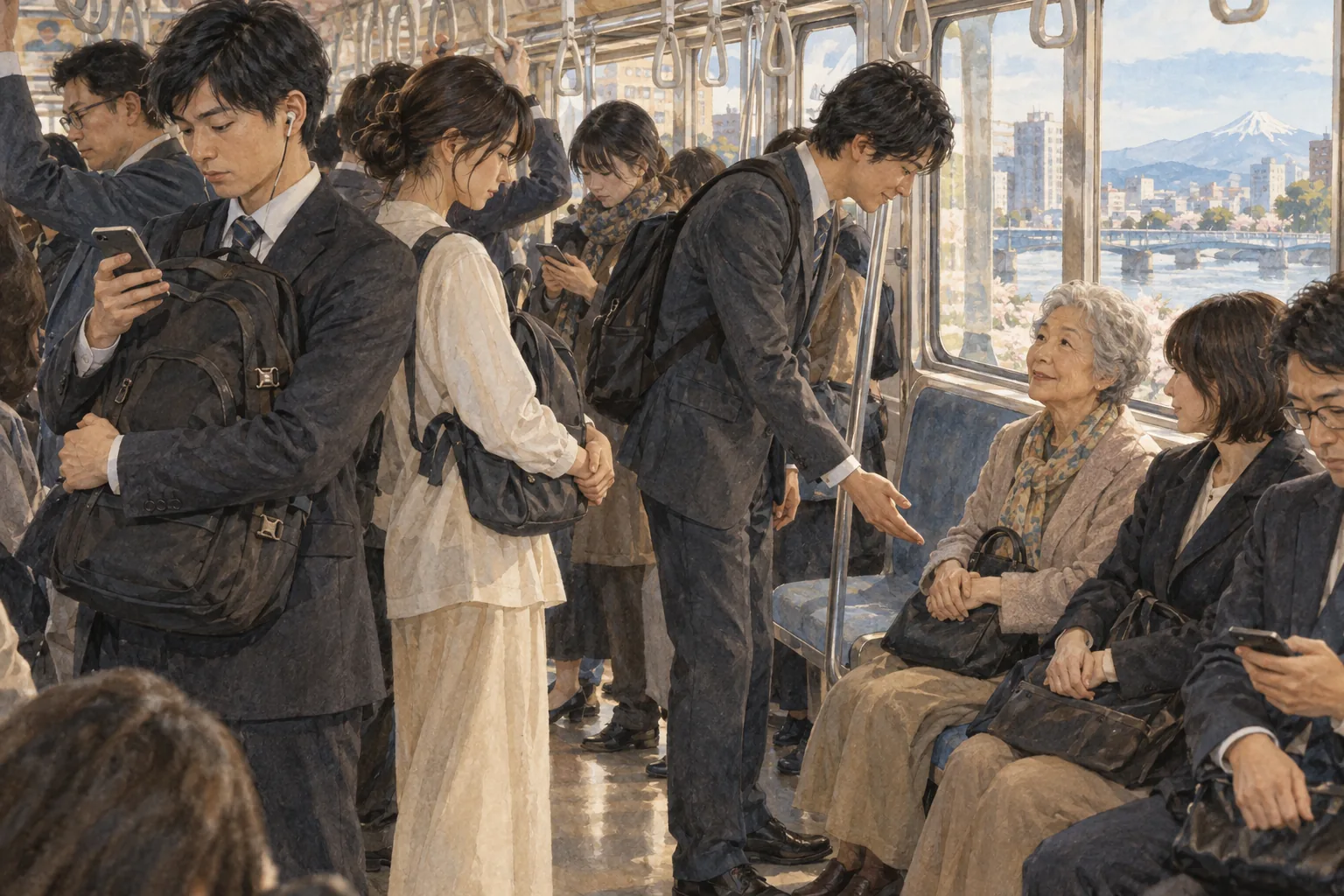
一言で言うと
これだけ覚えれば最低限伝わる一文
Japanese trains are quiet because phone calls are avoided and people keep their voices down, not because talking is banned.
日本の電車が静かなのは、通話を避け、声を落とすからであって、会話が禁止されているからではありません。
30秒で説明する
外国人に説明するときの標準サイズ
On a Japanese train, phones are set to silent, calls are not taken, backpacks come off your back, and voices stay low. Talking with a companion is fine; it is volume and phone calls that are avoided. Announcements ask passengers to switch phones off near priority seats when the train is crowded, and eating is avoided on commuter trains though not on long-distance ones.
日本の電車では、スマートフォンはマナーモードにし、通話はせず、リュックは背中から下ろし、声は低く保ちます。連れとの会話は問題ありません。避けられるのは音量と通話です。混雑時には優先席付近で電源を切るよう案内が流れますし、通勤電車では飲食を控えますが、長距離列車では構いません。
スピーチ・英作文
通訳案内士の二次口述・大学入試の自由英作文に
The first thing visitors notice on a Japanese train is the quiet. A packed car at rush hour can be almost silent. It is worth explaining what the actual rules are, because people often assume talking is forbidden. It is not. You can have a conversation with the person next to you, and friends do.
What is avoided is volume and, above all, phone calls. Phones go on silent mode, which is called manner mode here, and taking a call on the train is the thing people will look at you for. On the shinkansen you step out into the area between cars to talk.
Other conventions: take your backpack off your back and hold it in front or put it on the rack, do not sit with your legs spread, give up a priority seat if someone needs it, and do not eat on a commuter train, though eating on a long-distance train is completely normal and expected.
日本の電車で外の方がまず気づくのは、静かさです。ラッシュで満員の車両が、ほとんど無音になることもあります。実際の決まりが何かは説明する価値があります。会話が禁止されていると思われがちだからです。禁止ではありません。
隣の人と話して構いませんし、友人同士は話しています。避けられるのは音量、そして何より通話です。スマートフォンはマナーモードにし、車内で電話に出ることが、人に見られる行為です。新幹線では車両のあいだのデッキに出て話します。
ほかの決まりごと。リュックは背中から下ろして前に持つか棚に置く、脚を広げて座らない、必要な人がいれば優先席を譲る、通勤電車では飲食しない。ただし長距離列車で食べるのは、まったく普通で、むしろ前提になっています。
こう聞かれたら
外国人から実際にされる質問と、その答え方。
Can I talk to my friend on the train?
車内で友人と話してもいいですか。
Yes. Conversation is fine; it is the volume that matters. A normal indoor voice is acceptable, and a group laughing loudly is what draws looks.
話して構いません。問題は音量です。室内で話す程度の声なら大丈夫で、大声で笑う集団が視線を集めます。
Why can't I take a phone call?
どうして電話に出てはいけないのですか。
It is the thing announcements most often ask you not to do. A one-sided conversation is more intrusive than a two-sided one, and it has become the clearest shared rule on Japanese trains.
車内放送が最もよく控えるよう求めている行為です。一方だけの会話は、双方の会話より耳につきます。日本の電車で最もはっきり共有された決まりになっています。
Can I eat on the train?
電車の中で食べてもいいですか。
Not on a crowded commuter train. On a shinkansen or a long-distance limited express, absolutely, and buying a boxed meal at the station beforehand is part of the experience.
混んだ通勤電車では控えます。新幹線や長距離の特急なら問題なく、駅で駅弁を買うのは旅の一部です。
誤解されやすい
MYTHTalking on Japanese trains is forbidden.
日本の電車では話してはいけないと思われがちです。
FACTConversation is normal and allowed. What is avoided is loud volume and phone calls, and announcements specifically mention calls rather than talking.
会話は普通ですし問題ありません。避けられるのは大きな声と通話で、車内放送が名指しするのも会話ではなく通話です。
そのまま使えるフレーズ
- Please set your phone to silent mode.携帯電話はマナーモードにしてください。
- Take calls in the area between cars.通話はデッキでお願いします。
- Please take your backpack off your back.リュックは前に抱えてください。
- Talking is fine — it's the volume.会話は大丈夫です。問題は声の大きさです。
- Eating is fine on the shinkansen.新幹線なら食べて大丈夫です。
説明に使う語句
- silent modeマナーモード
- car / carriage車両
- priority seat優先席
- keep your voice down声を落とす
- vestibuleデッキ、車両の連結部
動画で見る
YouTube より豆知識
携帯電話を消音にする設定を「マナーモード」と呼ぶのは和製英語で、英語では silent mode などにあたる。優先席付近では携帯電話の電源を切るよう求める案内が長く行われてきたが、これは心臓ペースメーカーへの影響を懸念したもので、総務省の指針改定を受けて、多くの鉄道会社が「混雑時のみ電源オフ」へ運用を緩和している。リュックを前に抱える呼びかけは、2010年代後半から各社のマナーポスターで大きく扱われるようになった。車内での飲食の可否は明文の禁止ではなく慣習で、ロングシートの通勤電車では控え、クロスシートの長距離列車では許容される、という使い分けが一般的である。
