魚を食べる文化さかなをたべるぶんか
sakana o taberu bunka
how much fish Japan eats, and how that is changing
「日本人は魚をよく食べる」は半分本当。2011年度からは肉のほうが多く食べられている。
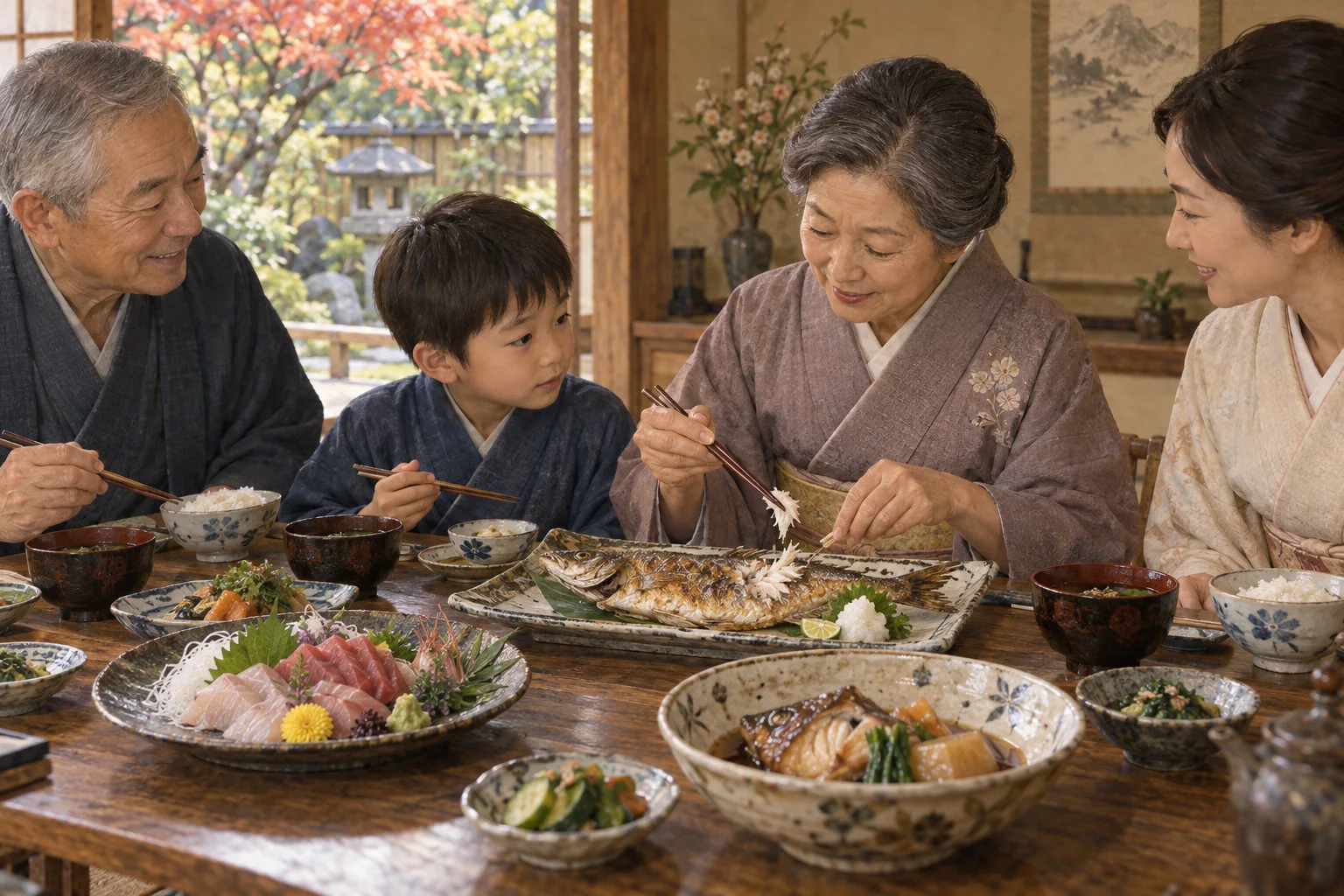
一言で言うと
これだけ覚えれば最低限伝わる一文
Sakana o taberu bunka, or fish-eating culture, is what Japan is known for, though meat has outpaced seafood since 2011.
魚を食べる文化とは、日本が知られている食文化ですが、2011年度からは肉類が魚介類を上回っているのが実態です。
30秒で説明する
外国人に説明するときの標準サイズ
Fish has been the main animal protein in Japan for most of its history, because the country is long, narrow and surrounded by sea, and because Buddhist rules discouraged eating four-legged animals for centuries. That is changing. Per-person seafood consumption has fallen since the early 2000s, and in fiscal 2011 meat overtook seafood for the first time. Fish is still central to washoku, but younger households cook it far less.
日本の歴史の大半で、魚は主な動物性たんぱく源でした。細長い国土が海に囲まれていることと、仏教の戒めが長く四つ足の獣を食べることを遠ざけたためです。それが変わりつつあります。一人あたりの魚介類の消費量は2000年代の初めから減り続け、2011年度に初めて肉類が魚介類を上回りました。魚は今も和食の中心ですが、若い世帯ほど家で魚を焼かなくなっています。
スピーチ・英作文
通訳案内士の二次口述・大学入試の自由英作文に
Japan's reputation as a fish-eating nation is real but out of date. Geography explains the origin: a long archipelago with warm and cold currents meeting off its coasts, giving an unusual variety of species. Religion reinforced it, since Buddhist influence made eating four-legged animals unusual for centuries, so fish carried the protein.
That produced a cuisine built on fish in every form, raw, grilled, simmered, dried, fermented and made into stock. But the direction has reversed. Per-person consumption of seafood has fallen steadily since the early 2000s, and according to government figures, fiscal 2011 was the first year in which people ate more meat than seafood.
The reasons given are price, the trouble of cooking whole fish and disposing of the bones and smell, and children who prefer chicken. Supermarkets now sell more boneless fillets, and the fishing industry faces an aging workforce and shrinking catches. So the honest line is that fish defines Japanese cuisine, not the Japanese diet of today.
日本が魚を食べる国だという評判は本当ですが、今の実態からは少しずれています。起源は地理で説明できます。細長い列島の沖で暖流と寒流が出会い、種類がきわめて豊富になりました。宗教もそれを強めました。仏教の影響で四つ足の獣を食べることが何世紀も一般的でなかったため、たんぱく源は魚が担ったのです。
そこから、生・焼き・煮・干し・発酵・出汁と、あらゆる形の魚に支えられた料理が生まれました。しかし流れは逆転しています。一人あたりの魚介類の消費量は2000年代の初めから下がり続け、国の統計によれば、2011年度に初めて魚介類より肉類を多く食べた年になりました。
理由として挙げられるのは、値段、丸ごとの魚を調理して骨や匂いを始末する手間、そして鶏肉を好む子どもです。スーパーには骨のない切り身が増え、漁業は担い手の高齢化と漁獲量の減少に直面しています。正直な言い方をすれば、魚が定義しているのは日本料理であって、今の日本人の食生活ではありません。
こう聞かれたら
外国人から実際にされる質問と、その答え方。
Do Japanese people eat fish every day?
日本人は毎日魚を食べているのですか。
Many older people do, and a traditional breakfast includes grilled fish. But younger households tend to eat it less often, and often as a ready-made fillet or in a lunch set rather than cooked whole at home.
年配の人には毎日食べる人が多く、伝統的な朝食には焼き魚がつきます。ただ若い世帯ほど食べる回数は少なく、家で丸ごと焼くのではなく、下ごしらえ済みの切り身か昼の定食で食べることが多い傾向があります。
Why did Japanese people avoid meat historically?
どうして昔の日本人は肉を避けていたのですか。
Buddhist teaching against taking life, reinforced by imperial edicts from the seventh century onward, made eating four-legged animals uncommon, though it never stopped entirely and game was eaten in mountain areas. Meat eating became normal again after the country opened in the Meiji era.
殺生を戒める仏教の教えと、七世紀以降に出された朝廷の禁令により、四つ足の獣を食べることは一般的でなくなりました。とはいえ完全に絶えたわけではなく、山間部では獣肉が食べられていました。肉食が再び当たり前になるのは明治の開国以降です。
What fish should I try that isn't sushi?
寿司以外なら、どの魚を試すといいですか。
Grilled mackerel with salt, simmered flounder in a sweet soy broth, or grilled saury in autumn, all of which come as a set meal with rice and miso soup. Dried and lightly salted fish for breakfast is another thing most visitors never encounter.
塩焼きの鯖、甘い醤油味で煮た煮付けのカレイ、秋の秋刀魚の塩焼きがよく、どれもご飯と味噌汁のついた定食で出てきます。朝食に出る干物や塩ものも、多くの外国人が経験しないものの一つです。
誤解されやすい
MYTHJapanese people eat more fish than meat.
日本人は肉より魚を多く食べている、と思われがちです。
FACTBy government food balance figures, meat consumption per person overtook seafood in fiscal 2011, and the gap has widened since.
国の食料需給表では、2011年度に一人あたりの肉類の消費が魚介類を上回りました。その差は以後、広がっています。
そのまま使えるフレーズ
- Japan eats a lot of fish, but less than it used to.日本は魚をよく食べますが、昔ほどではありません。
- Grilled fish comes with rice and miso soup.焼き魚にはご飯と味噌汁がつきます。
- Younger families don't cook whole fish much.若い家庭では丸ごとの魚をあまり焼きません。
- Watch out for the small bones.小骨に気をつけてください。
- This fish is in season right now.この魚は今が旬です。
説明に使う語句
- seafood魚介類
- fillet切り身
- in season旬の
- grilled with salt塩焼きの
- bones骨・小骨
- catch (of fish)漁獲
動画で見る
YouTube より豆知識
水産庁の水産白書によれば、一人一年あたりの食用魚介類の消費量は2000年代初頭から減少が続き、平成23(2011)年度に肉類の消費量が魚介類を上回りました。背景には、価格、骨や匂いの処理を含む調理の手間、食の洋風化などが挙げられます。日本近海は暖流と寒流が出会うため魚種が非常に多く、地域ごとに食べる魚も調理法も異なります。仏教の影響で四つ足の獣の肉食が長く避けられ、天武天皇の詔をはじめ禁令が繰り返し出された一方、山間部では獣肉が食べられており、完全に途絶えたわけではありません。近年は漁業者の減少と高齢化、資源量の変動が課題で、秋刀魚やするめいかのように漁獲が大きく減った魚もあります。
