おにぎりおにぎり
onigiri
a rice ball with a filling
「ライスボール」で説明が終わらない。海苔が別包装になっている理由まで話したい。
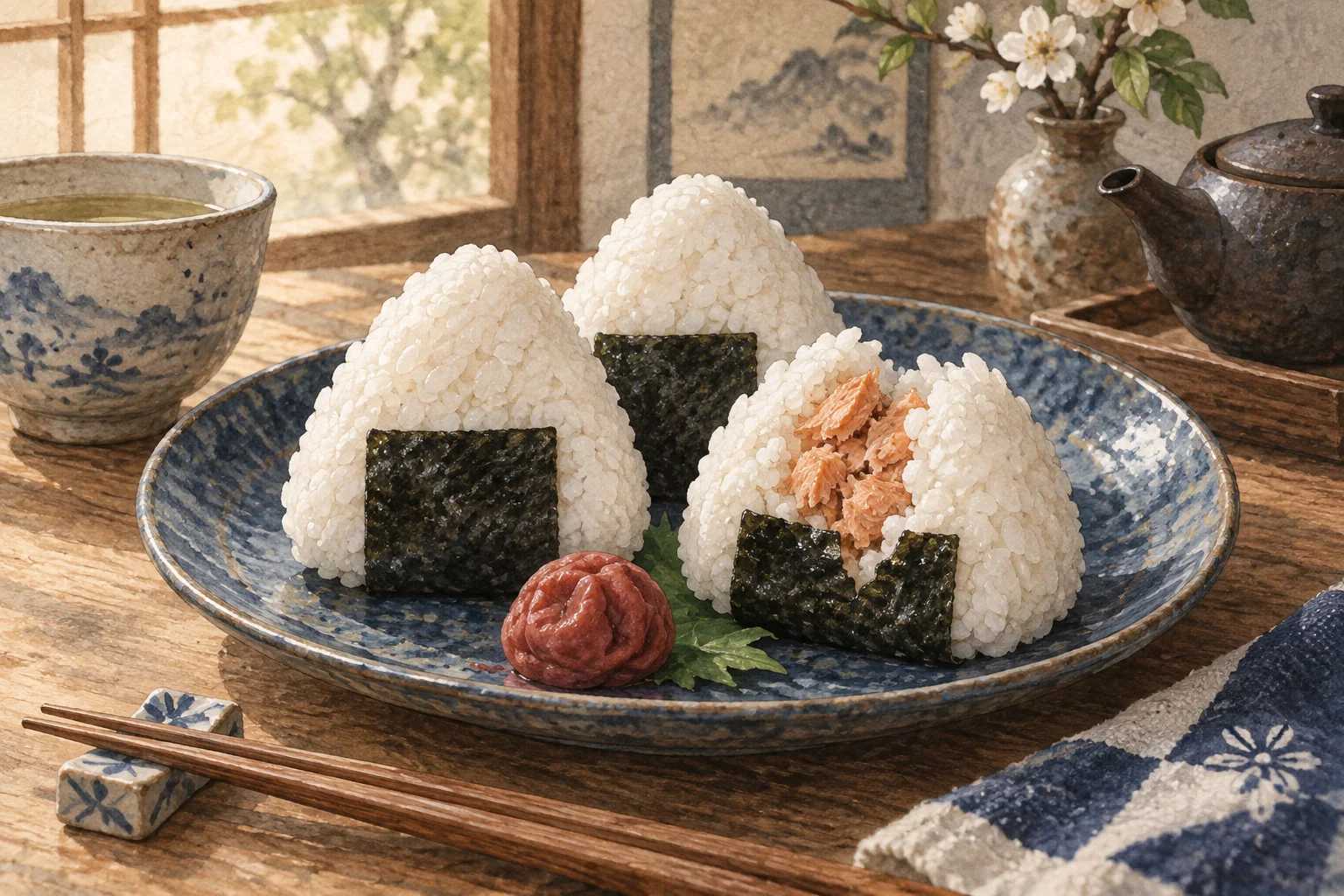
一言で言うと
これだけ覚えれば最低限伝わる一文
An onigiri is a hand-shaped ball of rice, usually with something salty inside and seaweed around it.
おにぎりとは、手で握った飯の塊で、たいてい中に塩気のある具が入り、海苔が巻いてあります。
30秒で説明する
外国人に説明するときの標準サイズ
Onigiri is rice pressed into a triangle or round shape, with a filling such as salted salmon, pickled plum or cod roe, and often wrapped in a sheet of dried seaweed. It is the standard portable meal in Japan: cheap, eaten with one hand, and sold in every convenience store. Convenience store versions keep the seaweed separate so it stays crisp.
おにぎりは、飯を三角や丸に握り、塩鮭・梅干し・たらこなどの具を入れ、多くは海苔を巻いたものです。日本の携帯食の定番で、安く、片手で食べられ、どのコンビニにもあります。コンビニのものは、海苔がパリパリのままになるよう別に包んであります。
スピーチ・英作文
通訳案内士の二次口述・大学入試の自由英作文に
Onigiri is the most ordinary food in Japan and one of the oldest. It is rice pressed by hand into a triangle, with something salty in the middle and usually a sheet of dried seaweed around it. The classic fillings are salted salmon, pickled plum, cod roe and tuna with mayonnaise.
The salt and the filling are not only for flavor; they are preservatives, which is why this was the food people carried into fields and onto journeys for centuries. If you buy one at a convenience store, look at the packaging.
The seaweed is sealed in a separate layer of plastic so it does not go soft against the rice, and there is a numbered opening sequence printed on it. Pull the tab, then pull the two sides, and the seaweed wraps itself around the rice as the plastic comes away. Getting it wrong on your first try is a rite of passage.
おにぎりは日本で最もありふれた食べもので、最も古い食べもののひとつでもあります。手で三角に握った飯で、真ん中に塩気のある具が入り、たいてい海苔が巻いてあります。
定番の具は塩鮭、梅干し、たらこ、ツナマヨネーズ。塩と具は味のためだけではありません。保存のためでもあり、だからこそ何世紀も、田へ、旅へと持っていく食べものだったのです。コンビニで買ったら、包装を見てください。
海苔は飯に触れてしなびないよう、別のフィルムで包まれていて、番号のついた開け方が印刷されています。上のつまみを引き、左右を引く。すると、フィルムが抜けながら海苔が飯に巻きつきます。最初の一回で失敗するのは、通過儀礼のようなものです。
こう聞かれたら
外国人から実際にされる質問と、その答え方。
What's the difference from sushi?
寿司とはどう違うのですか。
Sushi rice is seasoned with vinegar. Onigiri rice is plain, salted on the outside. Onigiri is everyday food you eat with your hands; sushi is a dish.
寿司の飯は酢で味つけしてあります。おにぎりの飯はそのままで、外側に塩をします。おにぎりは手で食べる日常食、寿司は料理です。
How do I open the convenience store packaging?
コンビニの包みはどうやって開けるのですか。
Pull the tab marked 1 all the way down to split the film, then pull the flaps marked 2 and 3 outward. Everyone gets it wrong once, and the rice usually survives.
①のつまみを最後まで引いてフィルムを切り、②と③を外へ引きます。誰でも一度は失敗しますが、たいてい飯は無事です。
Should it be warm?
温かいほうがいいのですか。
Not usually. Onigiri is eaten at room temperature, and the rice is made to hold together when cool. Most people eat convenience store ones as they are, though some shops sell warm ones separately.
ふつうは温めません。おにぎりは常温で食べるもので、冷めてもまとまるように作られています。コンビニのものはそのまま食べる人がほとんどですが、温かいおにぎりを別に売る店もあります。
そのまま使えるフレーズ
- The seaweed is packed separately so it stays crisp.海苔はパリパリのまま食べられるよう、別に包んであります。
- Pull the tab at the top first.まず上のつまみを引いてください。
- The filling is usually something salty.具はたいてい塩気のあるものです。
- It's fine to eat it cold.冷めたままで大丈夫です。
- Salted salmon is the safest first choice.最初は塩鮭が無難です。
説明に使う語句
- rice ballおにぎり
- filling具
- dried seaweed海苔
- pickled plum梅干し
- preservative保存のためのもの
動画で見る
YouTube より豆知識
石川県の杉谷チャノバタケ遺跡からは、弥生時代のものとみられる炭化した米の塊が出土しており、日本最古のおにぎり状のものとして知られる。三角形が主流なのは、山をかたどったという説、積み重ねやすいという説などがあるが定説はない。地域差もあり、俵型は関西で多い。コンビニの「パリパリ海苔」包装は1978年にセブン-イレブンが実用化したもので、それ以前は海苔がしっとりした状態で売られていた。近年は具の種類が増え、ツナマヨネーズは1983年に登場して定番になった。「おむすび」とも呼び、地域や家庭によって呼び方が分かれる。
