お茶漬けおちゃづけ
ochazuke
rice with tea or broth poured over it
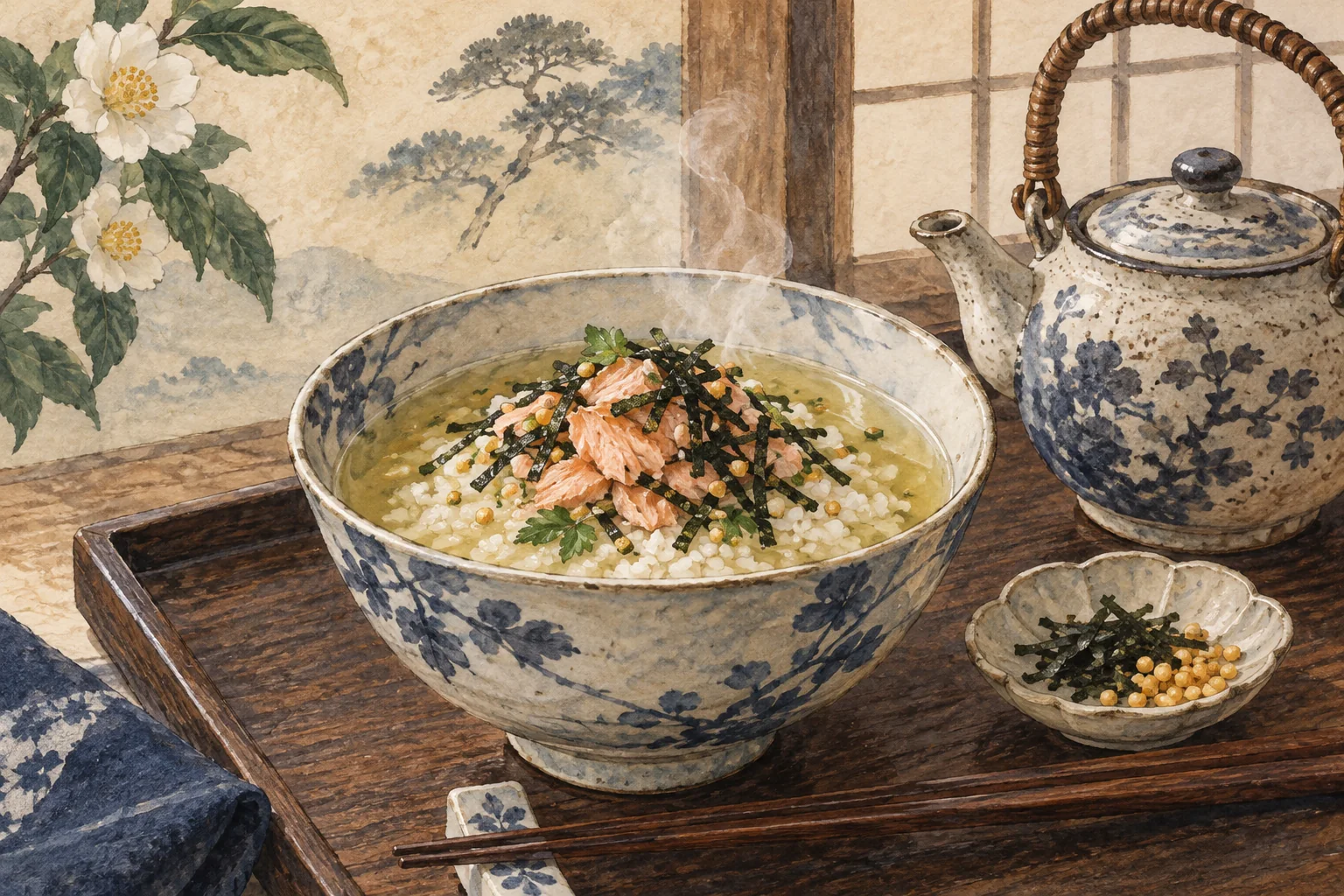
残ったご飯に茶をかけるだけ。飲んだ後と、食欲のない日の食べ物。
一言で言うと
これだけ覚えれば最低限伝わる一文
Ochazuke is cooked rice with green tea or light broth poured over it, a quick, plain finish to a meal.
お茶漬けとは、ご飯に緑茶か薄い出汁をかけたもので、食事の締めや手早い一杯として食べるものです。
30秒で説明する
外国人に説明するときの標準サイズ
Rice in a bowl, something salty on top — pickled plum, salmon flakes, seaweed, pickles — and hot green tea or dashi poured over. It is home food, made from leftover rice, and it is what people eat late at night, after drinking, or when they have no appetite. Instant packets have been sold since the 1950s and are in every supermarket.
茶碗のご飯に、梅干し、鮭、海苔、漬物といった塩気のあるものをのせ、熱い緑茶か出汁をかけます。残ったご飯で作る家の食べ物で、夜遅く、酒のあと、食欲のないときに食べるものです。粉末の素は1950年代から売られていて、どの店にもあります。
スピーチ・英作文
通訳案内士の二次口述・大学入試の自由英作文に
Ochazuke is about the simplest thing in Japanese cooking: rice in a bowl with hot green tea or a light dashi broth poured over it. On top goes something salty — a pickled plum, salted salmon, seaweed, pickles, fish roe — and that is the dish. It exists because Japanese households cook rice in quantity and it is what you do with the rice that is left.
The occasions are specific and everyone recognizes them: the end of a long drinking evening, a late night, a summer day when nothing else appeals, an illness. Restaurants serve refined versions, and an eel or sea bream ochazuke is a proper dish, but the everyday one is a packet of powder from a supermarket, torn over rice, with the kettle.
There is also a piece of Kyoto folklore attached to it: the story that when a Kyoto host offers you bubuzuke, their word for ochazuke, they are hinting that you have stayed too long. Kyoto people will tell you this is a joke about Kyoto rather than a rule anyone follows, and it is safer to treat it that way.
お茶漬けは、日本の料理のなかで最も簡素なものでしょう。茶碗のご飯に熱い緑茶か薄い出汁をかける。上にのせるのは塩気のあるもの、梅干し、塩鮭のほぐし身、刻んだ海苔、漬物、魚卵。それで料理になります。日本の家庭がご飯をまとめて炊くから生まれたもので、残ったご飯の行き先です。
食べる場面ははっきりしていて、誰もが知っています。長い酒席の締め、夜更け、ほかに何も食べたくない夏の日、体の具合が悪いとき。店で出す洗練された形もあり、鰻や鯛のお茶漬けは立派な一品です。けれど日常のそれは、袋の素をご飯にふりかけ、やかんの湯を注ぐものです。
京都にまつわる話もついています。京都の家で「ぶぶ漬けでもどうぞ」と言われたら、長居しすぎだという合図だ、という話です。京都の人は、これは京都をめぐる冗談であって、誰かが実際にやっている決まりではないと言います。そう受け取っておくのが安全です。
こう聞かれたら
外国人から実際にされる質問と、その答え方。
Is it really made with tea?
本当にお茶をかけるのですか。
Traditionally yes, green tea. Many people now use dashi broth, and most instant packets are a dashi powder, so either is normal.
もとは緑茶です。いまは出汁を使う人が多く、袋の素もほとんどが出汁の粉なので、どちらでもふつうです。
When would I be served this?
どんなときに出てきますか。
At the end of a drinking evening, late at night, or if you say you are not very hungry. A host offering it is offering something easy to eat.
酒席の締め、夜更け、あまり食べられないと言ったときです。出す側は、食べやすいものを勧めているのです。
Is the Kyoto story true?
京都の話は本当ですか。
It is a well-known joke about Kyoto indirectness rather than a custom you will meet. If someone offers you ochazuke, take it at face value.
京都の遠回しな物言いをめぐる有名な冗談で、実際に出会う習慣ではありません。勧められたら、そのまま受け取ってかまいません。
誤解されやすい
MYTHOchazuke is a formal Japanese dish.
お茶漬けは改まった日本料理だ、と思われがちです。
FACTIt is leftover food. Refined restaurant versions exist, but at home it is rice, a packet of powder and hot water.
残りもので作るものです。店の洗練された形もありますが、家ではご飯と袋の素と湯です。
そのまま使えるフレーズ
- It's rice with tea or broth poured over.ご飯に茶か出汁をかけたものです。
- You eat it at the end of a drinking night.飲んだあとの締めに食べます。
- The topping is something salty.のせるのは塩気のあるものです。
- Most people use an instant packet.たいていは袋の素を使います。
- It's good when you have no appetite.食欲のないときによいです。
説明に使う語句
- leftover rice残りご飯
- pickled plum梅干し
- salted salmon塩鮭
- instant packetお茶漬けの素
- broth出汁
動画で見る
YouTube より豆知識
粉末のお茶漬けの素は1952年(昭和27年)に発売され、家庭に広まった。京都で「ぶぶ漬けでもどうどす」と言われたら帰れという合図だという話は広く知られているが、京都では自嘲を含んだ言い回しとして語られることが多く、実際の作法として行われているわけではない。落語の演目にも取り入れられている。鰻茶漬けや鯛茶漬けのように、店で出す料理として作られるものもある。
