漬物つけもの
tsukemono
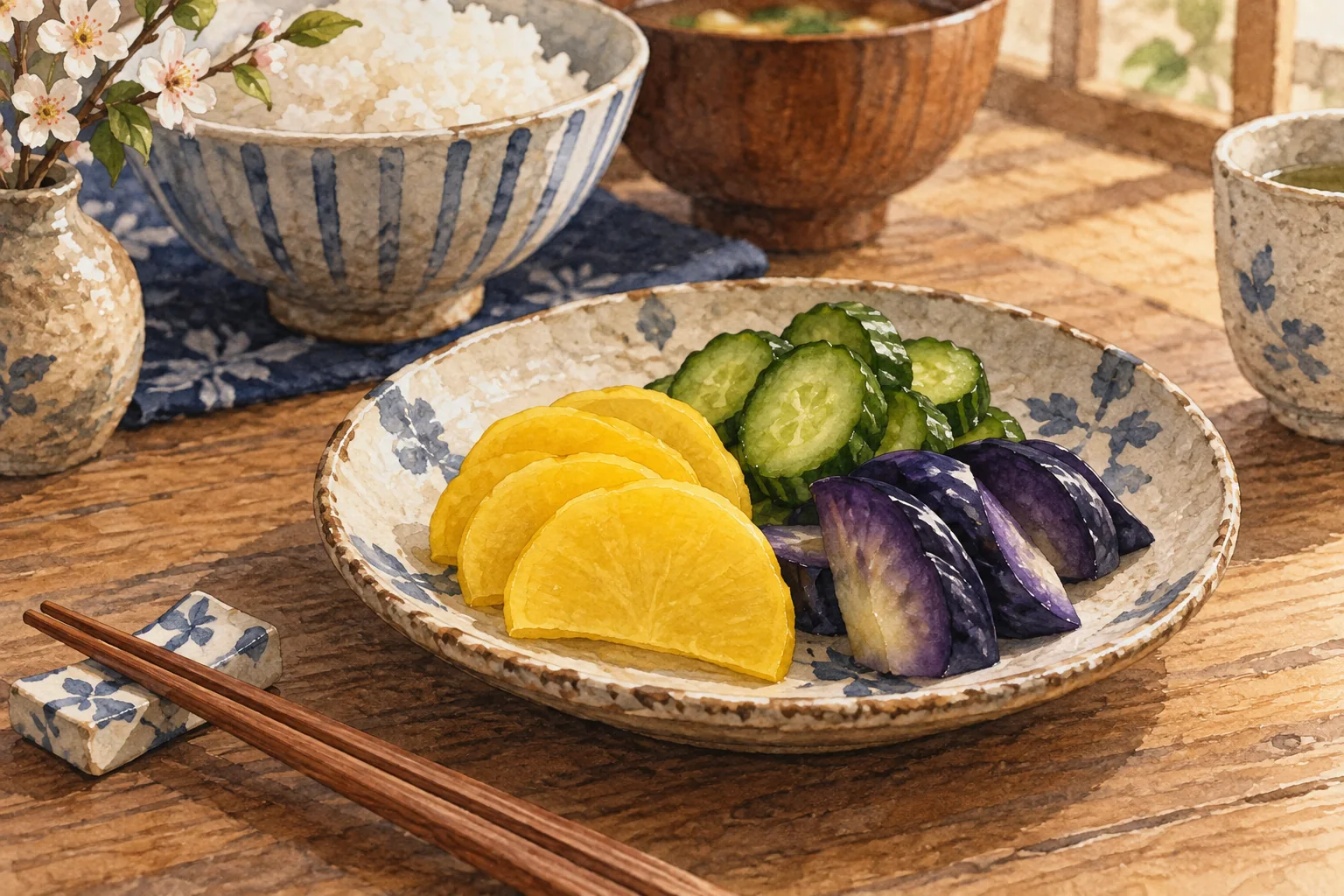
Japanese pickles served alongside rice
食事の最後に、ご飯と一緒に。副菜ではなく、口を変えるためのもの。
一言で言うと
これだけ覚えれば最低限伝わる一文
Tsukemono are Japanese pickles, eaten in small amounts with rice rather than as a side salad.
漬物とは日本の漬け物で、サラダのような副菜ではなく、ご飯と一緒に少量食べるものです。
30秒で説明する
外国人に説明するときの標準サイズ
Tsukemono covers everything from vegetables pressed in salt for an afternoon to roots buried in fermenting rice bran for months. They arrive in small quantities, usually with rice and soup at the end of a meal, and their job is to reset the palate and add crunch and salt. They are not meant to be eaten on their own like a salad.
漬物と言えば、半日ほど塩で押したものから、何か月も糠床に埋めた根菜まで含みます。出てくる量は少なく、たいていは食事の終わりに、ご飯と汁物と一緒に添えられます。役目は口を変えることと、歯ごたえと塩気を足すことです。サラダのように単独で食べるためのものではありません。
スピーチ・英作文
通訳案内士の二次口述・大学入試の自由英作文に
Tsukemono is the general word for Japanese pickles, and the range inside it is wider than most visitors expect. At one end is asazuke, vegetables salted and pressed for a few hours, fresh and barely sour. At the other is nukazuke, where cucumbers, eggplants or daikon are buried in a bed of fermenting rice bran that a household keeps alive for years, turning it by hand every day.
In between are things pickled in miso, in sake lees, in soy sauce and in vinegar. Regional names are everywhere: takuan from daikon, shibazuke and senmaizuke from Kyoto, iburigakko from Akita, which is smoked before pickling. What surprises people is the portion.
Three slices arrive next to the rice at the end of the meal, and that is deliberate, because they are salty and are there to punctuate rather than to fill. A practical note for anyone shopping: many bright yellow or pink pickles are colored, and the plainer-looking ones are usually the ones worth buying.
漬物は日本の漬け物をまとめて指す言葉で、その幅は、訪れた方が思うよりずっと広いです。一方の端にあるのが浅漬けで、野菜を数時間塩で押しただけの、みずみずしく酸味のほとんど無いものです。もう一方の端が糠漬けです。
きゅうり、なす、大根を、家庭が何年も生かし続ける糠床に埋め、毎日手で混ぜて育てます。そのあいだに、味噌漬け、粕漬け、醤油漬け、酢漬けがあります。土地ごとの名前も数えきれません。大根のたくあん、京都の柴漬けや千枚漬け、燻してから漬ける秋田のいぶりがっこ。人が驚くのは量です。
食事の終わりに、ご飯の横へ三切れほど出てきます。これはわざとで、塩気が強く、腹を満たすためではなく、区切りを付けるためにあるからです。買うときのために一つ。鮮やかな黄色や桃色の漬物には着色されたものが多く、見た目の地味なもののほうが、たいてい買う値打ちがあります。
こう聞かれたら
外国人から実際にされる質問と、その答え方。
When in the meal do I eat them?
食事のどのあたりで食べるものですか。
With the rice, usually toward the end. In a set meal they arrive with everything else, but they are eaten a slice at a time between mouthfuls of rice rather than finished first.
ご飯と一緒に、ふつうは終わりのほうで食べます。定食では他のものと一緒に出てきますが、先に食べきるのではなく、ご飯と交互に一切れずつ食べます。
Are they fermented or just salted?
発酵させたものですか、塩漬けしただけのものですか。
Both exist. Quick pickles are salted and pressed with no fermentation, while rice bran and some others involve lactic fermentation over weeks or months. Sourness is usually the clue.
どちらもあります。浅漬けは塩で押しただけで発酵しません。糠漬けなど一部は、数週間から数か月かけて乳酸発酵します。酸味があるかどうかが目安になります。
Why has the pickle counter at roadside shops shrunk?
どうして道の駅の漬物売り場が小さくなったのですか。
A change in food hygiene law now requires a business license and proper facilities for making pickles for sale, and the grace period ended in 2024. Many small producers, often elderly, chose to stop rather than rebuild their kitchens.
食品衛生法の改正で、売るための漬物作りには営業許可と、それに見合った設備が必要になり、経過措置が2024年に終わりました。多くは高齢の小さな作り手で、施設を作り直さずにやめる道を選びました。
誤解されやすい
MYTHPickles are a side salad and you should eat the whole dish.
漬物はサラダのような副菜で、出された分は食べきるものだと思われがちです。
FACTThey are seasoning for rice and are salty by design. Three or four slices alongside a bowl of rice is the intended amount, not a starter portion.
ご飯のための味付けであり、もともと塩気が強く作られています。ご飯一膳に三、四切れが想定された量で、前菜の一皿ではありません。
そのまま使えるフレーズ
- These pickles are made here.この漬物は自家製です。
- They go with the rice.ご飯と一緒にどうぞ。
- That one is quite salty.それは少し塩気が強いです。
- This has been pickled in rice bran.これは糠に漬けたものです。
- Could I have a little more rice?ご飯をもう少しいただけますか。
説明に使う語句
- pickles漬物
- to pickle漬ける
- rice bran米糠
- crunchyぽりぽりした
- to cleanse the palate口を変える
動画で見る
YouTube より豆知識
糠床は毎日混ぜて手入れをし、親から子へ引き継がれることもあります。混ぜるのは、空気を好む菌と嫌う菌の働きを整えるためです。たくあんは大根を干してから糠と塩で漬けたもので、地域によって色も味も違います。秋田のいぶりがっこは、雪国で大根を外に干せないため、囲炉裏の上で燻してから漬けたものです。2024年、食品衛生法の改正にともなう経過措置が終わり、販売する漬物の製造には営業許可が必要になりました。道の駅や直売所で、手作りの漬物が減った理由の一つがこれです。
