味噌汁みそしる
misoshiru
the soup served with almost every Japanese meal
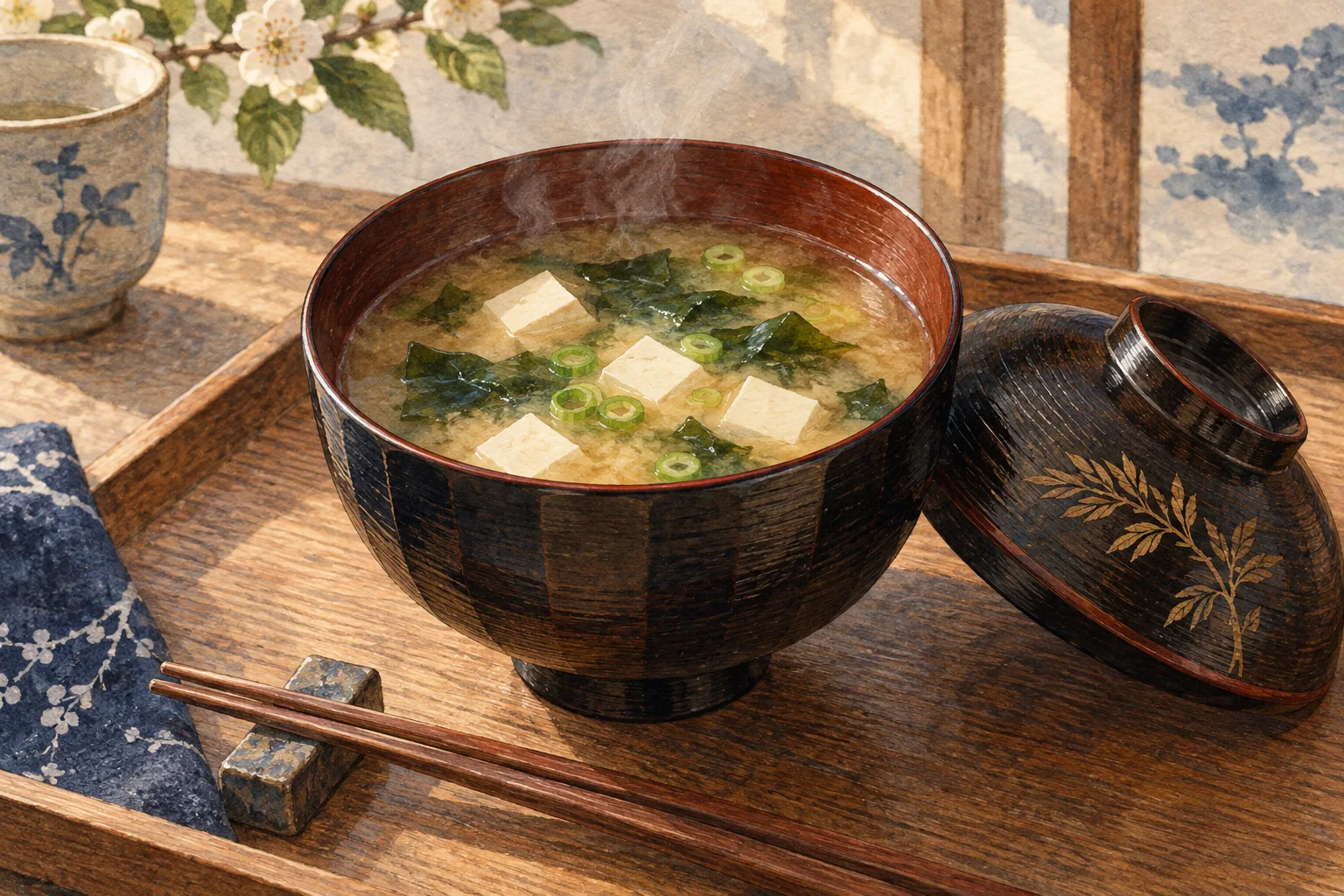
「スープ」だが、スプーンは出てこない。器を持ち上げて飲むのが正しい。
一言で言うと
これだけ覚えれば最低限伝わる一文
Miso soup is dashi stock with fermented soybean paste dissolved in it, served with most Japanese meals.
味噌汁は、出汁に発酵させた大豆のペーストを溶いた汁で、日本の食事のほとんどに付きます。
30秒で説明する
外国人に説明するときの標準サイズ
Miso soup is made by dissolving miso, fermented soybean paste, into dashi stock, with a few ingredients added: tofu, seaweed, spring onion, clams. It can come with breakfast, lunch or dinner. You drink it straight from the bowl, lifting it with both hands, and use chopsticks for the solid pieces. No spoon is provided.
味噌汁は、発酵させた大豆のペーストである味噌を出汁に溶き、豆腐・わかめ・ねぎ・あさりなどの具を入れた汁です。朝・昼・夜のどの食事にも出てきます。器を両手で持ち上げて直接飲み、具は箸でつまみます。スプーンは出ません。
スピーチ・英作文
通訳案内士の二次口述・大学入試の自由英作文に
Miso soup appears with almost every Japanese meal, including breakfast. It is made by dissolving miso, a fermented soybean paste, into dashi stock. The additions are usually simple: cubes of tofu, a little seaweed, spring onion, sometimes clams or vegetables. Two things are worth knowing.
First, you do not get a spoon. You lift the bowl with both hands and drink from it, and you use your chopsticks for the solid pieces. Drinking from the bowl is correct, not rude. Second, the miso is added at the very end, off the boil, because boiling it destroys the aroma.
Miso itself varies enormously by region: pale and sweet in Kyoto, dark and salty in the north, a distinctive dark soybean miso in Nagoya. If you tell a Japanese person which miso you like, they will often tell you where their family is from.
味噌汁は、朝食を含め、日本のほとんどの食事に付いてきます。発酵させた大豆のペーストである味噌を、出汁に溶いて作ります。具はたいてい簡素です。角切りの豆腐、少しのわかめ、ねぎ、ときにあさりや野菜。
知っておくとよいことが二つあります。第一に、スプーンは出ません。器を両手で持ち上げて直接飲み、具は箸でつまみます。器から飲むのが正しい作法で、無作法ではありません。第二に、味噌は最後、火を止めてから溶きます。
煮立てると香りが飛ぶからです。味噌そのものは地域差が非常に大きく、京都は色が淡く甘め、北国は濃く塩辛く、名古屋には大豆だけで作る独特の豆味噌があります。日本人に好きな味噌を言うと、よく家がどこの出身かを話してくれます。
こう聞かれたら
外国人から実際にされる質問と、その答え方。
Why is there no spoon?
どうしてスプーンがついていないのですか。
Because the bowl is designed to be lifted. Japanese tableware for soup and rice is made to be held in the hand, and drinking directly from the bowl is the correct way.
器が持ち上げる前提で作られているからです。日本の汁椀と飯椀は手に持つように作られており、直接口をつけるのが正しい飲み方です。
Is it vegetarian?
肉や魚は入っていませんか。
Usually not. The stock almost always contains dried fish flakes. Ask for kombu dashi if you need a plant-based version; some restaurants can do it.
たいてい違います。出汁にはほぼ必ず鰹節が入ります。植物性が必要なら昆布だしを頼んでください。対応できる店もあります。
Why does it taste different everywhere?
どうして店ごとに味が違うのですか。
Miso varies by region and by how long it was fermented. Rice miso, barley miso and soybean miso are all common, and the color ranges from almost white to near black.
地域と熟成期間で味噌が違うからです。米味噌、麦味噌、豆味噌があり、色もほぼ白から黒に近いものまであります。
そのまま使えるフレーズ
- Lift the bowl with both hands and drink from it.両手で器を持って、直接飲みます。
- There's no spoon — use chopsticks for the pieces.スプーンはありません。具は箸でつまみます。
- The miso goes in last, off the heat.味噌は最後に、火を止めてから入れます。
- It comes with breakfast too.朝食にも付きます。
- Every region has its own kind of miso.地域ごとに味噌が違います。
説明に使う語句
- fermented発酵させた
- soybean paste味噌
- stock / broth出汁
- tofu豆腐
- bring to the boil煮立てる
動画で見る
YouTube より豆知識
味噌は米・麦・大豆のいずれを麹に使うかで大きく分かれ、米味噌が全国の生産量の約8割を占める。色の違いは原料と熟成期間、加熱による褐変(メイラード反応)による。名古屋を中心とする東海地方の八丁味噌は大豆麹のみを使い、長期熟成させる。「味噌汁は煮立てるな」と言われるのは、香気成分が揮発し、味噌の風味が落ちるため。江戸時代には「一汁一菜」が庶民の食事の基本とされ、味噌汁は大豆のたんぱく質をとる手段の一つだった。「手前味噌」は自家製の味噌を自慢したことに由来し、自慢話をすることを指す言葉になった。
