鰹節かつおぶし
katsuobushi
dried, smoked and fermented bonito, shaved into flakes for stock
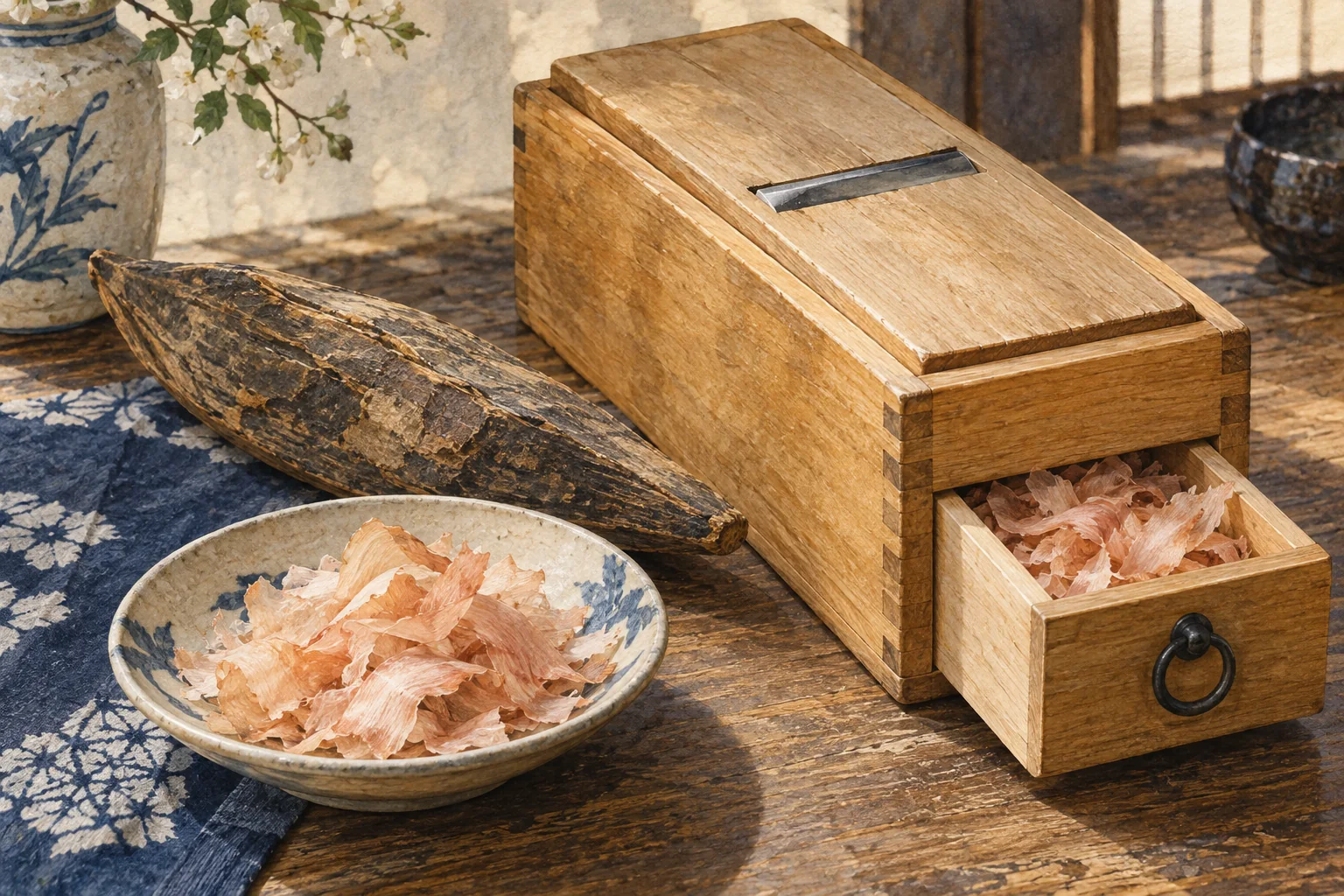
世界一硬い食品と言われる。魚を燻し、干し、カビをつけて作る。
一言で言うと
これだけ覚えれば最低限伝わる一文
Katsuobushi is bonito that has been smoked, dried and fermented until it is as hard as wood.
鰹節とは、カツオを燻し、干し、発酵させて、木のように硬くしたものです。
30秒で説明する
外国人に説明するときの標準サイズ
Katsuobushi is made from skipjack tuna. The fish is simmered, smoked over a wood fire many times, then in the best grade deliberately covered with a mold that draws out the last moisture and fat. The result is a hard block, shaved into paper-thin flakes. Together with kelp it makes dashi, the stock under most Japanese cooking.
鰹節はカツオから作ります。煮てから、薪の火で何度も燻し、上等なものはさらにわざとカビをつけて、残った水分と脂を抜きます。できあがるのは硬い塊で、紙のように薄く削って使います。昆布と合わせてだしになり、日本料理の多くはその上に成り立っています。
スピーチ・英作文
通訳案内士の二次口述・大学入試の自由英作文に
Katsuobushi is one of those foods that sounds impossible when you describe the process. You take a skipjack tuna, cut it into blocks, simmer them, then smoke them over a smoldering wood fire and rest them, over and over, for weeks.
At that stage it is already hard. For the top grade you go further: you put the blocks in a warm room and let a particular mold grow on the surface, brush it off, let it grow again, three or four times or more.
The mold pulls out the remaining water and breaks down the fat, and what is left is a piece of fish so hard that people call it the hardest food in the world. You shave it against a plane like a carpenter. The flakes go into hot water for a few minutes and that is dashi, which is under almost everything we cook.
鰹節は、作り方を説明すると「そんなことが可能なのか」と言われる食べ物です。カツオを節に切り分け、煮て、いぶした薪の上で燻しては寝かせる。それを何週間も繰り返します。この時点ですでに硬い。
最上等のものは、さらに先があります。温かい室に入れ、ある種のカビを表面に生やし、払い落とし、また生やす。三度、四度、あるいはそれ以上。カビが残りの水分を引き出し、脂を分解します。
残るのは、世界一硬い食品と言われるほど硬い魚の塊です。削るときは、大工のように鉋に当てます。削ったものを数分湯に入れれば、それがだしです。私たちの料理のほとんどは、その上に載っています。
こう聞かれたら
外国人から実際にされる質問と、その答え方。
Is the mold safe?
あのカビは安全なのですか。
Yes. It is a specific cultivated mold, a relative of the koji mold used for miso and soy sauce, and it is applied on purpose in a controlled room. It is brushed off before the block is sold.
安全です。味噌や醤油に使う麹菌の仲間の、決まった種類のカビで、管理された室でわざとつけます。売る前に払い落とします。
Why are the flakes moving?
削り節はどうして動いているのですか。
They are so thin and light that the rising steam from hot food lifts them. Nothing is alive. Children in Japan are told the same thing when they ask.
非常に薄く軽いので、熱い料理から立つ湯気で持ち上がるからです。生きてはいません。日本の子どもが聞いたときも、同じ説明をします。
Do people still shave it at home?
いまも家で削っているのですか。
Very few. Most households buy ready-shaved packets or a liquid stock base. A shaving box was once standard kitchen equipment, and many people my age remember being made to do it as a child.
ほとんどいません。多くの家庭は削ってある袋か、液体のだしの素を買います。削り器は昔は台所の定番で、私の年代には子どものころにやらされた記憶のある人が多いです。
誤解されやすい
MYTHKatsuobushi is just dried fish flakes.
鰹節は魚を干して削っただけのものだ、と思われがちです。
FACTThe best grade is smoked for weeks and then fermented with a cultivated mold over months. It is closer to a cured, fermented product like a dry-cured ham than to plain dried fish.
上等なものは何週間も燻したあと、何か月もかけて種付けしたカビで発酵させます。ただの干物というより、熟成させた生ハムのような発酵食品に近いものです。
そのまま使えるフレーズ
- It's bonito, smoked and then fermented with mold.カツオを燻して、カビで発酵させたものです。
- It's said to be the hardest food in the world.世界一硬い食品と言われています。
- You shave it, like planing wood.木を削るように、鉋で削ります。
- The flakes move because of the steam.湯気で動いているだけです。
- With kelp, this makes dashi.昆布と合わせると、だしになります。
説明に使う語句
- skipjack tuna, bonitoカツオ
- to smoke (food)燻す
- mold (the fungus)カビ
- to shave, to plane削る
- stock, brothだし
動画で見る
YouTube より豆知識
カビをつけない「荒節」はおよそ1か月で仕上がるが、カビ付けを4回以上繰り返す「本枯節」は4か月から半年かかる。生のカツオは7割ほどが水分だが、仕上がった節では15パーセントほどまで落ちる。節どうしを打ち合わせると、木のような乾いた音がする。硬さについては、水晶に近いモース硬度7前後と紹介されることが多いが、食品を鉱物の尺度で測った正式な測定ではなく、「世界一硬い食品と言われる」という言い方が正確である。削り器は「鰹箱」と呼ばれ、かつては嫁入り道具の一つだった。
