絵馬えま
ema
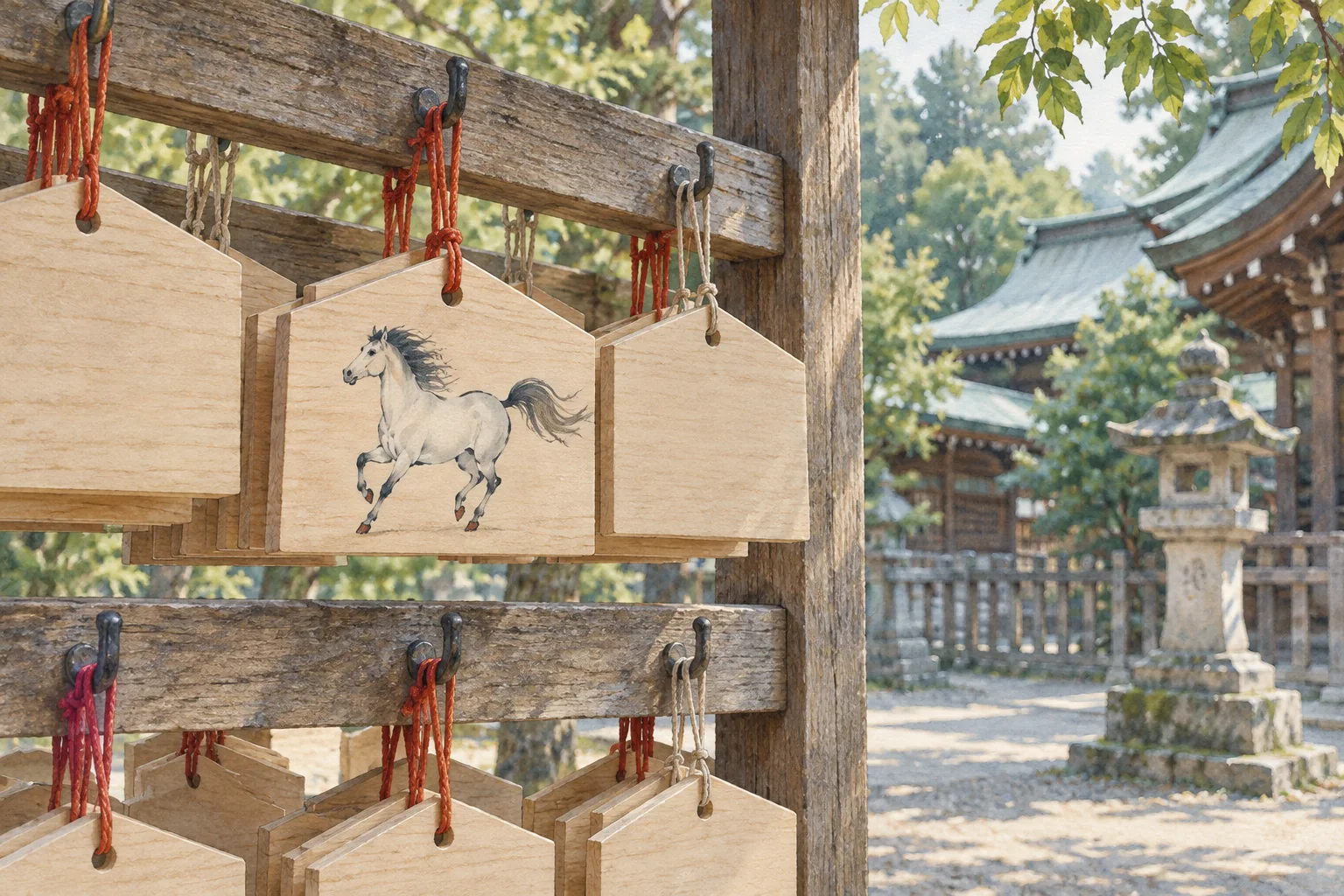
a wooden plaque you write a wish on
願い事が全部読める状態で吊るされている。プライバシーの概念が違う、と驚かれる。
一言で言うと
これだけ覚えれば最低限伝わる一文
An ema is a small wooden plaque you write a wish on and hang up at a shrine.
絵馬とは、願い事を書いて神社に掛ける、小さな木の板のことです。
30秒で説明する
外国人に説明するときの標準サイズ
At most shrines there is a rack hung with small wooden plaques. You buy one, write your wish and your name on the back, and hang it with the others. Anyone can read them, and people do. The most common wishes are about exams, health, work and relationships, and near universities the racks in January are almost entirely about entrance exams.
多くの神社には、小さな木の板が掛かった棚があります。一枚受けて、裏に願い事と名前を書き、他の絵馬と一緒に掛けます。誰でも読めますし、実際みんな読みます。多い願いは受験・健康・仕事・人間関係で、大学の近くでは1月の絵馬掛けがほぼ受験の願いで埋まります。
スピーチ・英作文
通訳案内士の二次口述・大学入試の自由英作文に
At a Shinto shrine you will see racks covered in small wooden plaques, each one written on. These are ema. You buy a blank one, write your wish on the back along with your name and the date, and hang it up. The wish is left in public where anyone can read it, which surprises visitors used to keeping that sort of thing private.
Reading other people's is half the pleasure. Near a university in January, almost every plaque is about passing an entrance exam. At a shrine known for relationships, they are all about one person. The word ema means picture horse.
Long ago, people who wanted to ask something serious of a shrine donated a real horse, which most could not afford, so a picture of a horse on a wooden board was accepted instead. The plaques are collected and burned at the shrine, usually once a year.
神社に行くと、小さな木の板がびっしり掛かった棚を見かけます。これが絵馬です。無地のものを受け、裏に願い事と名前と日付を書いて掛けます。願い事は誰でも読める状態で公開されるので、そういうことは伏せるものだと思っている方は驚きます。
他人の絵馬を読むのが楽しみの半分でもあります。1月の大学近くの神社では、ほぼすべてが合格祈願です。縁結びで知られる神社では、全部が誰か一人のことです。絵馬とは「絵の馬」の意味です。
昔、神社に重い願いをする人は本物の馬を奉納しましたが、多くの人には無理だったため、板に描いた馬で代えることが認められました。絵馬はふつう年に一度、神社でまとめて焚き上げられます。
こう聞かれたら
外国人から実際にされる質問と、その答え方。
Do I have to write my real name?
本名を書かなければいけませんか。
It is traditional to write your name and sometimes your address, so the kami knows who is asking. Many people now write only initials, and some shrines sell stickers to cover personal details.
誰の願いか分かるよう名前や住所を書くのが習わしです。今はイニシャルだけの人も多く、個人情報を隠すシールを用意する神社もあります。
Can I write in English?
英語で書いてもいいですか。
Yes, and shrines in tourist areas have plenty of plaques in every language. The kami are not understood to be limited by language.
大丈夫です。観光地の神社にはあらゆる言語の絵馬が掛かっています。神様が言語に縛られているとは考えられていません。
What happens to them afterwards?
絵馬はそのあとどうなるのですか。
They are taken down periodically and burned in a ceremony, which is how the wish is understood to be sent on. They are not thrown away as trash.
定期的に外され、お焚き上げで焼かれます。それによって願いが届くと理解されています。ごみとして捨てるわけではありません。
そのまま使えるフレーズ
- Write your wish on the back and hang it there.裏に願い事を書いて、あそこに掛けます。
- You can read other people's — that's normal.他の人のを読んでも大丈夫です。普通のことです。
- In January these are all about entrance exams.1月はこれが全部、受験の願いになります。
- They're burned in a ceremony once a year.年に一度、お焚き上げで焼かれます。
- The word means "picture horse."絵馬は「絵の馬」という意味です。
説明に使う語句
- plaque板、額
- wish (noun/verb)願い/願う
- hang up掛ける
- entrance exam入学試験
- offering奉納
動画で見る
YouTube より豆知識
絵馬の起源は、神に本物の馬を奉納する習わしにさかのぼる。馬は神の乗り物とされたが、庶民には負担が大きく、やがて木や土の馬、さらに板に描いた馬で代用されるようになった。現在も一部の神社では神馬(しんめ)と呼ばれる馬が飼われている。江戸時代には巨大な絵馬を奉納する「大絵馬」が流行し、絵師が腕を競った。現在の小さな五角形の絵馬は、家の形をかたどったものとも、屋根のある社を表すとも言われる。合格祈願で知られる太宰府天満宮や湯島天満宮では、受験期に絵馬が数万枚単位で掛けられる。
