祇園と花街ぎおんとかがい
Gion
the old Kyoto quarter where geiko and maiko still work
写真を撮る前に。あの細い道の多くは、人が住んでいる私道である。
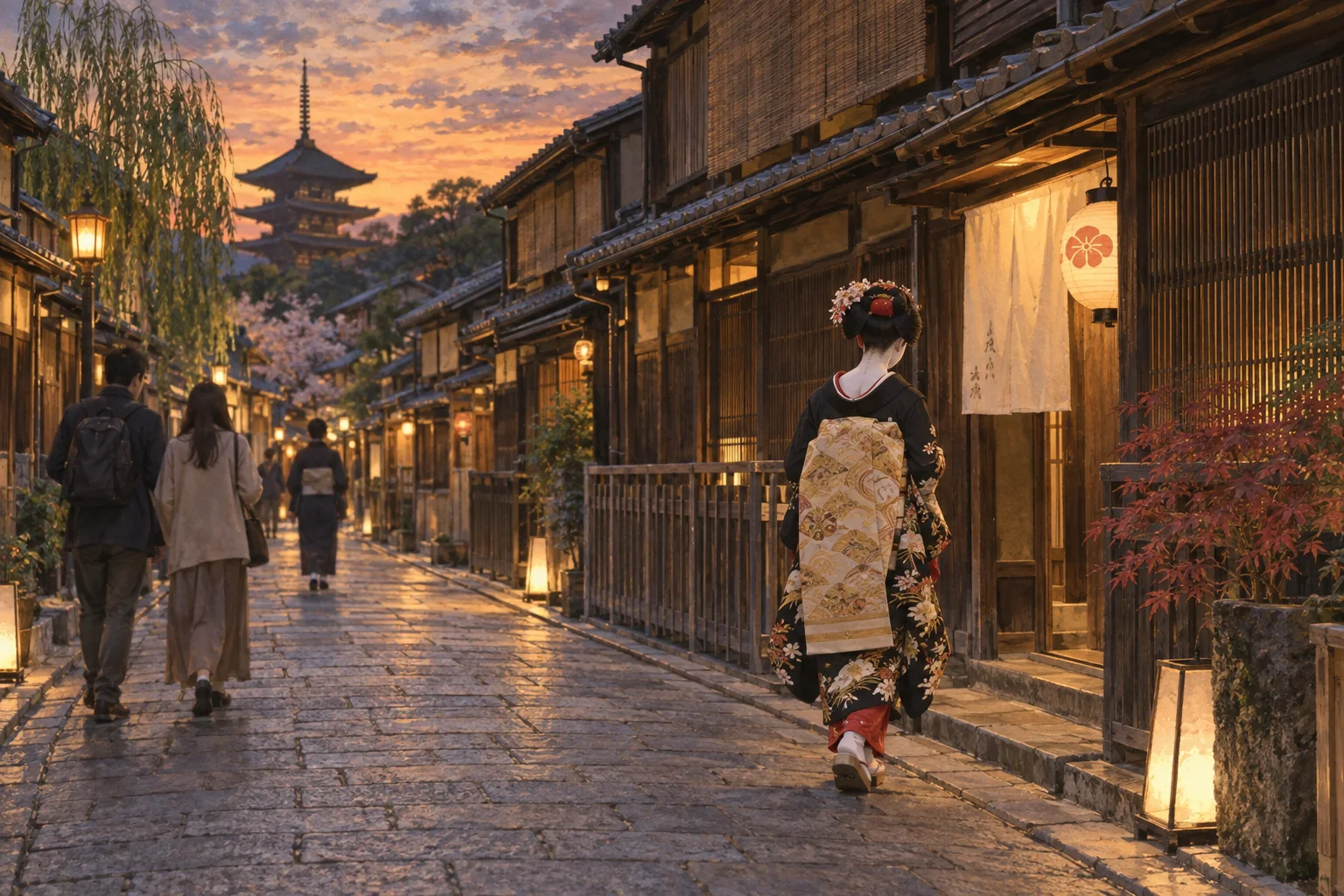
一言で言うと
これだけ覚えれば最低限伝わる一文
Gion is the Kyoto district where geiko and maiko still live, train and work.
祇園は、芸妓と舞妓がいまも暮らし、稽古し、働いている京都の街です。
30秒で説明する
外国人に説明するときの標準サイズ
Gion is a district of eastern Kyoto with wooden tea houses along narrow lanes. It is one of five remaining kagai, or geisha quarters, in the city. Women there work as geiko, the Kyoto word for geisha, and maiko, apprentices in their teens and early twenties. They are entertainers trained in dance, music and conversation, not sex workers, and the district is a working neighborhood, not an exhibit.
祇園は京都の東にある街で、細い通りに木造のお茶屋が並びます。市内に残る五つの花街の一つです。そこで働く女性は、京都では芸妓(げいこ)と呼ばれ、十代から二十代前半の見習いは舞妓といいます。踊り・音曲・座持ちを仕込まれた芸の担い手であって、性を売る仕事ではありません。そして花街は展示物ではなく、人が働き暮らす町です。
スピーチ・英作文
通訳案内士の二次口述・大学入試の自由英作文に
Gion is the best known of the five geisha districts still working in Kyoto. In Kyoto the word is not geisha but geiko, and a maiko is an apprentice, usually between fifteen and twenty, who starts after junior high school and trains in dance, shamisen, tea and the local dialect.
There are fewer than three hundred geiko and maiko in the whole city now, down from over a thousand in the 1960s. Two things are worth saying plainly to visitors. First, they are performing artists hired to host a dinner, not sex workers, and the confusion offends people here.
Second, many of the lanes are private property where people live, and local residents have put up signs asking visitors not to take photos there without permission, warning of a fine. If you want to see a performance, the districts hold public dances in spring.
祇園は、京都にいまも残る五つの花街のうち、もっとも知られた街です。京都では芸者ではなく芸妓(げいこ)と呼び、舞妓はその見習いで、たいてい15歳から20歳くらい。中学校を出てから入り、踊り・三味線・茶・京ことばを仕込まれます。
市内全体でも芸妓と舞妓はいま300人に満たず、1960年代の千人以上から大きく減りました。訪れる人にはっきり伝えたいことが二つあります。一つ、彼女たちは宴席をもてなすために呼ばれる芸の担い手であって、性を売る仕事ではありません。
混同はここでは失礼にあたります。二つ、細い路地の多くは人が住む私有地で、地元の協議会が無断撮影をしないよう求め、罰金をうたう掲示を出しています。舞台で見たいなら、春に公開の踊りがあります。
こう聞かれたら
外国人から実際にされる質問と、その答え方。
Are geisha prostitutes?
芸者は娼婦なのですか。
No. Geiko and maiko are trained performers paid to dance, play music and host a room. The confusion partly comes from the occupation years, when women in costume worked near bases and were called geisha girls.
いいえ。芸妓・舞妓は、踊り・音曲・座持ちのために呼ばれる芸の担い手です。混同の一因は占領期で、衣装をつけて基地の周りで働いた女性が「ゲイシャガール」と呼ばれたことにあります。
Can I take their photograph?
写真を撮ってもいいですか。
Not without asking, and not on the private lanes, where local residents have posted signs warning of a fine. If someone in full costume poses happily for you in the middle of the day, they are often a tourist who paid for a makeover.
断りなしには撮らないでください。私道では、地元の協議会が罰金をうたう掲示を出しています。昼間に衣装で快くポーズをとってくれる人は、変身体験をした観光客であることが多いです。
Can an ordinary visitor go to a tea house?
普通の旅行者でもお茶屋に行けますか。
Traditionally a tea house takes only customers introduced by existing ones. In recent years some hotels and agencies arrange evenings for visitors, and the spring public dances are open to anyone.
お茶屋は本来、なじみの客の紹介がなければ入れません。近年はホテルや業者が訪問客向けの席を用意することもあり、春の公開の踊りは誰でも見られます。
誤解されやすい
MYTHGeisha are high-class prostitutes.
芸者は高級な娼婦だと思われがちです。
FACTThey are trained entertainers — dance, shamisen, song and conversation — hired to host a banquet. The two professions were legally and socially separate.
実際には踊り・三味線・唄・座持ちを仕込まれた芸の担い手で、宴席をもてなすために呼ばれます。二つの職は制度の上でも世間の上でも別のものでした。
そのまま使えるフレーズ
- In Kyoto they're called geiko, not geisha.京都では芸者ではなく芸妓(げいこ)と呼びます。
- A maiko is an apprentice, usually in her teens.舞妓は見習いで、たいてい十代です。
- They're performers, not sex workers.芸を売る仕事で、性を売る仕事ではありません。
- Please don't photograph them without asking.断りなく撮らないでください。
- These lanes are private — people live here.この路地は私有地で、人が住んでいます。
説明に使う語句
- geisha district花街(かがい)
- apprentice見習い
- tea house (banquet house)お茶屋
- three-stringed lute三味線
- by introduction only一見さんお断り
動画で見る
YouTube より豆知識
京都の花街は、祇園甲部・祇園東・先斗町・宮川町・上七軒の五つで「五花街」と呼ばれる。島原は1976年に花街の組合から外れ、いまは五花街に数えられない。花街の健康保険組合の記録では、1960年ごろに千人を超えていた京都の芸妓は2000年代後半には300人ほどに減った。舞妓は寮にあたる置屋に住み込み、髪は自分の地毛を結うため、形を崩さないよう高い枕で寝る。春には都をどり(祇園甲部)や京おどりなど、各花街がそれぞれの公開舞台を持つ。
