原宿と表参道はらじゅくとおもてさんどう
Harajuku and Omotesando
the youth fashion street and the tree-lined avenue beside it
表参道はもともと明治神宮の参道。だから幅が広く、まっすぐである。
一言で言うと
これだけ覚えれば最低限伝わる一文
Harajuku and Omotesando are a center of youth fashion and the wide avenue beside it, built as a shrine approach.
原宿と表参道とは、若者ファッションの中心地と、その隣にある、神社の参道として造られた広い通りです。
30秒で説明する
外国人に説明するときの標準サイズ
Harajuku means two things side by side. Takeshita Street is a narrow crowded lane of small shops aimed at teenagers, full of crepes and photo booths. Omotesando, one street away, is a wide avenue of zelkova trees and luxury flagship stores. The avenue was laid out in 1920 as the approach to Meiji Shrine, which is why it is straight and unusually wide.
原宿は、隣り合う二つの顔を持ちます。竹下通りは十代向けの小さな店がひしめく細い道で、クレープと写真のブースであふれています。一本隣の表参道は、けやき並木と高級ブランドの旗艦店が並ぶ広い通りです。この通りは1920年、明治神宮の参道として造られました。まっすぐで、やけに幅が広いのはそのためです。
スピーチ・英作文
通訳案内士の二次口述・大学入試の自由英作文に
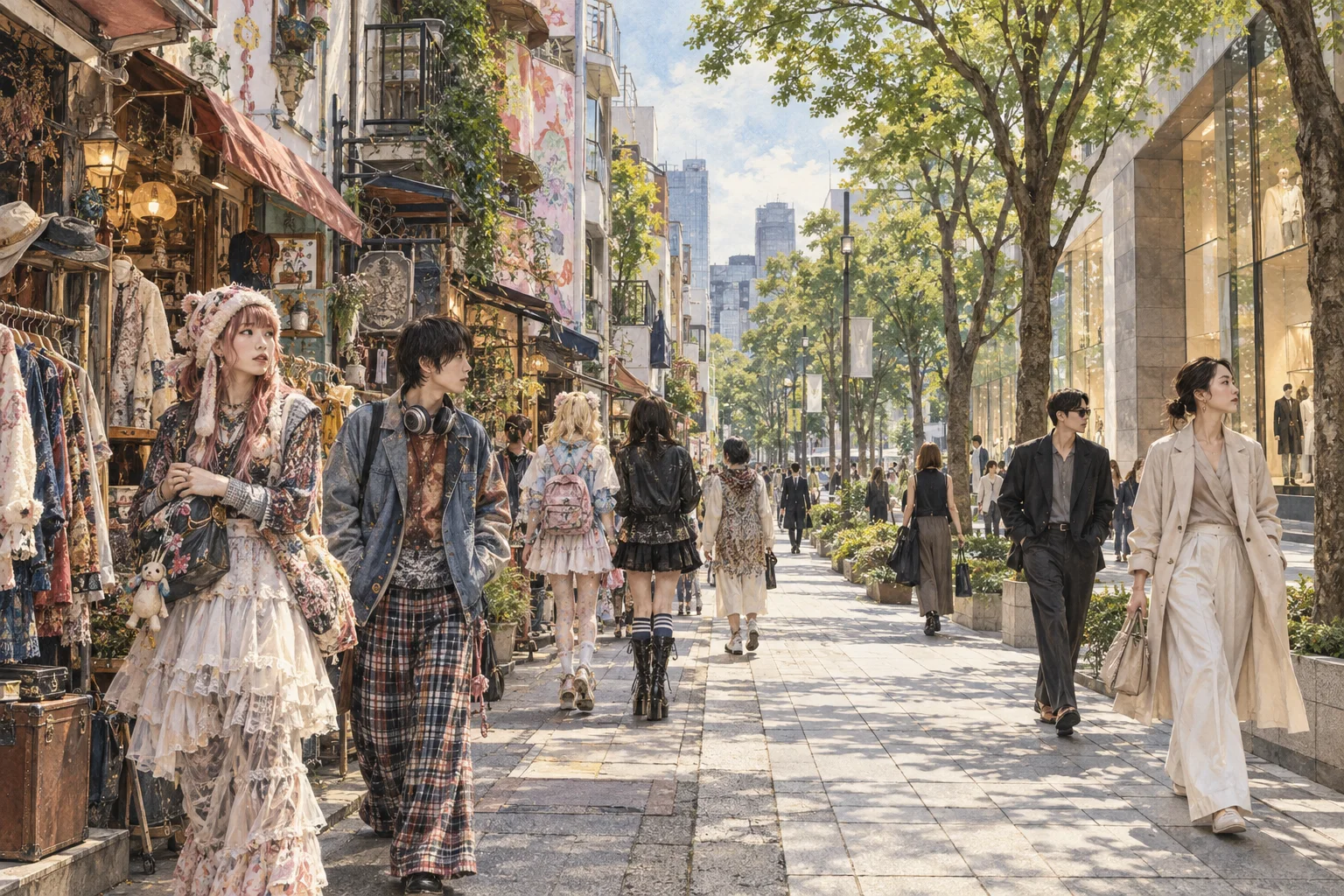
Harajuku is two different streets that happen to share a station. Takeshita Street is the one in the photographs: a narrow lane packed with teenagers, small shops, crepe stands and rainbow-colored sweets, and on a Sunday it is almost impossible to walk.
One block south is Omotesando, which could not be more different. It is a wide avenue lined with zelkova trees and the flagship stores of luxury brands, several of them designed by well-known architects. The reason it is so wide and so straight is that it was not built for shopping at all.
It was laid out in 1920 as the formal approach to Meiji Shrine, and the trees were planted the following year. The wartime air raids burned almost all of them and they were replanted afterward. So the street that now sells European handbags began as a path to a shrine, and still ends at one.
原宿は、たまたま同じ駅を使っている二つの別の通りです。写真に写るのは竹下通り。十代の人と小さな店とクレープの屋台と虹色の菓子が詰まった細い道で、日曜はほとんど歩けません。
その一本南が表参道で、こちらはまるで違います。けやき並木の広い通りに高級ブランドの旗艦店が並び、名の知れた建築家が設計した建物もあります。これほど広くまっすぐなのは、買い物のために造られた道ではないからです。
1920年、明治神宮の正式な参道として整備され、翌年にけやきが植えられました。戦時中の空襲でその大半が焼け、戦後に植え直されています。いまヨーロッパの鞄を売っているこの通りは、神社への道として始まり、いまも突き当たりは神社です。
こう聞かれたら
外国人から実際にされる質問と、その答え方。
Will I see people in the extreme fashion from photographs?
写真で見るような派手な格好の人に会えますか。
Much less than you expect. That scene peaked around twenty years ago and has moved online and into other neighborhoods. On a Sunday you will still see some, but it is no longer a street full of them.
思っているよりずっと少ないです。あの光景は20年ほど前が盛りで、いまはネットや別の街に移りました。日曜なら見かけますが、通りがそれで埋まることはもうありません。
Why is the avenue so wide?
どうしてあの通りはこんなに広いのですか。
It was built in 1920 as the approach to Meiji Shrine, on the scale a shrine approach required. The shopping came afterward, and the width is why the trees could be planted in rows.
1920年に明治神宮の参道として、参道にふさわしい規模で造られたからです。商業は後から来ました。この幅があったから、けやきを並べて植えられました。
Is it worth going if I don't want to shop?
買い物をしなくても行く価値はありますか。
Yes, for the buildings. Several of the flagship stores are by major architects and you can walk into them for free. And Meiji Shrine's forest is a five-minute walk from the noise.
買い物をしなくても、建物を見る価値があります。旗艦店のいくつかは著名な建築家の設計で、入るのは無料です。そして騒がしさから5分歩けば明治神宮の森です。
誤解されやすい
MYTHHarajuku is full of people in elaborate street fashion every day.
原宿は毎日、凝った格好の人であふれていると思われがちです。
FACTThat scene was at its height around the late 1990s and 2000s. You will see some on weekends, but the street today is mostly ordinary shopping crowds.
あの光景が盛りだったのは1990年代の終わりから2000年代です。週末には見かけますが、いまの通りはおおむね普通の買い物客です。
そのまま使えるフレーズ
- Takeshita Street is the narrow one for teenagers.竹下通りが、十代向けの細いほうです。
- Omotesando was built as the approach to Meiji Shrine.表参道は明治神宮の参道として造られました。
- The trees were planted in 1921.けやきは1921年に植えられました。
- The shrine forest is five minutes from here.神社の森はここから5分です。
- It's less extreme than the photographs suggest.写真で見るほど派手ではありません。
説明に使う語句
- shrine approach参道
- zelkova treeけやき
- street fashionストリートファッション
- flagship store旗艦店
- crepe standクレープの店
動画で見る
YouTube より豆知識
表参道は大正9年(1920年)の明治神宮鎮座に合わせ、神宮橋から青山方面へおよそ1キロの参道として整備され、翌年に両側へけやきが植えられた。当初の本数は201本とされる。1945年の空襲でほとんどが焼け、13本ほどが残ったという記録があり、戦後に植え直された。1926年には関東大震災の復興事業として同潤会青山アパートが参道沿いに建てられ、2003年に取り壊され、跡地に2006年、表参道ヒルズが開業した。竹下通りが若者の街になるのは1970年代以降である。
