かわいいかわいい
kawaii
the aesthetic of cuteness
「かわいい」は褒め言葉の範囲が広い。文房具にも、おじいさんにも使う。
一言で言うと
これだけ覚えれば最低限伝わる一文
Kawaii means cute, but in Japan it covers far more ground than the English word does.
かわいいは cute という意味ですが、日本では英語の語よりずっと広い範囲に使われます。
30秒で説明する
外国人に説明するときの標準サイズ
Kawaii means cute, and in Japan it is applied to almost anything: a puppy, a pencil case, a train station mascot, a friend's new haircut, an elderly man's careful handwriting. It is a general term of approval with a softness to it, and it is also a serious commercial force shaping product design across the country.
かわいいは cute の意味ですが、日本ではほとんど何にでも使われます。子犬、筆箱、駅のマスコット、友達の新しい髪型、年配の男性のていねいな字。やわらかい響きを持つ幅広い肯定の言葉であり、同時に、国じゅうの商品設計を左右する本物の商業の力でもあります。
スピーチ・英作文
通訳案内士の二次口述・大学入試の自由英作文に
Kawaii translates as cute, but the English word is narrower. In Japan it is applied to a puppy, a stapler, a bus, a bank's mascot, a friend's new haircut, a small polite gesture, and an old man's careful handwriting. It functions as a general positive judgment with warmth in it, and using it is often the safest compliment available.
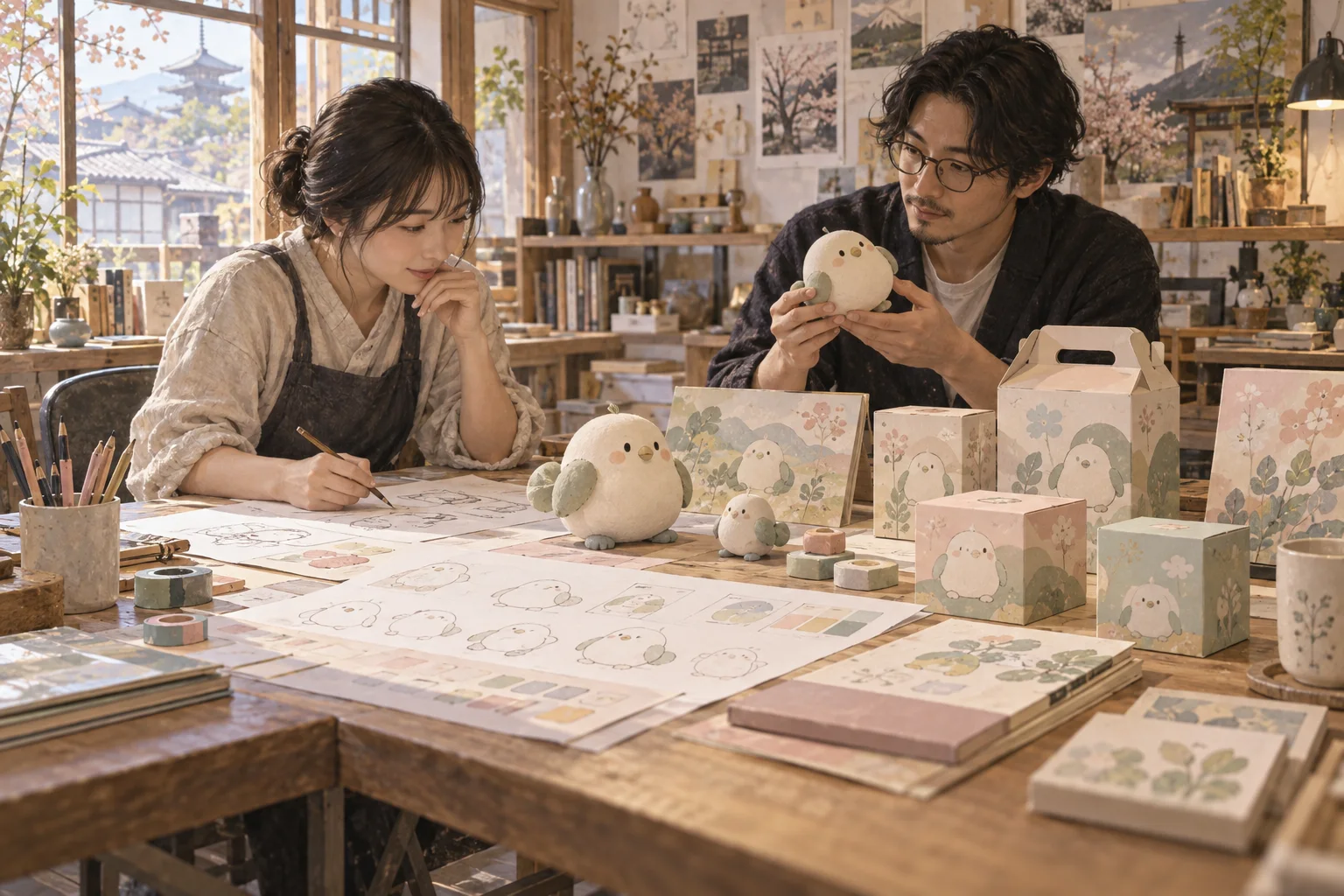
Beyond conversation it is a design force. Japanese products are routinely given faces, rounded corners and softened colors, including things with no obvious reason to be cute: road construction barriers shaped like animals, warning signs with apologetic cartoon characters, official documents from a city office with a mascot in the corner.
The word itself has drifted. Its older form meant something closer to pitiable, something that makes you want to protect it, and that thread of protectiveness is still audible under the modern sense.
かわいいは cute と訳されますが、英語の語のほうが範囲が狭いのです。日本では、子犬にも、ホチキスにも、バスにも、銀行のマスコットにも、友達の新しい髪型にも、ちょっとした礼儀正しいしぐさにも、年配の男性のていねいな字にも使われます。
温かみのある幅広い肯定の判断として働き、多くの場合、最も無難な褒め言葉になります。会話を離れても、これは設計の力です。日本の製品には日常的に顔がつき、角が丸められ、色がやわらげられます。かわいくある理由の見当たらないものにまで及びます。
動物の形をした工事用の柵、申し訳なさそうな絵の描かれた注意書き、隅にマスコットの入った役所の書類。語そのものも移ろってきました。古い形は、気の毒だ、守ってやりたくなる、という意味に近く、その保護したくなる糸は、今日の意味の下にも今なお聞き取れます。
こう聞かれたら
外国人から実際にされる質問と、その答え方。
Is it rude to call a man kawaii?
男性に「かわいい」と言うのは失礼ですか。
It depends on tone and relationship, but it is common and usually affectionate, said about a gesture or a reaction rather than about someone's appearance. Between colleagues it can still land awkwardly, so read the room.
言い方と間柄によりますが、よく使われますし、たいていは親しみを込めたものです。容姿ではなく、しぐさや反応について言うことが多くあります。同僚どうしではぎこちなくなることもあるので、場を見てください。
Why do official things have cute mascots?
どうして公的なものにまでゆるキャラがいるのですか。
Because softness lowers resistance. A warning that would read as scolding becomes acceptable from a cartoon character, and public bodies use this deliberately for tax reminders, safety rules and police notices.
やわらかさが抵抗を下げるからです。叱責に読めてしまう注意書きも、絵のキャラクターが言えば受け入れられます。行政はこれを意図して使い、納税の呼びかけ、安全の決まり、警察の掲示などに用いています。
誤解されやすい
MYTHKawaii is aimed at children.
かわいいは子ども向けだと思われがちです。
FACTIt runs across all ages and into government, banking and construction. Adults are major buyers of cute goods, and the aesthetic is applied to serious institutions on purpose.
実際はあらゆる年代に及び、行政にも銀行にも建設現場にも入り込んでいます。大人もかわいい商品の大きな買い手であり、この美意識は真面目な組織にも意図して用いられています。
そのまま使えるフレーズ
- It's used for almost anything positive.ほとんど何にでも肯定の意味で使えます。
- Even road barriers are made cute here.工事の柵までかわいく作ります。
- The older meaning was closer to pitiable.古い意味は気の毒に近いものでした。
- Plenty of adults buy cute goods too.かわいい商品を買う大人もたくさんいます。
説明に使う語句
- cuteかわいい
- mascotマスコット
- rounded丸みのある
- appealing親しみやすい
動画で見る
YouTube より豆知識
「かわいい」は古語の「かはゆし」にさかのぼり、もとは見ていられないほど気の毒だという意味を含んでいました。そこから、放っておけない、いとおしいという方向へ変わります。1970年代には丸い文字が若い女性の間で流行し、この美意識が可視化されました。英語では kawaii がそのまま借用語として使われています。工事現場の柵や標識にキャラクターを使う例は日本で広く見られ、行政の掲示物にも定着しています。
