銀閣寺ぎんかくじ
Ginkakuji
the Silver Pavilion in Kyoto, which has no silver on it
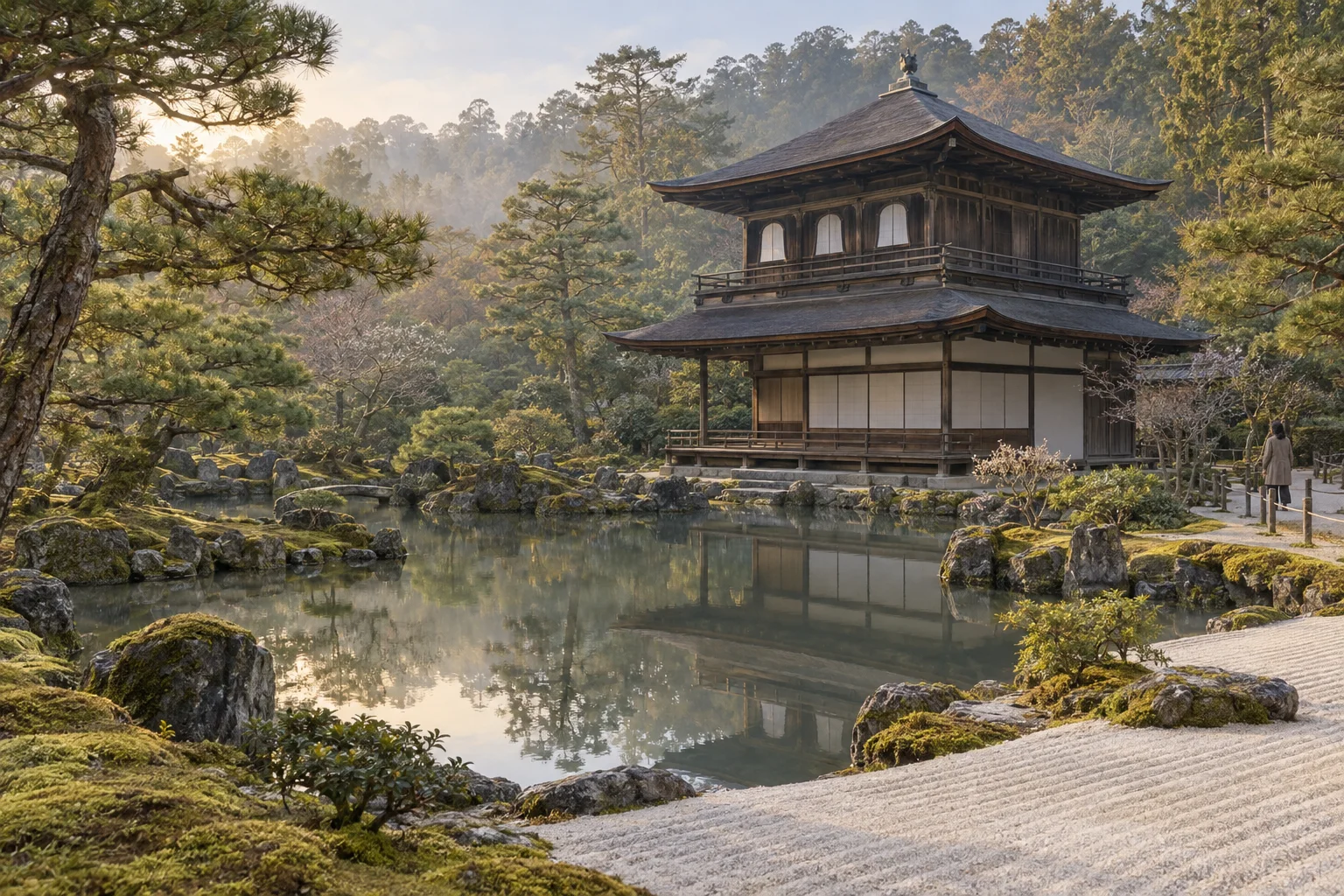
銀は貼られていない。貼るつもりだったという話にも、確かな裏づけはない。
一言で言うと
これだけ覚えれば最低限伝わる一文
Ginkakuji is Kyoto's Silver Pavilion, and it has never had any silver on it.
銀閣寺は京都の「銀閣」で知られる寺ですが、銀は一度も貼られていません。
30秒で説明する
外国人に説明するときの標準サイズ
Ginkakuji, formally Jishoji, sits at the foot of the eastern hills of Kyoto. It was built from 1482 as a retirement villa for the shogun Ashikaga Yoshimasa and became a temple after his death. The pavilion itself dates from 1489. Despite the name, there is no silver. Recent investigation found the upper exterior was finished in black lacquer, not silver leaf.
銀閣寺は正式には慈照寺といい、京都の東山のふもとにあります。1482年から将軍の足利義政の山荘として造られ、その死後に寺になりました。銀閣そのものは1489年の建築です。名前に反して銀はありません。近年の調査では、上層の外壁は銀箔ではなく黒漆で仕上げられていたことが分かっています。
スピーチ・英作文
通訳案内士の二次口述・大学入試の自由英作文に
Ginkakuji is the counterpart to the Golden Pavilion, built by the grandson of the shogun who built Kinkakuji. He started it in 1482 as a retirement villa, and the pavilion was finished in 1489. The obvious question is where the silver is, and the answer is that there never was any.
A popular story says silver was planned but the money ran out during the wars of the period; that story has no solid evidence behind it, and investigation has found the upper floor's exterior was black lacquer. The name seems to have come later, as a pairing with the Golden Pavilion. What actually matters here is a small building beside it, the Togudo, finished in 1485.
A four-and-a-half mat room inside it has the oldest surviving built-in desk and staggered shelves, and it is treated as the origin of the shoin style that became the Japanese room. So much of what people picture as a traditional Japanese room can be traced back to this spot. Go for the moss and the sand cone, but know what that small hall means.
銀閣寺は金閣の対になるもので、金閣を建てた将軍の孫が造りました。1482年に山荘として着手し、銀閣は1489年に完成しています。当然「銀はどこか」という話になりますが、答えは、最初から無かった、です。
銀を貼る予定だったが戦乱で資金が尽きた、という話が広く語られますが、確かな裏づけはありません。調査では上層の外壁は黒漆だったことが分かっています。銀閣という名は後から、金閣と対にして呼ばれるようになったものらしいのです。ここで本当に大事なのは、隣にある小さな建物、1485年に建った東求堂です。
その中の四畳半の部屋には、現存する最古の付書院と違棚があり、のちの和室のもとになった書院造の源流とされています。つまり、皆さんが伝統的な日本の部屋と聞いて思い浮かべるものの多くは、この場所までさかのぼれるのです。苔と砂の山を見に行くとしても、あの小さなお堂の意味は知っておいてください。
こう聞かれたら
外国人から実際にされる質問と、その答え方。
So why is it called the Silver Pavilion?
では、どうして「銀閣」と呼ぶのですか。
The name appears to have come into use later, as a pair to the Golden Pavilion built by the same family. The idea that silver was intended and abandoned is a popular story rather than an established fact.
この呼び名は後から、同じ一族が建てた金閣と対にして使われるようになったようです。銀を貼るつもりだったのにやめた、という話は広く語られていますが、確かめられた事実ではありません。
What is the cone of sand in the garden?
庭にある円錐形の砂は何ですか。
It is called the moon-facing platform, part of a sand garden raked into a flat sea and a cone. Explanations vary: a moon-viewing device, a representation of a mountain, or simply a form kept and rebuilt over centuries. Nobody knows its original purpose for certain.
向月台と呼ばれるもので、平らな砂の面と円錐からなる砂の庭の一部です。説明は分かれていて、月を見るためのもの、山を表したもの、あるいは何百年も形を保って作り直されてきただけ、とも言われます。本来の目的ははっきりしていません。
Is it worth visiting if I've seen Kinkakuji?
金閣寺を見たあとでも、行く価値はありますか。
They are opposites, which is the point. Kinkakuji is a show of wealth; Ginkakuji is deliberately plain and is the place people point to when they talk about the restrained aesthetic. If you only want spectacle, go to Kinkakuji.
対照的なところが見どころです。金閣は富の誇示、銀閣はあえて質素で、抑えた美意識を語るときに引き合いに出されるのがこちらです。華やかさだけを求めるなら金閣のほうです。
誤解されやすい
MYTHGinkakuji was covered in silver leaf, or was meant to be before the money ran out.
銀閣には銀箔が貼られていた、あるいは資金が尽きて貼れなかった、と言われます。
FACTNo silver was ever applied, and the story about running out of money is not backed by solid evidence. Investigation found black lacquer on the upper exterior.
銀は一度も貼られていませんし、資金の話にも確かな裏づけはありません。調査では、上層の外壁は黒漆でした。
そのまま使えるフレーズ
- There's no silver on it, and there never was.銀は貼られていませんし、もともと無かったんです。
- Its official name is Jishoji.正式な名前は慈照寺です。
- The small hall beside it is where the Japanese room began.隣の小さなお堂が、和室のはじまりの場所です。
- It's the plain one. Kinkakuji is the showy one.こちらは質素なほうです。派手なのは金閣です。
- Nobody is sure what the cone of sand was for.あの砂の山が何のためのものかは、はっきりしていません。
説明に使う語句
- silver leaf銀箔
- lacquer漆
- retirement villa山荘、別邸
- built-in desk付書院
- staggered shelves違棚
動画で見る
YouTube より豆知識
正式名称は東山慈照寺。足利義政が文明14年(1482年)から東山に山荘を造営し、その死後に禅寺となった。観音殿、いわゆる銀閣は長享3年(1489年)の建築で、下層は書院風、上層は禅宗様の仏堂風という二層構造。近年の調査では上層の外壁は黒漆塗りで、銀箔を貼った痕跡は見つかっていない。文明17年(1485年)に建った東求堂の四畳半「同仁斎」には現存最古の付書院と違棚があり、書院造の源流とされる。1994年に「古都京都の文化財」として世界文化遺産に登録された。
