侘び寂びわびさび
wabi-sabi
beauty in imperfection and age
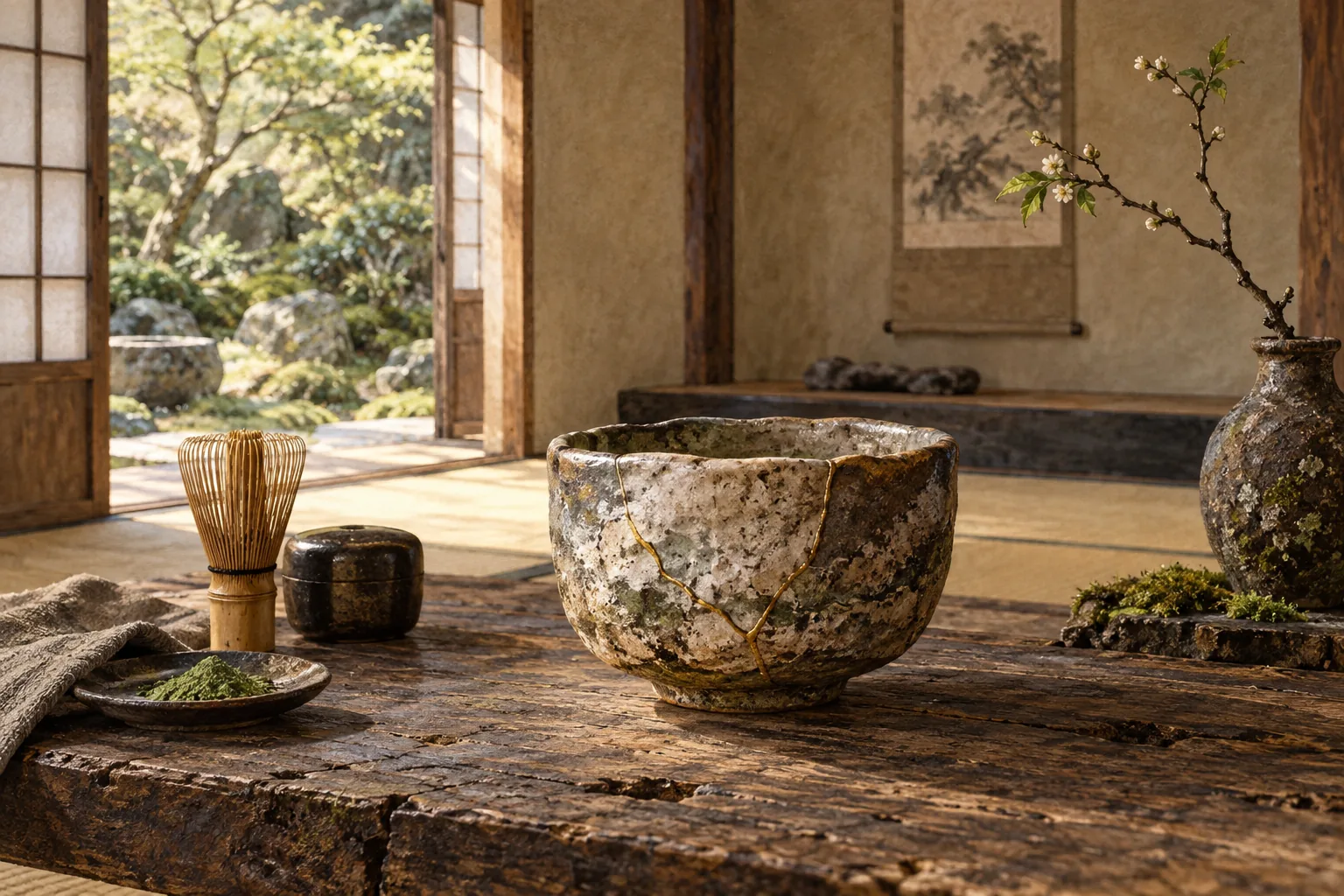
「不完全の美」だけでは足りない。侘びと寂びは別の言葉で、意味も違う。
一言で言うと
これだけ覚えれば最低限伝わる一文
Wabi-sabi is finding beauty in things that are imperfect, plain and worn by time.
侘び寂びとは、不完全なもの、簡素なもの、時を経たものに美しさを見いだす感覚のことです。
30秒で説明する
外国人に説明するときの標準サイズ
Wabi-sabi is an aesthetic that values what is imperfect, simple and aged. A cracked tea bowl, a rough clay surface, a garden in late autumn. Strictly speaking these are two different words. Wabi is the beauty of plainness and of having little. Sabi is the beauty that appears as things get older and wear down. Together they describe a taste for what is quiet and unfinished rather than what is new and perfect.
侘び寂びは、不完全なもの・簡素なもの・古びたものを尊ぶ美意識です。ひびの入った茶碗、ざらついた土の肌、晩秋の庭。厳密には二つの別の言葉です。侘びは、質素であること・乏しいことの美。寂びは、時が経って古びていくなかに現れる美。合わせて、新しく完全なものより、静かで未完成なものを好む感覚を表します。
スピーチ・英作文
通訳案内士の二次口述・大学入試の自由英作文に
Wabi-sabi is one of the hardest Japanese words to translate. It is usually explained as finding beauty in imperfection, but that is only part of it.
Wabi originally described the feeling of being poor and alone, and was turned into something positive by tea masters who preferred a plain, rough bowl to a gleaming imported one. Sabi is the beauty that time adds: the dullness of old metal, moss on a stone, the faded color of paper.
Put together, wabi-sabi is a preference for things that are simple, aged and incomplete. I think it also carries an acceptance that nothing lasts. A perfect new object can only get worse. An imperfect old one is already at peace with that.
侘び寂びは、日本語のなかでも訳しにくい言葉です。ふつう「不完全の美」と説明されますが、それは一部にすぎません。侘びはもともと、貧しさや心細さを指す言葉でした。
それを、輝く舶来の器より素朴で粗い茶碗を好んだ茶人たちが、肯定的な価値に変えたのです。寂びは、時間が加える美しさ。古い金属のくすみ、石に生えた苔、色あせた紙。合わせると、侘び寂びは簡素で、古び、未完成なものを好む態度になります。
そしてそこには「何も永遠ではない」という受け入れもあると思います。完璧な新品は、これから悪くなる一方です。不完全で古いものは、すでにそれと折り合いがついているのです。
こう聞かれたら
外国人から実際にされる質問と、その答え方。
So is wabi-sabi about liking broken things?
では侘び寂びとは、壊れたものを好むということですか。
Not broken in the sense of ruined. It is closer to valuing a bowl whose glaze pooled unevenly, or a wooden floor darkened by a hundred years of feet. Damage that shows a history, not damage that makes something useless.
壊れたもの、という意味ではありません。釉薬が不均一にたまった茶碗や、百年踏まれて黒くなった床を良しとする感覚に近いです。使えなくなる傷ではなく、来歴の見える傷です。
Is kintsugi the same idea?
金継ぎも同じ考え方ですか。
It comes from the same taste. Kintsugi repairs broken pottery with lacquer mixed with gold, so the crack is highlighted rather than hidden. The break becomes part of the object's history instead of a flaw to disguise.
同じ美意識から出ています。金継ぎは、割れた器を金を混ぜた漆で直し、ひびを隠さずむしろ見せます。割れは隠すべき欠点ではなく、その器の来歴の一部になります。
Do Japanese people actually use this word?
日本人は実際にこの言葉を使うのですか。
Rarely in daily conversation. It is a term from aesthetics and tea culture, and most people would struggle to define it precisely. It is better known abroad than it is discussed at home.
日常会話ではほとんど使いません。茶の湯と美学の用語で、正確に説明できる人は多くありません。国内で語られる以上に、海外でよく知られています。
誤解されやすい
MYTHWabi-sabi is an ancient philosophy that guides how Japanese people live.
侘び寂びは日本人の生き方を導く古代の哲学だと思われがちです。
FACTIt is an aesthetic idea from tea culture, not a way of life, and the compound phrase only became common much later. Most Japanese homes are full of new, symmetrical, mass-produced things.
これは茶の湯から出た美意識であって生活哲学ではなく、「侘び寂び」という組み合わせ自体が一般化したのはずっと後です。日本の家の多くは、新しく左右対称の量産品で満ちています。
そのまま使えるフレーズ
- It's the beauty of something plain and worn.簡素で古びたものの美しさです。
- The crack is part of its history, not a flaw.ひびは欠点ではなく、その器の来歴です。
- Nothing lasts, and that's part of the point.何も永遠ではない。それも含めての美です。
- We don't really use the word in everyday conversation.日常会話ではあまり使わない言葉です。
- Think of moss on stone, or faded paper.石の苔や、色あせた紙を思い浮かべてください。
説明に使う語句
- imperfection不完全さ
- aesthetic美意識、美学
- weathered / worn風化した、使い込まれた
- restraint抑制、控えめさ
- impermanence無常、はかなさ
動画で見る
YouTube より豆知識
「侘び」と「寂び」はもともと別語で、ひとつの言葉として並べて使われるようになったのは比較的新しい。侘びは「わぶ(気落ちする、不足を嘆く)」から出た語で、本来は否定的な意味だった。それを積極的な美に転じたのが、村田珠光から武野紹鴎、千利休へと続く茶の湯の系譜とされる。寂びは「さぶ(古びる)」に由来し、松尾芭蕉の俳諧でも重んじられた。金継ぎは室町時代に始まったとされ、割れ目を金で強調する。なお海外では wabi-sabi がインテリアや暮らし方の哲学として紹介されることが多いが、日本での本来の文脈は茶の湯と和歌・俳諧の美学である。
