茶室ちゃしつ
chashitsu
the room built for a tea gathering
入口は高さ六十センチ。刀も身分も外に置いて入る。
一言で言うと
これだけ覚えれば最低限伝わる一文
A chashitsu is a small, deliberately plain room built for serving tea to a few guests.
茶室とは、少人数に茶を出すために建てられた、あえて簡素な小さい部屋です。
30秒で説明する
外国人に説明するときの標準サイズ
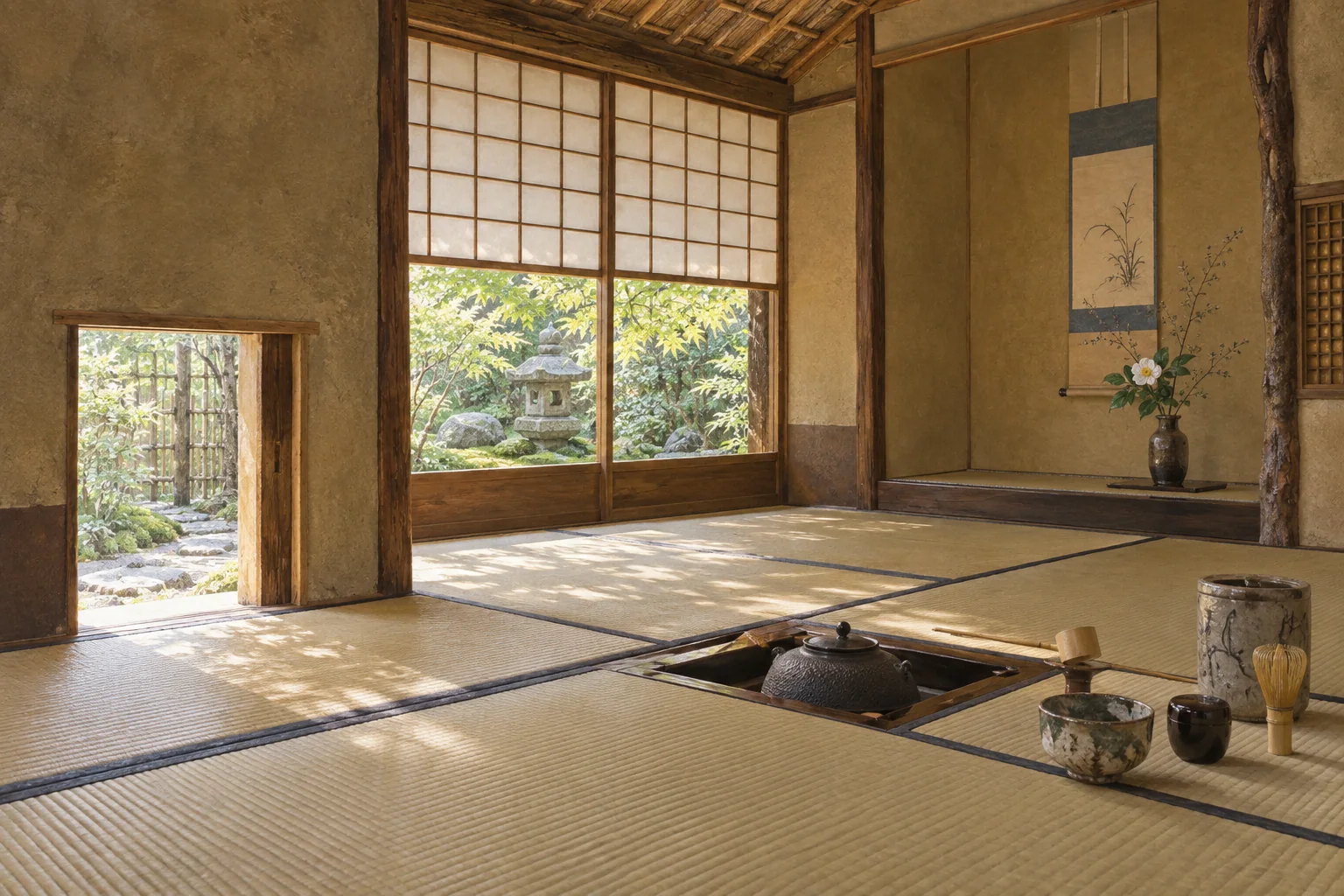
A tea room is usually four and a half mats or smaller, with earth walls, uneven timbers and very little in it. Guests enter through a low opening that forces everyone to bend, and a sword could not be carried through it. The plainness is the design, not a lack of money: it grew as a deliberate reaction against the display of grand reception rooms.
茶室はふつう四畳半かそれより小さく、土壁に、形の整っていない木を使い、物をほとんど置きません。客は低い入口から身をかがめて入ります。刀を差したままでは通れません。この簡素さは、貧しさではなく設計です。格式を見せる座敷への、意識的な反発から生まれました。
スピーチ・英作文
通訳案内士の二次口述・大学入試の自由英作文に
A tea room is one of the few buildings in the world designed to make a guest feel small in a good way. It is tiny, usually four and a half tatami mats or less. The walls are rough earth, the posts are left with their bark or their bends, and the window openings are irregular.
The entrance is the famous part: a sliding opening about sixty centimeters square, so that everyone, a lord or a merchant, has to kneel and crawl in, and a sword has to be left outside on a rack. Inside there is an alcove with one scroll and one flower, and nothing else.
This style was shaped in the sixteenth century, above all by Sen no Rikyu, as a deliberate move away from the gold and display of the reception rooms of the powerful. The only surviving tea room attributed to Rikyu, Taian near Kyoto, is just two mats, and it is a National Treasure.
茶室は、客に自分を小さく感じさせることを、よい意味で狙って設計された、世界でも数少ない建物の一つです。とても狭く、ふつうは四畳半以下。壁は粗い土、柱は皮を残したり曲がったままだったりし、窓の開け方も不揃いです。
有名なのは入口です。六十センチ角ほどの引き戸で、大名でも商人でも膝をついてにじり入るしかなく、刀は外の刀掛けに置きます。中には床の間があり、掛け軸が一幅と花が一輪。それだけです。
この様式は十六世紀に、とりわけ千利休によって整えられました。権力者の座敷の金と格式から、意識して離れようとしたものです。利休の作と伝わる唯一の現存茶室である京都近郊の待庵は、わずか二畳で、国宝になっています。
こう聞かれたら
外国人から実際にされる質問と、その答え方。
Why is the entrance so low?
どうして入口はあんなに低いのですか。
So that everyone enters the same way, on their knees, whatever their rank, and so that a sword cannot be brought in. Whether Rikyu intended both meanings is debated, but both effects are real.
身分にかかわらず誰もが膝をついて同じように入るためであり、刀を持ち込めないようにするためです。利休がその両方を意図したかは議論がありますが、どちらの効果も実際にあります。
Is it uncomfortable to sit in?
座っているのはつらくありませんか。
For most visitors, yes, after twenty minutes on your heels. Tea schools now put out low stools for guests who need them, and asking for one is normal rather than rude.
正座で二十分も座れば、多くの人にはつらいものです。今は必要な客のために低い椅子を用意する流派が増えており、それを頼むのは失礼ではなくふつうのことです。
Can I visit one without doing a full tea ceremony?
茶会に出なくても見学できますか。
Often yes. Many gardens and temples keep a tea house you can look into from outside, and city tea rooms run short sessions of twenty or thirty minutes with a bowl of tea and a sweet.
できることが多いです。庭園や寺には外から中をのぞける茶室がありますし、市中の茶室では、菓子と一服だけの二十分から三十分ほどの席も開かれています。
そのまま使えるフレーズ
- You have to bend to get in.身をかがめて入ります。
- The room is four and a half mats.四畳半の部屋です。
- There is one scroll and one flower.掛け軸が一幅と花が一輪あります。
- Swords were left outside.刀は外に置きました。
- The plainness is deliberate.この簡素さは意図されたものです。
説明に使う語句
- tea room茶室
- crawl-in entranceにじり口
- earth wall土壁
- garden path to the tea room露地
- sunken hearth炉
動画で見る
YouTube より豆知識
茶室は、四畳半以下の小間と、それより広い広間に大きく分かれます。にじり口は六十センチ角ほどで、身分に関わらず頭を下げて入ることになり、刀は外の刀掛けに置きました。柱にはあえて皮つきや曲がった木を使い、壁は土のままとします。京都府大山崎町の待庵は二畳の茶室で、千利休の作と伝えられ、国宝に指定されています。茶室の作りを住宅に取り入れたものを数寄屋造と呼び、格式を見せる書院造とは対照的な様式として発展しました。
