金継ぎきんつぎ
kintsugi
repairing broken pottery with lacquer and gold
割れた器を金で「隠さず」直す。ただし接着剤は金ではなく漆。
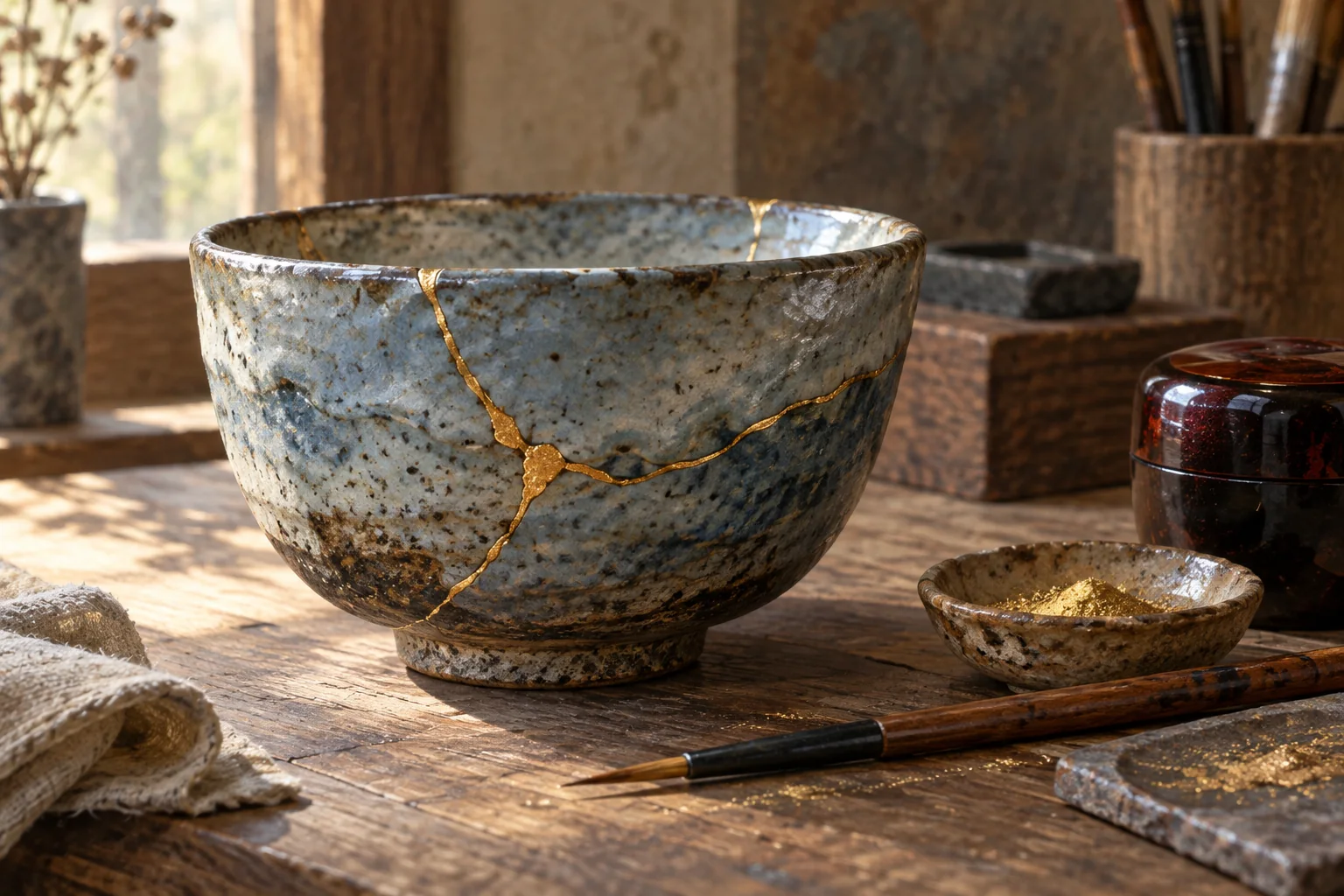
一言で言うと
これだけ覚えれば最低限伝わる一文
Kintsugi is the Japanese way of fixing broken pottery with lacquer and letting gold show the cracks.
金継ぎとは、割れた器を漆で直し、その継ぎ目を金で見せる日本の修理法です。
30秒で説明する
外国人に説明するときの標準サイズ
Kintsugi means "joining with gold." A broken bowl or cup is glued back together with urushi, a natural lacquer from tree sap, and the seams are then dusted with gold powder. Instead of hiding the damage, the repair turns the cracks into gold lines. It is said to have grown up alongside the tea ceremony, when good tea bowls were too precious to throw away.
金継ぎは「金で継ぐ」という意味です。割れた茶碗や湯のみを、木の樹液から取れる天然の漆で貼り合わせ、継ぎ目に金の粉をまきます。傷を隠すのではなく、ひびを金の線に変える直し方です。上等な茶碗が捨てるには惜しいほど貴重だった茶の湯の世界とともに発達したとされます。
スピーチ・英作文
通訳案内士の二次口述・大学入試の自由英作文に
Kintsugi is a way of repairing broken ceramics, and it has become famous around the world as a symbol of accepting flaws. The glue is not gold but urushi, a lacquer made from tree sap. The pieces are joined with it, the gaps are filled, and only at the end is gold powder sprinkled on the seams.
Real urushi hardens slowly and needs humidity to cure, so a proper repair can take weeks or even months. The technique is said to have developed in the Muromachi period, when tea masters valued their bowls too much to replace them.
Today many people try it through workshops or simple kits, though those kits often use synthetic resin instead of lacquer. What I like about kintsugi is that the history of an object becomes part of its beauty.
金継ぎは割れた陶磁器を直す技法で、欠点を受け入れる象徴として世界中で知られるようになりました。接着剤は金ではなく、木の樹液から作る漆です。漆でかけらを貼り合わせ、すき間を埋め、最後に継ぎ目に金の粉をまきます。
本物の漆はゆっくり固まり、固まるには湿気が必要なので、きちんとした修理には数週間から数か月かかることもあります。この技法は、茶人たちが茶碗を大切にするあまり買い替えなかった室町時代に発達したとされます。
いまはワークショップや手軽なキットで試す人も多いですが、キットは漆の代わりに合成樹脂を使うものも少なくありません。私が金継ぎを好きなのは、その器がたどってきた歴史が、そのまま美しさの一部になるところです。
こう聞かれたら
外国人から実際にされる質問と、その答え方。
Is the gold what holds the pieces together?
かけらをくっつけているのは金なのですか。
No, the lacquer does the work. The gold is a thin finishing layer on top of the seam, and some people use silver instead, which is called gintsugi.
いいえ、くっつけているのは漆です。金は継ぎ目の上にのせる薄い仕上げで、代わりに銀を使うこともあり、それは銀継ぎと呼ばれます。
Can I still eat from a bowl repaired with kintsugi?
金継ぎで直した器で、また食事をしてもいいのですか。
If it was repaired with real urushi and the lacquer has fully cured, many people do. Repairs made with epoxy or other synthetic kits are a different story, so ask what was used.
本物の漆で直し、漆が完全に固まっていれば、使っている人は多いです。エポキシ樹脂など合成素材のキットで直したものは話が別なので、何を使ったか確かめてください。
Is it true that kintsugi is a philosophy of life in Japan?
金継ぎは日本では人生哲学だというのは本当ですか。
It's a craft first. Overseas it's often used as a metaphor for healing, and many Japanese people like that idea, but most would simply call it a way of repairing dishes.
まずは工芸の技法です。海外では心の回復のたとえとしてよく使われ、その考え方を好む日本人も多いですが、たいていの人にとっては単に器の直し方です。
誤解されやすい
MYTHKintsugi uses melted gold to glue broken pottery back together.
金継ぎは、溶かした金で割れた器を貼り合わせるものだと思われがちです。
FACTThe pieces are joined with urushi lacquer, and gold powder is only dusted onto the finished seam.
かけらを貼り合わせるのは漆で、金の粉は仕上がった継ぎ目の上にまくだけです。
そのまま使えるフレーズ
- This bowl was repaired with kintsugi.この器は金継ぎで直してあります。
- The gold lines show where it was broken.金の線が、割れた場所を示しています。
- It's lacquer underneath, not solid gold.下は漆で、純金のかたまりではありません。
- Real lacquer can take months to fully harden.本漆は完全に固まるまで数か月かかることがあります。
- Please be careful: raw lacquer can give you a rash.生の漆はかぶれることがあるので気をつけてください。
説明に使う語句
- lacquer漆
- gold powder金粉
- seam継ぎ目
- to cure (lacquer)(漆が)固まる
- chipped欠けた
- tea bowl茶碗
動画で見る
YouTube より豆知識
漆は乾燥ではなく、漆に含まれる成分が空気中の水分を使って化学反応を起こすことで固まる。そのため職人は湿度を高く保った「漆風呂(室)」に器を入れて硬化させる。乾いた部屋では、かえって固まりにくい。金継ぎは室町時代の茶の湯の広がりとともに育ったとされ、当時は良い茶碗の多くが中国からの輸入品で、割れたからといって簡単に買い替えられるものではなかったといわれる。海外で“kintsugi”が知られるようになってからは、傷を隠さない美しさの例として、侘び寂びと並べて語られることが多い。
