焼き物の産地やきもののさんち
yakimono no sanchi
the pottery towns that each make a distinct kind of ware
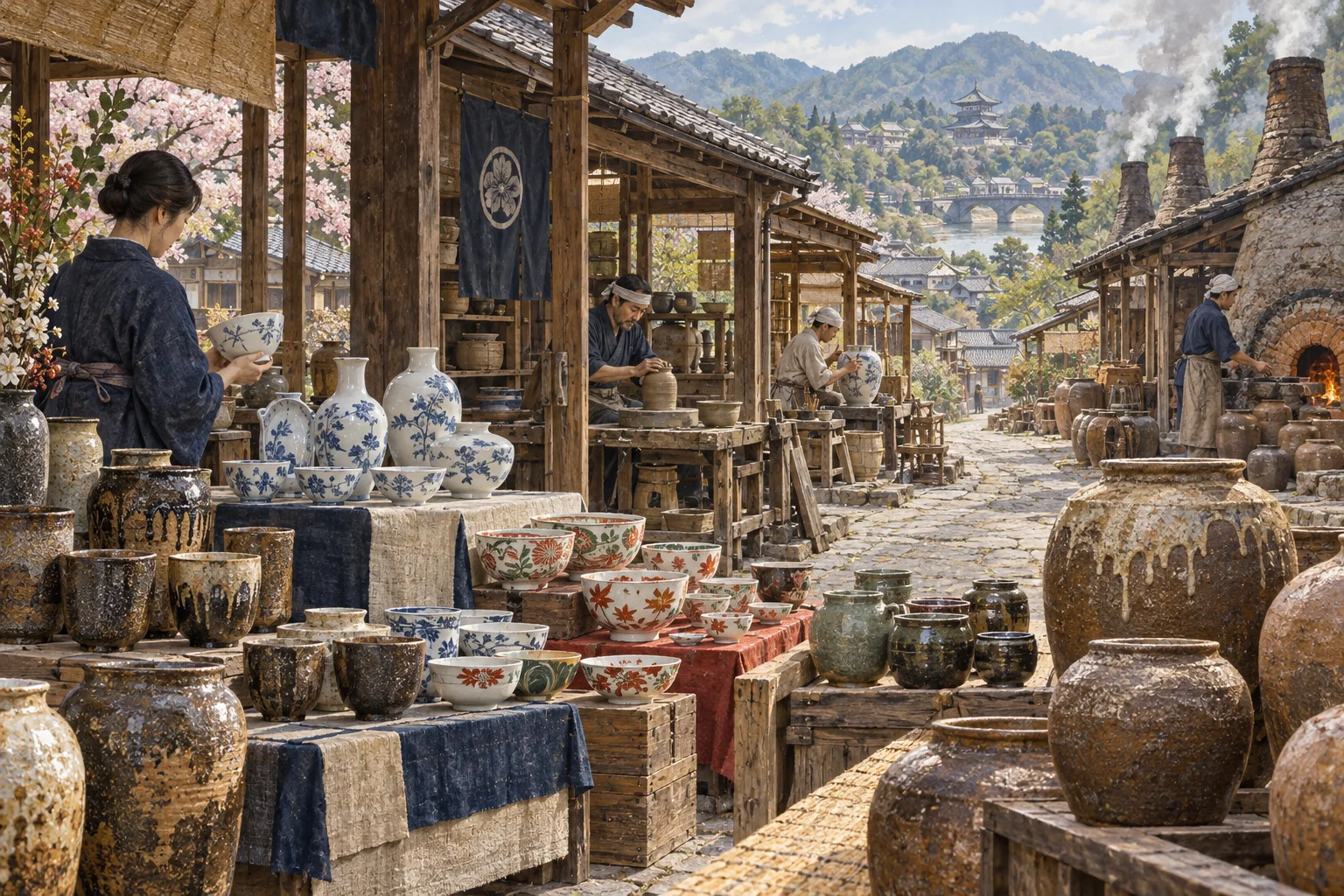
「日本の陶器」という一つの様式はない。土が違えば、焼き上がりが違う。
一言で言うと
これだけ覚えれば最低限伝わる一文
Yakimono no sanchi, or pottery regions, are places across Japan that each make their own ware from local clay.
焼き物の産地とは、それぞれがその土地の土で独自の焼き物を作る、日本各地の産地のことです。
30秒で説明する
外国人に説明するときの標準サイズ
Japan has dozens of pottery towns, and each is named after its place: Arita, Bizen, Hagi, Mashiko, Shigaraki, Kutani, Mino. What separates them is the local clay, the local kiln tradition, and whether the piece is glazed or left bare. Bizen ware has no glaze at all and gets its color from the fire. Arita is white porcelain with painted decoration. Calling all of it Japanese pottery hides most of what is interesting.
日本には焼き物の町がいくつもあり、それぞれ地名で呼ばれます。有田、備前、萩、益子、信楽、九谷、美濃。違いを生むのは土地の土、その土地の窯の伝統、そして釉薬をかけるかどうかです。備前焼は釉薬を一切かけず、色は火がつけます。有田は白い磁器に絵付けをしたものです。まとめて日本の焼き物と呼ぶと、面白いところがほとんど消えてしまいます。
スピーチ・英作文
通訳案内士の二次口述・大学入試の自由英作文に
If someone asks you what Japanese pottery is like, the honest answer is that there is no single answer. Pottery in Japan is organized by place. Arita in Kyushu makes white porcelain with fine painted decoration, and it was the first Japanese ware exported to Europe in quantity.
Bizen, near Okayama, makes the opposite: no glaze, no painting, just clay fired for many days so that ash and flame leave marks on the surface. Hagi ware is soft and pale and is said to change color as tea soaks into it over years of use. Mashiko is thick and everyday.
The reason for all this variety is simple: the clay under each town is different, and before modern transport you used what was under your feet. If you visit one of these towns, many kilns welcome visitors, and a good cup costs less than a nice dinner.
日本の焼き物はどんなものかと聞かれたら、正直な答えは「ひとつではありません」です。日本の焼き物は土地ごとに分かれています。九州の有田は白い磁器に細かい絵付けをしたもので、ヨーロッパへ量産して輸出された最初の日本の焼き物でした。
岡山の近くの備前はその逆で、釉薬も絵付けもなく、何日も焼くことで灰と炎が表面に跡を残します。萩焼はやわらかく淡い色で、長年使ううちにお茶がしみて色が変わるといわれます。益子は厚手で日常のものです。
これだけ違う理由は単純で、町ごとに地中の土が違い、輸送が発達する前は足元にあるものを使ったからです。こうした町を訪ねると、見学できる窯元が多く、よい湯呑みが外食一回分より安く買えます。
こう聞かれたら
外国人から実際にされる質問と、その答え方。
What's the difference between porcelain and stoneware here?
ここで言う磁器と陶器はどう違うのですか。
Porcelain, like Arita, is made from a white stone-based clay, fired very hot, and it is thin, white and rings when tapped. Stoneware, like Bizen or Shigaraki, uses coarser clay and stays opaque and earthy. Japan makes both, in different towns.
有田のような磁器は白い石の粉を原料にし、高温で焼くので薄く白く、たたくと澄んだ音がします。備前や信楽のような陶器は粗い土を使い、土の色のまま不透明です。日本は両方を、別々の町で作っています。
Why are some pieces deliberately uneven?
どうしてわざと歪ませてあるのですか。
In the tea ceremony tradition, irregularity is valued rather than hidden. A bowl that is slightly off-round or has a rough foot is considered to have character. This taste is connected to wabi-sabi, and it is not an accident or a defect.
茶の湯の流れでは、ゆがみは隠さず価値とみなされます。少し歪んだ碗や、高台が荒い碗は景色があると言われます。この感覚は侘び寂びとつながっていて、失敗でも欠陥でもありません。
そのまま使えるフレーズ
- Each pottery town uses the clay from its own area.焼き物の町は、それぞれの土地の土を使います。
- Bizen ware has no glaze — the color comes from the fire.備前焼は釉薬をかけません。色は火がつけます。
- Arita is white porcelain with painted patterns.有田は白い磁器に絵付けをしたものです。
- That unevenness is intentional, not a flaw.そのゆがみはわざとで、欠陥ではありません。
- Many kilns let you visit and buy directly.見学して直接買える窯元が多いです。
説明に使う語句
- kiln窯
- glaze釉薬
- porcelain磁器
- stoneware陶器
- clay土、粘土
- ware焼き物
動画で見る
YouTube より豆知識
日本の焼き物の産地は、原料の違いで大きく磁器と陶器に分かれる。磁器は17世紀初めに有田で国内生産が始まったとされ、のちに伊万里の港から積み出されたため、ヨーロッパでは伊万里の名で知られた。備前焼のように釉薬を使わない焼き締めの産地では、窯の中の置き場所によって灰のかかり方が変わり、同じ土でも一点ずつ色が違う。この偶然の模様を「窯変」と呼ぶ。なお産地名は法律上の地域ブランドとして保護されているものもあり、土地の外で作ったものに名乗らせない仕組みがある。
