職人しょくにん
shokunin
the craftsman, as an identity
「職人気質」という言葉がある。ほめ言葉でもあり、扱いにくさの指摘でもある。
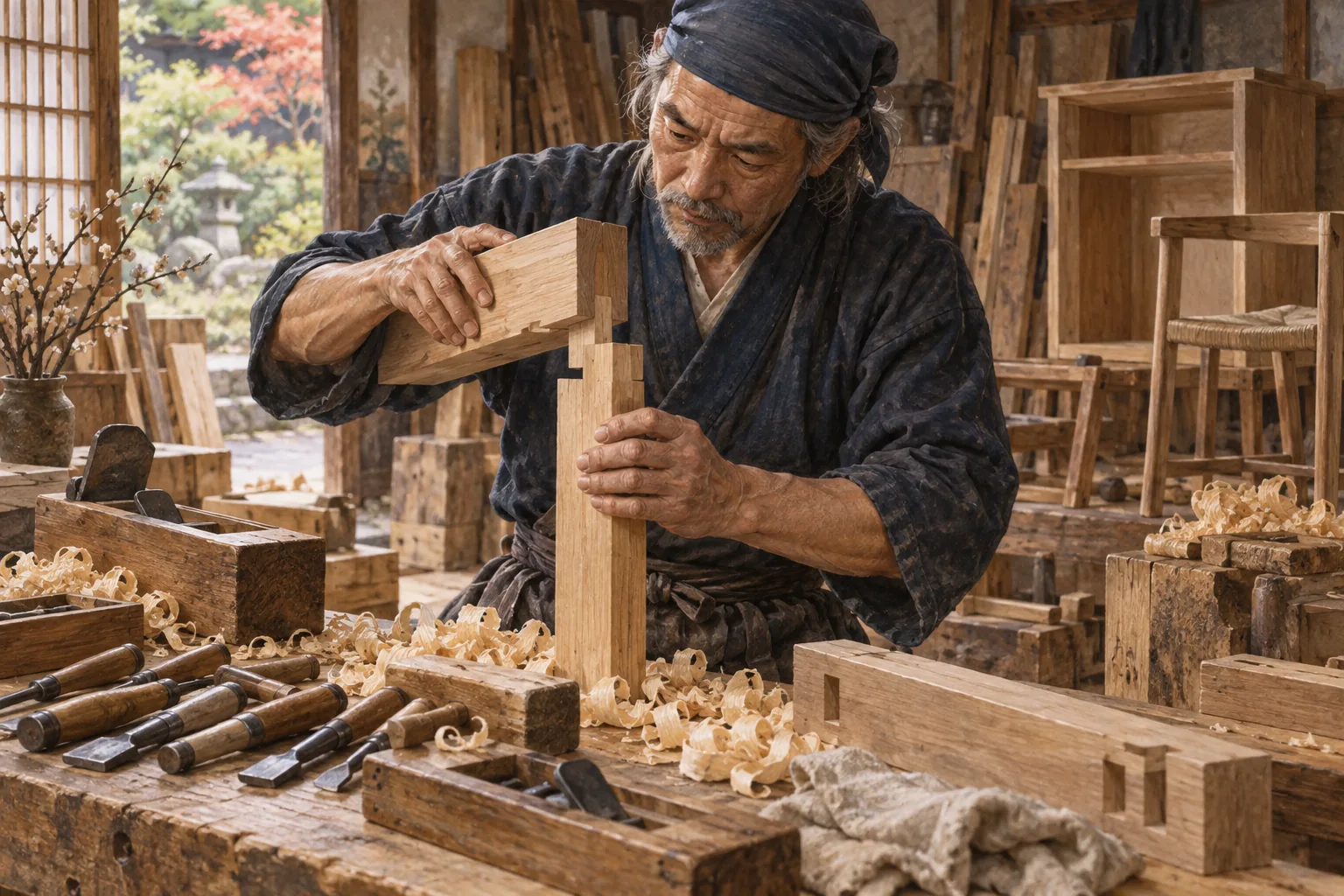
一言で言うと
これだけ覚えれば最低限伝わる一文
A shokunin is a craftsperson who is defined by the craft itself rather than by the job they do.
職人とは、仕事の内容ではなく、その技そのものによって自分を定義する人のことです。
30秒で説明する
外国人に説明するときの標準サイズ
Shokunin means craftsperson, but it carries more than the English word. It implies long training under a master, a narrow specialization pursued for decades, and a duty to the work rather than to the customer. There is a related word, shokunin katagi, describing the temperament: uncompromising, blunt, and often difficult to work with.
職人は craftsperson にあたる語ですが、英語より多くを含みます。師のもとでの長い修業、何十年も追い続ける狭い専門、そして客ではなく仕事そのものへの責任を含意します。関連する語に「職人気質」があり、妥協せず、無愛想で、しばしば扱いにくい気性を指します。
スピーチ・英作文
通訳案内士の二次口述・大学入試の自由英作文に
The word shokunin translates as craftsperson, but it carries more weight than that in Japanese. It implies a long apprenticeship, often starting in your teens, where for the first years you are not allowed to do the actual work and instead sharpen tools, clean and watch.
It implies specialization so narrow that a person might spend forty years making one part of one thing. And it implies that your obligation is to the work rather than to the customer: a shokunin will refuse to make something badly even when the customer would accept it. There is a matching phrase, shokunin katagi, which describes the personality this creates.
It is a compliment and a warning at once, meaning someone stubborn, uninterested in pleasing people, and impossible to argue with about their craft. This is admired and it is also a problem: many traditional crafts are now struggling to find successors willing to take on a decade of low-paid training.
職人という語は craftsperson と訳されますが、日本語ではそれ以上の重みを持ちます。十代から始まることも多い長い修業を含意します。最初の数年は実際の仕事をさせてもらえず、道具を研ぎ、掃除をし、見て覚えます。
一つのものの一つの部分を作るのに四十年を費やす、というほど狭い専門も含意します。そして責任の向き先が、客ではなく仕事そのものであることも。客が納得するとしても、職人は雑な仕事を拒みます。対になる言い回しに「職人気質」があります。
この生き方が作る性格を指す言葉です。ほめ言葉であり、同時に警告でもあります。頑固で、人に取り入る気がなく、自分の技については議論にならない。これは尊敬されると同時に、問題でもあります。多くの伝統工芸が、十年の薄給の修業を引き受ける後継者を見つけられずにいます。
こう聞かれたら
外国人から実際にされる質問と、その答え方。
Is it only for traditional crafts?
伝統工芸の人だけに使う言葉ですか。
No. It is used for sushi chefs, machinists, printers and increasingly for anyone with obsessive standards. A factory worker who has perfected one process can be called a shokunin.
違います。寿司職人、旋盤工、印刷工にも使いますし、近年は極端に基準の高い人全般に使われます。一つの工程を極めた工場の作業者も職人と呼ばれます。
Why does the apprenticeship take so long?
どうして修業にそれほど長くかかるのですか。
Traditionally, teaching was by observation rather than instruction: you were expected to steal the skill by watching. This is now widely criticized as inefficient, and many workshops have modernized their training.
伝統的には、言葉で教えるのではなく見て覚えるやり方でした。「技は盗むもの」とされたのです。今では非効率だという批判が強く、指導の仕方を改めた工房も多くあります。
Are these crafts dying out?
こうした工芸は失われつつあるのですか。
Many are at risk. Falling demand, cheap imports and the difficulty of recruiting successors are real pressures, and government designation schemes exist specifically to support traditional crafts.
危機にあるものが多くあります。需要の減少、安価な輸入品、後継者不足は現実の圧力で、伝統的工芸品の指定制度は、まさにそれを支えるために設けられています。
誤解されやすい
MYTHThe long silent apprenticeship is a beautiful tradition that should be preserved as is.
長く無言の修業は守るべき美しい伝統だと思われがちです。
FACTIt is also a barrier. Many crafts are losing successors precisely because a decade of poorly paid observation is not a viable path, and workshops that modernized training have had more success attracting young people.
それは障壁でもあります。十年の薄給の見習いが現実的でないために後継者を失っている工芸は多く、指導を現代化した工房のほうが若い人を集められています。
そのまま使えるフレーズ
- The obligation is to the work, not to the customer.責任の向き先は客ではなく、仕事そのものです。
- Apprentices watch for years before they're allowed to make anything.弟子は何年も、作らせてもらえずに見て覚えます。
- Shokunin katagi means stubborn about the craft.職人気質とは、技については譲らない性格のことです。
- They'll refuse to make something badly.雑な仕事はしません。
- Finding successors is a real problem now.後継者探しは今、本当の問題です。
説明に使う語句
- craftsperson職人
- apprenticeship修業、見習い期間
- master親方、師匠
- uncompromising妥協しない
- successor後継者
動画で見る
YouTube より豆知識
経済産業大臣が指定する「伝統的工芸品」は、100年以上の歴史、手工業中心の製造、伝統的な技術・原材料といった要件を満たすもので、全国で240品目を超える。多くの産地で従事者数と生産額は長期的に減少している。「技は盗め」という指導法は、言語化されない身体知を伝えるやり方として説明される一方、後継者育成の障害としても議論されている。近年は、伝統工芸の職人が動画やSNSで工程を公開し、海外からの受注や弟子入り志望者を集める例も増えている。なお「職人」と「作家」は区別され、注文に応じて作るのが職人、自らの表現として作るのが作家、という整理がされることが多い。
