浮世絵うきよえ
ukiyo-e
woodblock prints
美術品ではなく、庶民が買える印刷物だった。値段はそば一杯ほど。
一言で言うと
これだけ覚えれば最低限伝わる一文
Ukiyo-e are Japanese woodblock prints, made cheaply for ordinary townspeople in the Edo period.
浮世絵とは、江戸時代に町人向けに安く作られた木版画です。
30秒で説明する
外国人に説明するときの標準サイズ
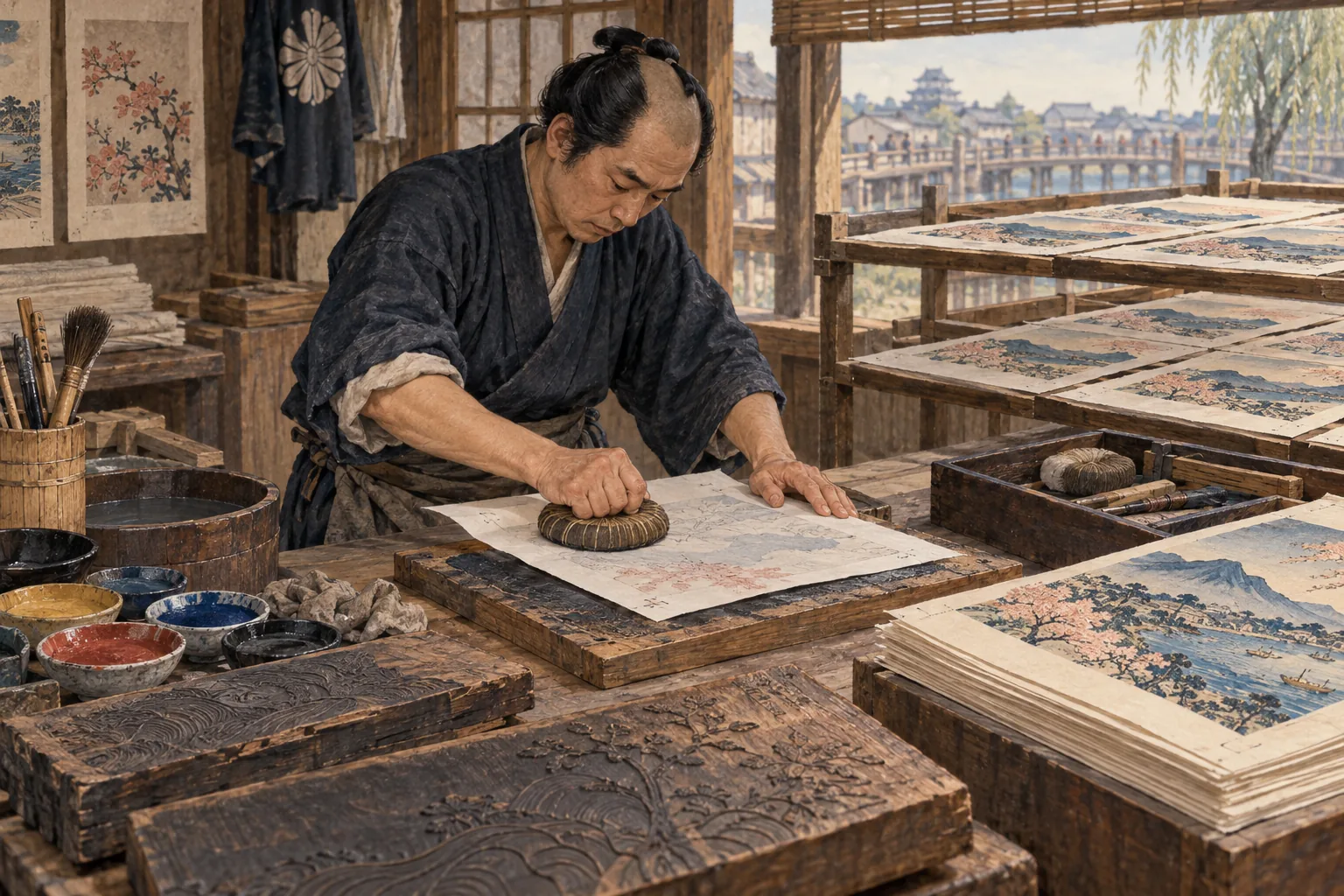
Ukiyo-e means pictures of the floating world. They are color woodblock prints made in the Edo period showing actors, courtesans, landscapes, ghosts and daily life. They were not fine art but cheap printed goods sold to ordinary townspeople. Each print was made by a team: a publisher, a designer, a block carver and a printer.
浮世絵とは「浮き世の絵」という意味です。江戸時代に作られた多色刷りの木版画で、役者、遊女、風景、幽霊、暮らしの様子を描きました。美術品ではなく、町人向けに売られた安い印刷物でした。一枚の絵は、版元、絵師、彫師、摺師の分業で作られました。
スピーチ・英作文
通訳案内士の二次口述・大学入試の自由英作文に
Ukiyo-e are Japanese color woodblock prints from the Edo period, and the first thing to understand is that they were not art objects. They were cheap printed goods, sold in shops to ordinary townspeople at roughly the price of a bowl of noodles, and the subjects were what the public wanted: famous kabuki actors, celebrated courtesans, travel views, ghost stories, and later landscapes.
Nor were they the work of one artist. A publisher decided what would sell, a designer drew the image, a carver cut a separate block for each color, and a printer laid the colors down in sequence, so a single print might take a dozen impressions.
When Japan opened up in the nineteenth century, prints reached Europe, reportedly sometimes as packing material, and their flat color and bold cropping influenced Manet, Degas and Van Gogh. The irony is that Japan treated them as throwaway and Europe treated them as revolutionary.
浮世絵は江戸時代の日本の多色刷り木版画で、まず理解すべきなのは、それが美術品ではなかったということです。町人向けに店で売られた安い印刷物で、値段はそば一杯ほど、題材は人々が求めるものでした。人気の歌舞伎役者、評判の遊女、旅の風景、怪談、そしてのちには風景画です。
一人の画家の仕事でもありませんでした。版元が何が売れるかを決め、絵師が図を描き、彫師が色ごとに別の版木を彫り、摺師が順に色を重ねます。一枚に十回以上摺りを重ねることもありました。19世紀に日本が開かれると、浮世絵はヨーロッパへ渡りました。
荷の詰め物として届いたこともあったと言われます。その平らな色面と大胆な切り取り方は、マネやドガ、ゴッホに影響を与えました。皮肉なのは、日本が使い捨てとして扱ったものを、ヨーロッパが革新として扱ったことです。
こう聞かれたら
外国人から実際にされる質問と、その答え方。
Were they really that cheap?
本当にそんなに安かったのですか。
Yes. A single-sheet print cost about the same as a bowl of noodles, which is why so many were made and why so few survive in good condition. People pinned them up, used them and threw them away when they faded.
本当です。一枚絵はそば一杯ほどの値段でした。だからこそ大量に作られ、そして良い状態のものがほとんど残っていません。人々は壁に貼り、使い、色があせれば捨てました。
Who actually made the print?
実際に版画を作ったのは誰ですか。
Four roles, at minimum. The publisher commissioned and financed it, the designer drew it, the carver cut the blocks, and the printer inked and pressed each color. The designer's name is the one we remember, but the carver's skill decided how fine the lines could be.
少なくとも四つの役です。版元が企画と出資をし、絵師が図を描き、彫師が版木を彫り、摺師が色ごとに摺りました。名が残るのは絵師ですが、線の細かさを決めたのは彫師の腕です。
Is that famous wave a tsunami?
あの有名な波は津波なのですか。
It is generally understood as a large offshore wave rather than a tsunami, with boats caught beneath it and Mount Fuji small in the distance. The print is one sheet from a series of views of the mountain.
津波ではなく沖の大波と理解されるのがふつうで、その下に舟が巻き込まれ、遠くに富士山が小さく見えます。この絵は富士山を描いた連作の一枚です。
誤解されやすい
MYTHUkiyo-e were prized fine art in their own time.
浮世絵は当時から珍重された美術品だと思われがちです。
FACTThey were inexpensive commercial prints for a mass audience. Their status as art rose later, and partly through European collectors.
実際は大衆向けの安価な商業印刷物でした。美術としての地位が上がったのは後のことで、ヨーロッパの収集家の影響も大きくありました。
そのまま使えるフレーズ
- They were cheap prints, not paintings.絵画ではなく安い版画でした。
- A team of four people made each one.一枚を四人の分業で作りました。
- Each color needed a separate block.色ごとに別の版木が要ります。
- They influenced European painters.ヨーロッパの画家に影響を与えました。
説明に使う語句
- woodblock print木版画
- block carver彫師
- printer摺師
- publisher版元
動画で見る
YouTube より豆知識
「浮世」はもともと仏教の無常観から来た「憂き世」で、それが移り変わる現世を楽しむ意味に転じました。葛飾北斎の『富嶽三十六景』、歌川広重の『東海道五十三次』が代表作として知られます。多色刷りの技法が確立したのは18世紀半ばで、それ以前は墨一色の摺りに筆で色を足したものや、二、三色だけの摺りでした。19世紀後半にヨーロッパで浮世絵が流行した現象はジャポニスムと呼ばれます。現在も伝統的な技法で摺る工房が残り、復刻版が作られています。
