日本画にほんが
nihonga
painting in traditional Japanese materials
「日本画」という言葉は明治にできた。洋画が入ってきて、初めて必要になった。
一言で言うと
これだけ覚えれば最低限伝わる一文
Nihonga means painting made with traditional Japanese materials, a category that only became necessary in the Meiji period.
日本画とは、日本の伝統的な画材で描く絵のことで、この区分は明治になって初めて必要になりました。
30秒で説明する
外国人に説明するときの標準サイズ
Nihonga is defined by its materials rather than its subject: mineral pigments ground from rock, animal glue as the binder, and paper or silk as the support. The word was created in the Meiji period to distinguish this from oil painting arriving from Europe. Before that, nobody needed a word for it, because there was nothing to contrast it with.
日本画を決めているのは主題ではなく材料です。鉱物を砕いた岩絵具、それを定着させる膠、そして紙か絹の下地です。この語は明治になって、ヨーロッパから入ってきた油絵と区別するために作られました。それ以前は、対比するものが無かったので、この言葉を必要とする人がいませんでした。
スピーチ・英作文
通訳案内士の二次口述・大学入試の自由英作文に
Nihonga is a useful example of how a category can be created by contact with the outside. The word was coined in the Meiji period, when oil painting arrived from Europe and suddenly there were two kinds of painting in Japan that needed telling apart. What had simply been painting became nihonga, and the new arrival became yoga, or Western-style painting.
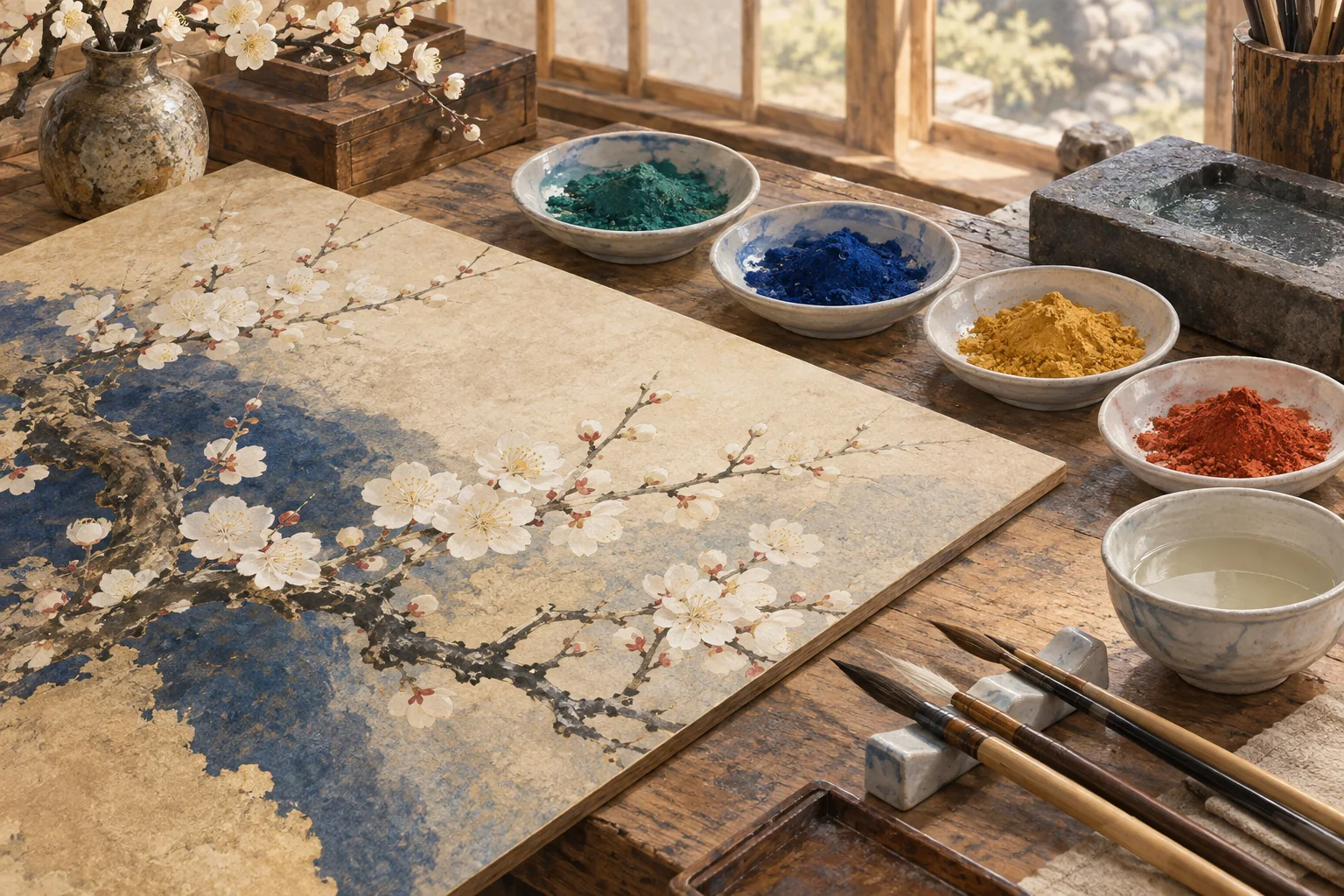
The definition rests on materials. Pigments are ground from minerals, shell and earth, and the coarser the grind the deeper the color, which is why the same pigment comes in numbered grades. They have no adhesive of their own, so the painter mixes them with nikawa, a glue made from animal collagen, warmed and applied in layers on paper or silk.
Gold and silver leaf are common. The results are matte rather than glossy, and color sits on the surface as particles rather than as a film. Painters today work in every subject from classical birds and flowers to contemporary abstraction, so nihonga is a set of materials and a tradition of handling them, not a restriction on what may be painted.
日本画は、外のものと接したことで区分が生まれる、その良い例です。この語ができたのは明治です。ヨーロッパから油絵が入ってきて、日本の絵に区別すべき二種類が急にできました。それまでただ絵だったものが日本画になり、新しく来たほうが洋画になりました。
区分の拠りどころは材料です。絵具は鉱物や貝殻や土を砕いたもので、粒が粗いほど色が濃く出ます。同じ絵具に番号の付いた粒度があるのはそのためです。それ自体には接着する力が無いので、描き手は膠と混ぜます。動物から取った膠を温めて使い、紙や絹の上に何層も重ねていきます。
金箔や銀箔もよく使われます。仕上がりは艶のないもので、色は膜ではなく、粒として表面に載ります。今の描き手は、古典的な花鳥から現代の抽象まであらゆる主題を描きます。日本画とは材料の一組と、その扱い方の伝統であって、何を描いてよいかの制限ではありません。
こう聞かれたら
外国人から実際にされる質問と、その答え方。
So is it the subject that makes it nihonga?
では日本画かどうかは題材で決まるのですか。
No, the materials. A painting of a city street in mineral pigment and animal glue on paper is nihonga; a painting of Mount Fuji in oils is not. The category is about how it is made.
主題ではなく材料です。街並みを岩絵具と膠で紙に描けば日本画ですし、富士山を油絵で描けばそうではありません。この区分は、どう作られたかの話です。
Why do the colors look different from oil paint?
どうして油絵と色の見え方が違うのですか。
Mineral pigment sits on the surface as visible particles and scatters light, so the finish is matte and slightly granular. Oil paint forms a smooth film, which is why it looks deeper and glossier.
岩絵具は粒のまま表面に載って光を散らすので、仕上がりは艶が無く、わずかにざらつきます。油絵具はなめらかな膜になるため、深く艶やかに見えます。
Where can I see it?
どこで見られますか。
Many large art museums in Japan have a nihonga section, and several museums specialize in it. Because the works are on paper and silk, they are often rotated rather than permanently displayed.
日本の大きな美術館の多くに日本画の部屋があり、日本画を専門にする館もあります。紙や絹に描かれているため、常設ではなく、入れ替えて展示されることが多いです。
誤解されやすい
MYTHNihonga is an ancient category of art that has always existed.
日本画は昔からある古い区分だと思われがちです。
FACTThe word was created in the Meiji period as the counterpart to oil painting. The techniques are old; the category and the name are only about 140 years old.
この語は明治に、油絵の対として作られたものです。技法は古くても、区分と名前のほうは百四十年ほどのものです。
そのまま使えるフレーズ
- It is defined by the materials, not the subject.主題ではなく、材料で決まります。
- The pigments are ground from minerals.絵具は鉱物を砕いたものです。
- Animal glue holds the pigment to the paper.膠が絵具を紙に定着させます。
- The finish is matte rather than glossy.仕上がりは艶のないものです。
- The word was coined in the Meiji period.この言葉は明治にできました。
説明に使う語句
- a pigment絵具・顔料
- a binder接着剤・膠
- silk絹
- gold leaf金箔
- matte艶のない
動画で見る
YouTube より豆知識
岩絵具は粒の細かさで番号が付けられ、粗いほど色が濃く、細かいほど淡くなります。膠は温めて溶かして使い、季節や湿度で扱いが変わります。下地には和紙や絹を用い、金箔や銀箔を貼ることもあります。明治になって洋画が入ったことで日本画という呼び名が生まれ、両方を教える学校や展覧会の部門が整えられていきました。今は化学的に作られた顔料も使われ、伝統の材料と組み合わせる描き手もいます。作品は光に弱いため、展示替えをしながら公開されるのがふつうです。
